This is despite Motsoaledi saying he's never heard of emergency funding
- Like its prior iterations, budget 3.0 does not include an allocation to deal with the loss of US funding for South Africa's HIV response. But the money could come later in the year, according to the finance minister.
- The National Health Department has submitted a new application for emergency funding from the National Treasury, which is currently being considered.
- The health department told GroundUp over a month ago that it had sent Treasury a proposal for emergency funding through section 16 of the Public Finance Management Act.
- Weeks later, the health minister said he didn't know why people were speaking about emergency funding and that he had never heard of it.
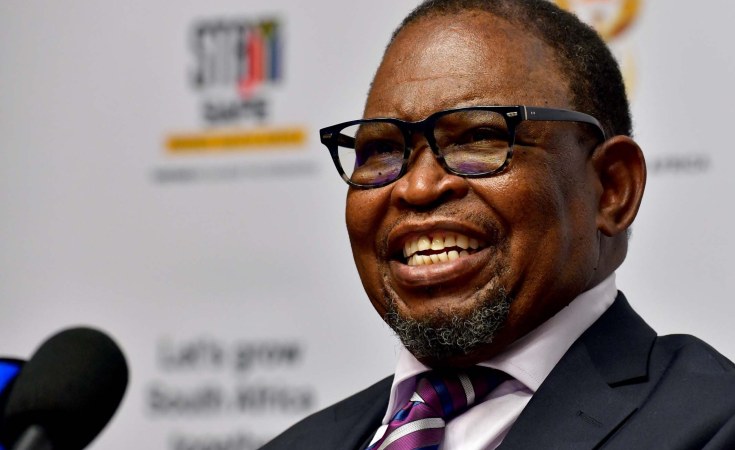
In his budget speech on Wednesday, the finance minister, Enoch Godongwana, stated that no new allocations are being made to deal with the withdrawal of US funding for HIV-related services. But he stated that such funding may be issued later in the year.
This could be done as part of the budget adjustment process which takes place in October. But if a recent application for emergency funding by the National Health Department is successful, then funds could be released even sooner.
Follow us on WhatsApp | LinkedIn for the latest headlines
Godongwana stated: "The spending pressures that may require funding later this year include among others the withdrawal of the [US] President's Emergency Plan for AIDS Relief (PEPFAR) ... We have not made provision for the allocation of funding for that now."
PEPFAR is a multi-billion-dollar US initiative supporting HIV-related programmes around the world. South Africa received billions of rands through the fund each year. But in January, US President Donald Trump suspended all foreign development assistance globally. Many of these programmes were then terminated in February, though some are still active (see a detailed timeline here).
Officials from the National Health Department have been in negotiations with Treasury over the last few months about securing emergency funding in order to cover the PEPFAR cuts.
The emergency funds could come from Treasury's contingency reserve, which exists partially in order to cover unexpected funding shortfalls. It may also be financed through borrowing.
The health department's proposal for emergency funding had apparently been insufficiently detailed. It needed to provide more information about how the money would actually be spent.
But in recent days, the health department provided Treasury with a new bid for emergency funding, which we understand is more detailed than prior submissions. The sum which has been requested is also significantly lower than what was previously requested. It is asking for about R1.3 billion for the financial year, which is roughly half of what it previously asked for.

Sign up for free AllAfrica Newsletters
Get the latest in African news delivered straight to your inbox
We understand that the health department has also put in a separate application to the National Treasury to cover the cuts to research funding by the US. This follows a decision by the US National Institutes of Health (NIH) to effectively cancel grants to researchers in South Africa (see a detailed explanation here). Two large private donors have offered to assist with this if the government puts up a certain amount.
Emergency funding could be authorised through section 16 of the Public Finance Management Act. This allows the finance minister to allocate funds in exceptional cases "which cannot, without serious prejudice to the public interest, be postponed to a future parliamentary appropriation of funds".
The health department's spokesperson, Foster Mohale, told us over a month ago that the department had sent the National Treasury a letter which included "firm proposals about [a] section 16 application". The Treasury confirmed that it had received this letter at the time.
Despite this, the Minister of Health, Dr Aaron Motsoaledi, told media last week that it was "surprising" to hear people speaking about section 16 emergency funding, and that he had "never heard of it".