

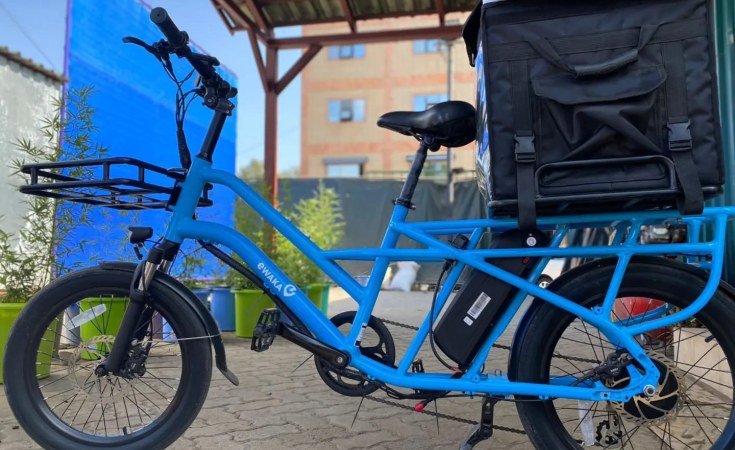
Nairobi - As dusk settles over a high school in central Kenya, the hum of an electric motor powered by a discarded laptop battery signals a quiet revolution - led by physics teacher and inventor Paul Waweru.
"Most people throw these away," he says, holding up a palm-sized lithium-ion cell. "I see power, potential, possibility."
Waweru sources old laptop battery packs, tests their viability and then crafts new packs from them, which are then fitted as power sources for motorbikes.
These bikes can travel up to 50 kilometers on one charge, providing a cleaner, quieter and cheaper alternative to petrol-powered boda-bodas - Kenya's famous motorcycle taxis.
Follow us on WhatsApp | LinkedIn for the latest headlines
From trash to transport
Waweru scours junkyards, repair shops and electronic waste dumps for old laptop batteries, which sell for as low as 0.50 Kenyan shillings - less than one American cent.
While most people view them as dead, Waweru says up to 70 percent of these cells still have some charge.
He converts old motorbikes by stripping out the internal combustion engine and replacing it with an electric motor and one of his custom battery packs. The end result is a machine that produces zero emissions and is almost free to operate.
"In places like Nairobi, where fuel prices keep rising and traffic chokes our cities, this kind of innovation isn't just clever - it has become necessary," he says.
Evans Otieno, a 29-year-old boda-boda rider in Kisumu, was among the first to test Waweru's invention. He used to spend more than 700 shillings a day on petrol. Now he charges his bike overnight with solar power.
"No noise, no smoke, just movement," Otieno grinned. "The customers do ask. They're all surprised. They say, this came out of an old laptop?"
Global talks seek to curb e-waste dumping as Africa bears the brunt
An estimated 50,000 tonnes of e-waste are deposited in Africa annually, most of which ends in open, unregulated dumps, emitting toxins into the environment - adding to urban air pollution.
Waweru's laptop-motorbike hybrids provide a grassroots solution for climate change, waste management and youth unemployment all in one, and all out of a backyard workshop.
"This is bottom-up climate action and it's working," said Mary Mburu, a circular economy strategist.
The Kenyan engineer building a sustainable future with recycled plastic bricks
From landfill to lifeline
Waweru's vision reaches beyond his workshop. He has begun training young people in his community to test the used batteries, build circuits and retrofit bikes. He envisages a network of community-powered workshops across Africa, building electric vehicles using locally available waste.

Sign up for free AllAfrica Newsletters
Get the latest in African news delivered straight to your inbox
"We don't need to wait for Tesla or Toyota to bring electric mobility to Africa" he says. "We can build our own with what we have."
His biggest challenges are funding, access to quality tools and grappling with outdated policies.
Back in his shed, he inserts the final cell into a freshly built battery pack. As he fastens the casing, a soft whir proclaims success. He steps back, watching one of his students ride the bike around the block.
"Change doesn't have to be flashy," he says. "It just has to work and keep moving forward."

