Nairobi — The education sector has emerged as the biggest winner in the 2025/2026 national budget, receiving the lion's share of allocations, even as funding for agriculture was significantly reduced.
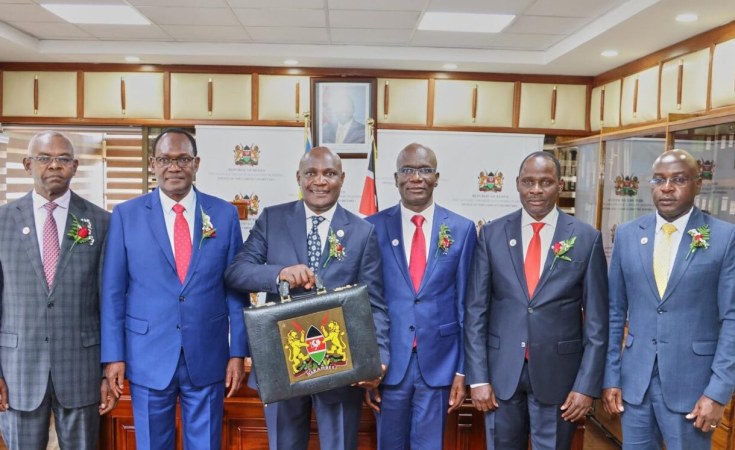
Presenting the budget estimates in the National Assembly, Treasury Cabinet Secretary John Mbadi emphasized the government's commitment to strengthening the education system, describing it as a cornerstone for national development.
He proposed a total allocation of Sh702.7 billion to the education sector. Of this, Sh387.2 billion will go to the Teachers Service Commission (TSC), including Sh7.2 billion for the recruitment of intern teachers and Sh980 million for capacity building on Competency-Based Education.
Keep up with the latest headlines on WhatsApp | LinkedIn
The government has also earmarked Sh7 billion for Free Primary Education, Sh28.9 billion for Junior Secondary School Capitation, and Sh51.9 billion for Free Day Secondary Education.
Additional allocations include Sh5.9 billion for national examinations, Sh3 billion for the school feeding programme, Sh7.2 billion to hire intern teachers, and Sh4 billion for various TVET projects.
School infrastructure development will receive Sh1.7 billion for primary and secondary schools and Sh1.4 billion for technical training institutions.
In efforts to promote equity and quality in education, Sh13.3 billion has been allocated for primary education equity programmes, Sh2.3 billion for improving secondary education, and Sh993 million for science, research, and innovation.
University and TVET learners will benefit from Sh41.5 billion through the Higher Education Loans Board (HELB), Sh16.9 billion for university scholarships, and Sh7.7 billion for TVET scholarships.
Mbadi said these investments reaffirm the government's constitutional duty to provide every Kenyan learner with access to basic education.
He also noted that the allocations are guided by input gathered during public budget forums held across the country.
In contrast, the agriculture sector has seen its funding cut by 20.1 percent, from Sh60.4 billion in the 2023/24 fiscal year to Sh47.6 billion in the new financial year.
The reduced allocation comes despite the sector being key to food security, rural development, and economic resilience.
The budget now sets aside Sh8 billion for fertilizer subsidies and Sh10.2 billion to support agricultural value chains.
Other allocations include Sh800 million for small-scale irrigation and value addition, Sh1.2 billion for food security and crop diversification programmes, and Sh5.8 billion to boost food systems resilience.
Livestock production support has been allocated Sh2.3 billion for pastoral risk management, Sh1.6 billion for commercialization of livestock, Sh280 million for livestock value chains, and Sh340 million for the leather industrial park at Kenanie.

Sign up for free AllAfrica Newsletters
Get the latest in African news delivered straight to your inbox

