A year on from landmark protests over taxes and corruption, Kenya's youth remains undeterred by a violent police response but faces conflicting ideas on what direction to take. Meanwhile, the recent death of a blogger in prison has sparked new demonstrations.
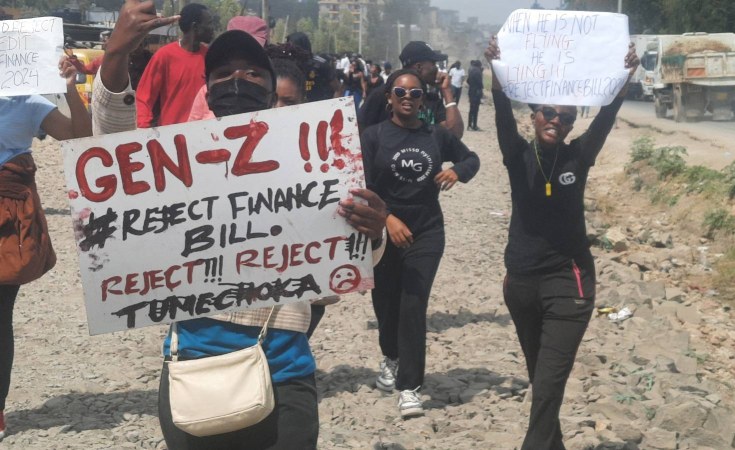
In June 2024, protests erupted across Kenya against a new bill that would mean a sharp rise in taxes - with 40 percent of people in the country living in poverty and the government regularly embroiled in corruption scandals.
"It was spontaneous, leaderless and unlike anything our country had ever seen," said Hanifa Adan of the movement. The 28-year-old emerged as one of the most high-profile figures in what became known as the "Gen Z protests".
Keep up with the latest headlines on WhatsApp | LinkedIn
The demonstrations reached a climax on 25 June, when thousands stormed the parliament where lawmakers were debating the bill - ultimately forcing President William Ruto to withdraw it.
In the course of the protests, 60 people died amid a violent police response, and dozens were arbitrarily detained.
Following this brutal response, in the weeks that followed the protests dwindled.
"State violence was brutal and traumatising, and it was meant to intimidate and silence us. But instead, it exposed the desperation of a system clinging to power," said Adan.
Kenya probes deadly violence that erupted during tax hike protests
Fractured movement
Kenya has rarely seen protests of this kind, which observers have called a new form of political uprising in the country - in which young people cast off the ethnic and geographic divides which had long defined their politics, to focus instead on policies.
But divides began to emerge within the movement. While some continued to engage in street protests, notably over women's rights and against police brutality, others took a different path - like Kasmuel McOure, 27.
He had gained notoriety during the protests with his fiery statements, but he subsequently joined the establishment, allying with veteran opposition leader Raila Odinga, who recently forged an alliance with the government.
McOure now calls himself "a party man through and through" - a move perceived by many protesters as a betrayal.
"If you're going to play politics then let's play it properly," he told French news agency AFP.
Some observers say he may intend to run for parliament at the next election in 2027. He has said that young people "must take political power" and that the Gen Z movement was too disorganised to foster real change.
"I thought the majority of the people who were calling themselves leaders were agitating for the sake of agitating," he said.

Sign up for free AllAfrica Newsletters
Get the latest in African news delivered straight to your inbox
Death in custody
With the death of the blogger Albert Ojwang in custody last weekend, new protests have erupted this week.
The first march began in the capital, Nairobi, on Monday, near the Central Police Station where Ojwang died. Some protesters clashed with the police after officers used tear gas on the crowd.
Kenya protests erupt after activist Albert Ojwang dies in police custody
For Amnesty International in Kenya, Ojwang's death highlights major concerns about Kenya's police - which are not new.
"Why would the Directorate of Criminal Investigations use so much public taxes to arrest Albert Ojwang in Homa Bay and drive 350km past several police stations and courts to Central Police Station, Nairobi? Why would a suspect commit suicide after peacefully complying with an arrest and actively calling for family and friends to raise bail for him?" the organisation wrote in a statement, co-signed by groups working on police reforms.
Amnesty is calling on Kenyan authorities to admit a UN fact-finding team to independently investigate the cases of deaths and abductions by the police.
"Without independent and external investigation, these practices shall remain a threat to Kenyan lives, the rule of law, national security and the public interest," the statement concluded.
(with AFP)