

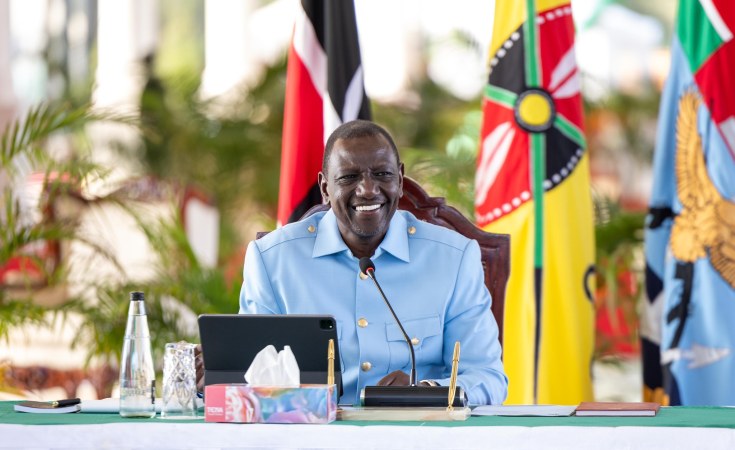
Nairobi — President William Ruto signed the Finance Bill 2025 into law on Thursday, ushering in a raft of tax amendments and fiscal reforms designed to streamline revenue collection, ease the cost of doing business, and bolster economic growth across key sectors.
A key highlight of the new law is a mandatory amendment to the Income Tax Act requiring all employers to automatically apply all applicable tax reliefs, deductions, and exemptions for their employees.
The move seeks to ease the tax burden on salaried workers and eliminate bureaucratic hurdles that previously led to underutilization of available tax benefits.
Follow us on WhatsApp | LinkedIn for the latest headlines
"This provision will ensure that employees receive their full tax benefits without needing to make separate claims, improving compliance and fairness in the tax system," said Kuria Kimani, the Chairperson of the Departmental Committee on Finance and National Planning, who sponsored the Bill.
The Finance Act 2025 also introduces significant incentives to the telecommunications sector. In a bid to promote digital infrastructure investment, the Act now provides a tax exemption on investment allowances related to the purchase of spectrum licenses and rights to use fiber optic cables by telecom operators.
The intervention will lower operating costs and improve service delivery in the sector.
Additionally, the law provides for tax exemptions on gratuity and allowances paid under pension schemes, along with an increase in the daily tax-exempt subsistence allowance from Sh2,000 to Sh10,000.
The Bill, published on May 6 and passed by the National Assembly on June 19, amends six key tax laws: the Income Tax Act, the Value Added Tax Act, the Excise Duty Act, the Tax Procedures Act, the Miscellaneous Fees and Levies Act, and the Stamp Duty Act.
Other Highlights:
- Capital Gains Tax Adjustments:
- Exemptions for property transfers within Special Economic Zones and gains on listed securities.
- A reduction in the Capital Gains Tax rate from 15% to 5% for high-value investments certified by the Nairobi International Financial Centre Authority.
- Digital Economy Taxation:
- Significant Economic Presence Tax expanded to cover all online services, including digital marketplaces, regardless of revenue thresholds.
- Introduction of Advance Pricing Agreements for non-resident entities operating in Kenya.
- Betting transactions to be taxed at the point of withdrawal.
- Digital Assets and Virtual Services:
- The Digital Assets Tax has been repealed and replaced with a 5% excise duty on transaction fees payable to virtual asset providers, aimed at promoting innovation and investment.
- Value Added Tax (VAT) Reliefs:
- VAT exemptions on raw materials and machinery used in manufacturing mosquito repellents.
- Tea and coffee packaging materials to be zero-rated to boost the agricultural value chain.
- Excise Duty Reforms:
- New 5% excise duty on betting, gaming, prize competitions, and lottery tickets.
- Micro-distillers exempted from certain costly automation and metering requirements.
- Miscellaneous Levies:
- Exemptions from the Import Declaration Fee and Railway Development Levy for mosquito repellent production inputs.
- New levies to boost local steel and ceramic industries.
- Administrative Changes:
- The period for processing tax offset and refund applications extended from 90 to 120 days.
- Importers now required to present a valid certificate of origin to regulate standards.

Sign up for free AllAfrica Newsletters
Get the latest in African news delivered straight to your inbox

