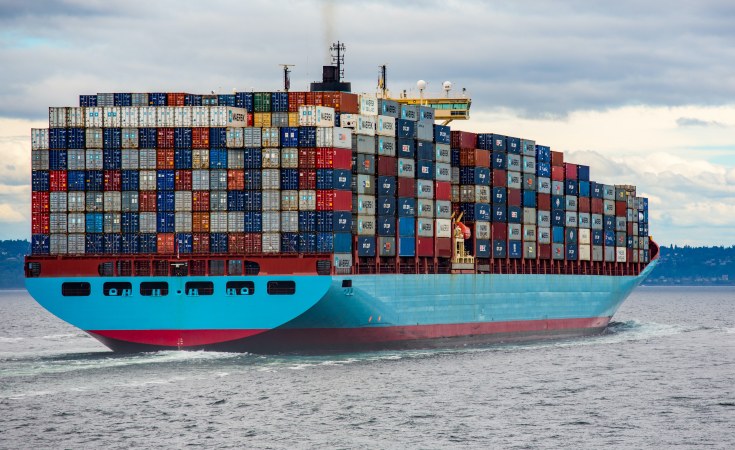
As the African Continental Free Trade Area (AfCFTA) begins to reshape regional trading dynamics, another transformation is quietly underway at the heart of Africa’s logistical infrastructure: the securitisation of its ports. With more than 80% of the continent’s imports and exports passing through maritime routes, the stakes are considerable. Far from being a purely technical issue, port security is now emerging as a strategic pillar in the pursuit of economic sovereignty.
Across a continent where up to $50 billion is lost annually to illicit financial flows, much of it linked to porous ports and under-resourced customs systems, securing maritime gateways is becoming as critical as building roads or negotiating trade agreements. Ports are no longer neutral spaces: they have become strategic battlegrounds where the ability to control the movement of goods, people, and capital intersects with the fight against smuggling, piracy, and foreign interference.
For governments hoping to capitalise on the promises of the AfCFTA, which could, according to the World Bank, increase intra-African trade by more than 50% by 2035, the pressure is mounting. Without safe and efficient port infrastructure, regional integration risks becoming an empty slogan. Yet, across much of the continent, many ports remain vulnerable, often reliant on outdated systems and limited surveillance capacity.
Cameroon’s quiet port revolution
Some countries, however, are beginning to confront the challenge head-on. In Cameroon, the transformation of the Douala Autonomous Port, the country’s main maritime gateway, responsible for nearly 95% of external trade, offers a glimpse into what securing a 21st-century African port could look like.
Since 2019, the site has undergone a significant security overhaul led by PortSec SA, a regional company specialising in the protection of critical infrastructure. The reforms, discreet but far-reaching, included the integration of biometric access controls, intelligent video surveillance, radar systems, and aerial drones. A naval simulator was also introduced to train rapid-response teams, while over 200 new security agents were deployed across the port.
These measures have already produced tangible results. Between 2019 and 2023, incidents of cargo theft dropped by 35%. Operational fluidity has improved. Customs revenues have risen, though exact figures remain confidential. For Douala, long plagued by inefficiencies and criminal infiltration, this marks a profound shift, not just in capacity, but in perception.
By modernising its security architecture, the port has become a more credible node in regional supply chains. It is not just about stopping theft or tightening control; it’s about redefining the port as a platform for national resilience and economic projection.
And as similar upgrades begin in other hubs, from Kribi to Tema to Mombasa, the lesson becomes clearer: Africa’s ports are not just gateways to trade. They are levers of sovereignty.
From infrastructure to influence
Across Africa, a new understanding is taking hold: that infrastructure, without sovereignty, is not development, it is dependence. And that sovereignty, in the 21st century, begins with the ability to control what enters and exits a territory.
Port security sits at the crossroads of this evolution. It protects revenue, curbs trafficking, enables compliance, and fosters investor confidence. But above all, it underpins the credibility of continental integration efforts like AfCFTA, which cannot succeed if trade corridors remain exposed to criminal exploitation and inefficiency.
Private actors such as PortSec have shown that these changes are not only feasible, they are already underway. The question now is whether governments and regional institutions will elevate port security to the place it deserves in economic planning and political discourse.
Because Africa’s ports are not just logistical spaces. They are the new frontlines of sovereignty. And who controls the gates, and how, will shape the continent’s future.


