

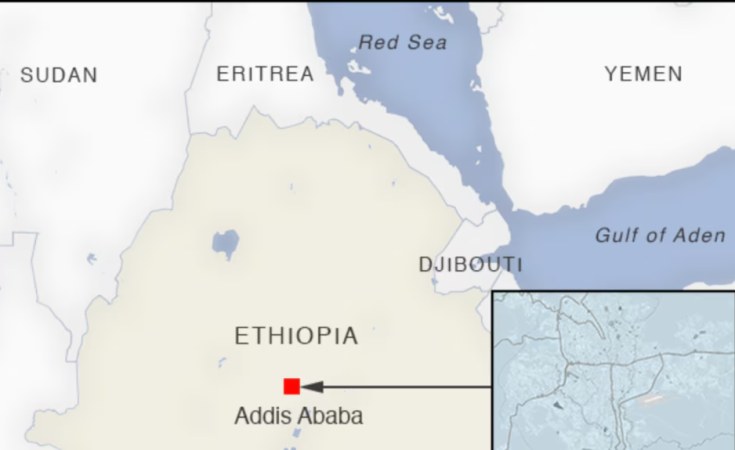
Addis Abeba — Seven years ago, this publication warned against romanticized quick fixes to the Ethiopia-Eritrea stalemate. We cautioned that gestures lacking concrete implementation, transparency, and restraint would fail to end the two-decade "no-war, no-peace" deadlock. Today, those warnings ring with new urgency. The two countries edge perilously close to renewed conflict- this time fueled by Eritrea's maximalist claims of sovereignty and open hostility toward the Pretoria Peace Agreement, alongside Ethiopia's "existential" pursuit of Red Sea access.
This is no hypothetical threat. It is a real and accelerating slide toward catastrophe.
Ethiopia's recent accusations depict an Eritrean regime bent on subversion, militarization, and territorial encroachment. Ethiopian officials have openly cited President Isaias Afwerki's May 24 speech as evidence of intent to sow discord, exploit Ethiopia's internal divisions, and reignite conflict. Eritrea, for its part, has dismissed these claims as diplomatic maneuvering aimed at justifying Ethiopia's long-standing ambitions to seize Eritrean ports, especially Assab, by force. These clashing narratives have transformed the post-Pretoria atmosphere into a rhetorical arms race, with each statement and troop movement pushing the region closer to the edge.
Both countries are now trapped in a dangerous cycle of hostile rhetoric and military posturing. Eritrea's nationwide mobilization earlier this year, including mass reservist call-ups, and Ethiopia's endless announcement of a military buildup have stoked widespread anxiety. In such a volatile context, even a minor miscalculation could trigger full-scale war.
Follow us on WhatsApp | LinkedIn for the latest headlines
The international community must recognize that the broader struggle over control of the Red Sea has already attracted a wide-range of external actors' appetite, and is already manifesting violently across the Horn of Africa. A direct Ethiopia-Eritrea clash would open a new, volatile front in this complicated contest, with dire humanitarian and geopolitical consequences.
Ongoing conflicts with armed groups such as the Oromo Liberation Army (OLA) and Fano strain the state's security capacity across key regions. Millions of Ethiopians are being crushed by the weight of a deepening economic crisis
The wounds of the devastating two-year war in the Tigray region remain raw. Despite the 2022 Pretoria Agreement, Eritrean forces continued occupying parts of Tigray, while reports of covert ties with TPLF factions deepen mistrust. These factors not only obstruct full implementation of Pretoria but risk reigniting proxy conflicts. The atrocities committed during the war, amounting to war crimes, crimes against humanity, and ethnic cleansing by both Eritrean and Ethiopian forces, have yet to be addressed. Tigrayan forces are accused of committing war crimes during their militarized incursions into neighboring Afar and Amhara regions during the war. Marching toward another conflict while these wounds continue to fester is both morally indefensible and strategically reckless.
Meanwhile, elsewhere, Ethiopia grapples with deepening internal instability. Ongoing conflicts with armed groups such as the Oromo Liberation Army (OLA) and Fano strain the state's security capacity across key regions. Millions of Ethiopians are being crushed by the weight of a deepening economic crisis. Opening a new war front abroad amid such fragility risks national collapse. Ethiopia cannot pursue external ambitions while its house burns from within.
The less costly path
The path forward is clear and should begin with honesty and restraint at home. Last year, this publication warned that the slow, uneven, and opaque implementation of the Pretoria Agreement dangerously undermined the fragile peace in Tigray, risking renewed war. While initial ceasefire and humanitarian relief brought temporary respite, unresolved issues - including the continued presence of Eritrean and Amhara forces in Tigray, stalled disarmament, absence of justice for war victims, and rising mistrust - have all widened divisions between the federal government and Tigrayan authorities. The solution remains urgent: full implementation of all provisions, transparent withdrawal of foreign forces, genuine political dialogue, and an active AU-led monitoring and accountability mechanism.
...the 2018 détente between Ethiopia and Eritrea, which culminated in "peace and friendship" declarations, must be fully declassified
The responsibility ultimately lies with the Ethiopian federal government, which must recommit to full implementation of the Pretoria Agreement, demilitarizing occupied areas, restoring constitutional order, and reintegrating Tigray into the federation in accordance with both the letter and spirit of the Pretoria Agreement. There can be no peace at the center without peace at the periphery.
Moreover, the 2018 détente between Ethiopia and Eritrea, which culminated in "peace and friendship" declarations, must be fully declassified. Any undisclosed annexes or implementation frameworks, particularly those related to port usage, military cooperation, or Ethiopia's acceptance of the 2002 Eritrea-Ethiopia Boundary Commission ruling, must be made public. Only transparency can build the trust essential to avoiding further escalation.
To the leaders of Ethiopia and Eritrea, we say: war over access to the Red Sea, or the intransigence claims of its sovereignty, will not make your respective countries freer, safer, prosperous, or stronger

Sign up for free AllAfrica Newsletters
Get the latest in African news delivered straight to your inbox
At the same time, Ethiopia must exhaust all peaceful means to settle internal armed conflicts. It would be reckless to stoke hostile propaganda against Eritrea while unresolved insurgencies continue to destabilize Oromia, Amhara, and other regions. Ethiopia's national interest cannot be secured through external confrontation; it must be rebuilt through inclusive political process, internal reconciliation, and national cohesion.
Finally, the Horn of Africa cannot afford another militarized struggle over Red Sea access. Already caught in the crosshairs of foreign naval bases, proxy conflicts, and regional rivalries, the region must resist descending further into a new geopolitical rivalry.
To the leaders of Ethiopia and Eritrea, we say: war over access to the Red Sea, or the intransigence claims of its sovereignty, will not make your respective countries freer, safer, prosperous, or stronger. It will make both poorer, weaker, and more isolated. Lasting peace lies not through military brinkmanship, or nationalist posturing, but through honest diplomacy, transparent agreements, and courageous internal peace and cohesion.
History will not forgive leaders who drag their nations into yet another devastating war. Nor will their people.
The time to step back is now.

