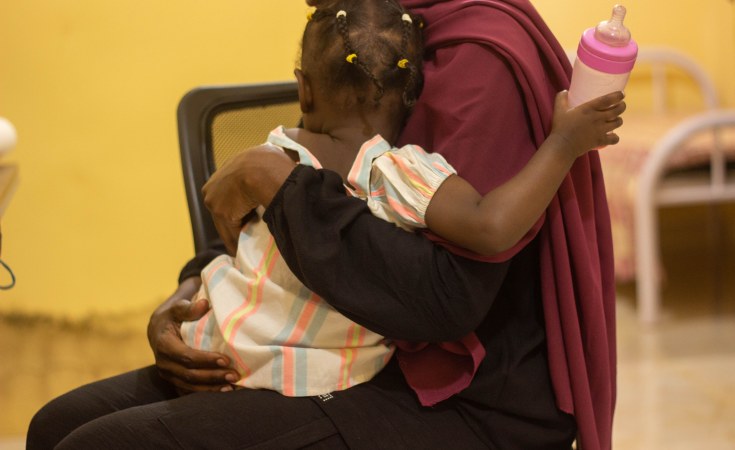
Humanitarians continue to push for more support for Sudan amid ongoing conflict, rising malnutrition and a cholera outbreak, a senior UN aid coordination official said on Thursday in New York.
Edem Wosornu, Director of Operations and Advocacy for the humanitarian affairs office, OCHA, briefed journalists on her recent visit to Sudan and neighbouring Chad - a critical entry point for aid and a haven for some 850,000 people who have fled fighting between the Sudanese army and the Rapid Support Forces (RSF) militia.
The war erupted in April 2023 and has created one of the world's largest humanitarian crises, with some 30 million people needing assistance.
Homes, hospitals and schools have been destroyed, and basic services have ceased. Malnutrition and food insecurity are on the rise.
Keep up with the latest headlines on WhatsApp | LinkedIn
Aid trucks waiting
Ms. Wosornu voiced concern over the situation in El Fasher, which has been under siege for 500 days, with fresh shelling reported that morning. The North Darfur capital is also in the grip of deadly cholera which "doesn't care whether you're in uniform or a civilian".
She said some 70 trucks from the World Food Programme (WFP), the UN Children's Fund (UNICEF), and the World Health Organization (WHO) are waiting in Nyala, South Darfur, to enter the city.
Meanwhile, two other cities - Kadugli in South Kordofan state and El Obeid in North Kordofan - are also under siege.
"We have some good news", Ms. Worsonu said, announcing that UNICEF trucks have delivered assistance to hundreds of thousands of people in Kadugli in recent days.
Khartoum now 'a ghost town'
The senior OCHA official recalled that Sudan was once the "breadbasket" of the Horn of Africa, but last year famine conditions were reported in the Zamzam camp in North Darfur.
The current lean season finds some 680,000 people nationwide in a state of catastrophic food insecurity.
Although fighting has died down in the capital, Khartoum, she said the sheer scale and destruction is devastating, with "streets and buildings littered with explosive remnants of war". The once vibrant city is now "completely a ghost town" with a "palpable sense of trauma everywhere".
However, she also witnessed signs of hope. She saw "a city trying to come back to life, people sweeping the streets, a population determined to come back to what they once were. But it will take, of course, many, many, many years."
In Chad, she thanked the authorities for their support, including ensuring that the Adre border with Sudan remains open.
The war has made travel within Sudan extremely difficult, so humanitarian aid has to go from Douala in Cameroon through Chad's capital, N'Djamena, and onto several more cities before arriving at Adre for entry into Darfur - "a mammoth effort", she said.

Sign up for free AllAfrica Newsletters
Get the latest in African news delivered straight to your inbox
More funding and aid access
Ms. Wosornu concluded by making four "key asks" to the international community, including for sustained improvements in aid access and more funding.
"What we need is 55 cents per person, per day. That's it for Sudan," she said.
Harder to deliver were her final plea to the warring parties for a lasting peace and an end to the fighting.
"Our humanitarian partners are also saying that this needs to stop so we can continue to deliver assistance," she said. "Because after the war and everything has stopped, and when the guns are silenced, people still need recovery."

