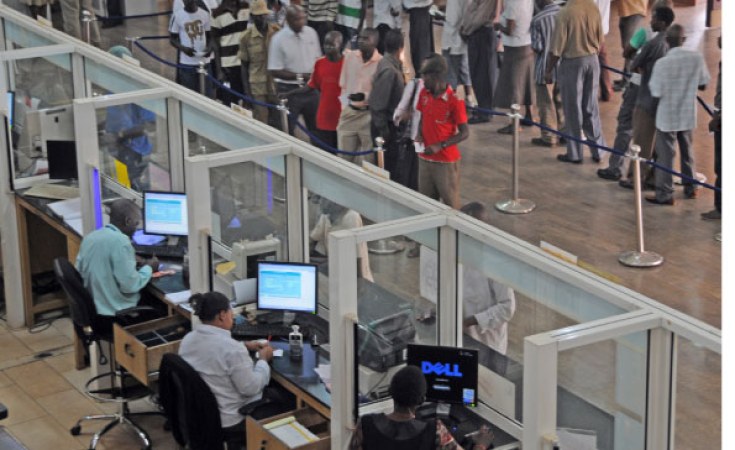
HIGH bank charges imposed by local institutions are severely choking financial inclusion and contradicting best practices from other regional players, the National Economic Consultative Forum (NECM) report has revealed.
The NECF report, which analyses Zimbabwe's financial inclusion infrastructure, identifies some of the pressing issues affecting the country's banking public. For instance, over and above the fixed monthly charges, an amount of US$3,00 is charged for every US$100 withdrawn.
"The cost structure of banking services significantly affects financial inclusion, particularly for the informal sector. In Zimbabwe, bank charges are relatively high ($5.00 per month), which, combined with a 3% mobile money transaction fee and 4% transaction fees for the informal sector, can discourage the use of formal banking services," NECF said.
Keep up with the latest headlines on WhatsApp | LinkedIn
The Forum poked holes into the cost of borrowing, arguing it is also steep, with interest rates on loans averaging 12%, creating barriers for informal businesses seeking credit.
NECF compared Zimbabwe to South Africa, which offers more affordable banking services, with lower bank charges around $3.00 per month, mobile money transaction fees (2%), and borrowing rates (7%).
"These lower costs contribute to greater accessibility of financial services for both the formal and informal sectors, and combined with a robust financial ecosystem, encourage higher financial inclusion," said the forum.
The paper observes that, in Zimbabwe, the primary barriers to financial inclusion include high banking costs and a lack of banking infrastructure in rural areas, where 67% of the population resides.
The informal sector, which makes up 90% of the economy, remains largely underserved by formal financial institutions.
While mobile network coverage (90%) is high, providing a solid foundation for mobile-based financial services, gaps in financial literacy (35%) and the high costs associated with mobile money transactions continue to restrict broader inclusion.
On Bank Branch Density, Zimbabwe had a score of 4.5 per 100,000 adults compared to South Africa, which has 9,8 per 100,000 adults.
"While mobile money penetration in Zimbabwe is high, internet penetration remains relatively low at 36%, limiting the potential for advanced digital financial services. To fully realise the benefits of digital financial inclusion, policymakers should focus on expanding internet connectivity, particularly in rural areas," the paper added.


