

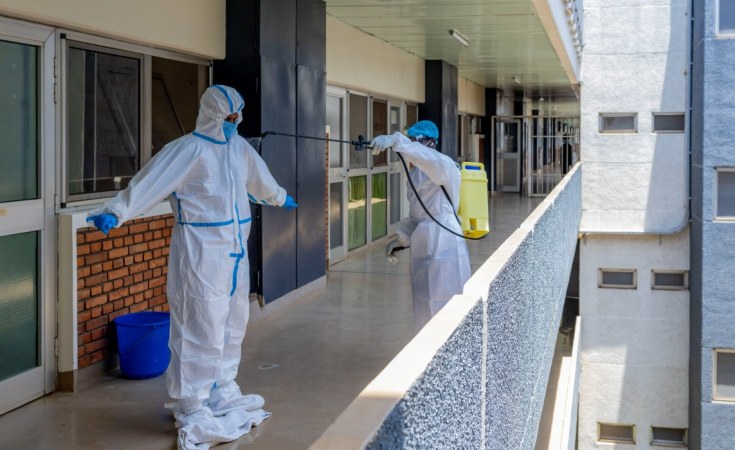
Rwanda contained its first Marburg virus disease (MVD) outbreak in record time, achieving the lowest fatality rate ever documented for the virus, a new study published in the New England Journal of Medicine (NEJM), has found.
Published on September 10, the study explains how early detection and a coordinated response curbed the spread and reduced deaths.
ALSO READ: Rwanda declares Marburg virus outbreak over
Health Minister Dr. Sabin Nsanzimana, sharing the findings on his X account, wrote: "One year later, our study reports how science-guided detection and rapid action stopped Rwanda's first Marburg outbreak in weeks, achieving the lowest recorded fatality."
Keep up with the latest headlines on WhatsApp | LinkedIn
ALSO READ: How Rwanda detected the first Marburg virus cases
A summary of the findings
The outbreak was detected in September 2024 when clusters of patients with severe fever were admitted to two specialized hospitals in Kigali.
Within days, more than 20 health workers were infected, showing the risk of hospital-based transmission. Investigations traced the origin to a miner believed to have contracted the virus from Egyptian fruit bats, with further spread occurring through hospital contacts.
By the time the outbreak was declared over in December, Rwanda had confirmed 66 cases from more than 6,000 people tested. Health workers represented 77 percent of infections. Despite the high risk of spread, the fatality rate was 23 percent, far below the levels seen in previous Marburg outbreaks across Africa, where rates have often exceeded 50 percent.
Rwanda's quick mobilization was decisive as authorities established a national treatment center within days, increased laboratory capacity, and deployed rapid response and contact-tracing teams.
The country's network of community health workers was engaged to screen nearly 4.8 million people. Surveillance was reinforced through mandatory mortality testing and routine household visits, measures that confined the outbreak to three clusters.
Advanced medical care also helped as patients received dialysis, transfusions, and mechanical ventilation, treatments rarely available during earlier filovirus outbreaks (a family of highly deadly hemorrhagic fever viruses).
Emergency measures enabled the use of investigational therapies, with 52 patients receiving remdesivir (an antiviral drug) and 10 treated with the monoclonal antibody MBP091 (an experimental antibody targeting Marburg virus).
The study indicates that these treatments, combined with advanced intensive supportive care, contributed to improved survival among patients.
The report shows Rwanda's first use of a vaccine during an active Marburg outbreak. The ChAd3-MARV vaccine was deployed 13 days after the outbreak was declared, reaching more than 1,700 healthcare workers and other high-risk contacts. At the same time, a phase 2 clinical trial was launched to evaluate the vaccine's effectiveness.

Sign up for free AllAfrica Newsletters
Get the latest in African news delivered straight to your inbox

