

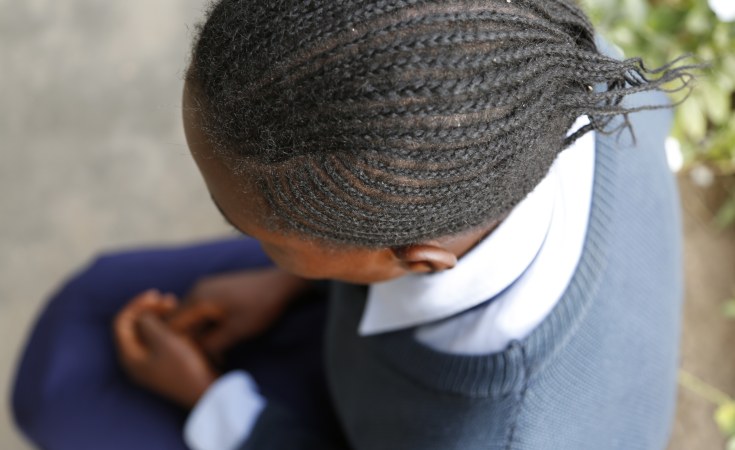
Child marriage remains a huge threat to girls worldwide. New research from Plan International reveals how this harmful practice puts girls in danger and limits their opportunities.
Over 250 girls and young women from 15 countries have shared their personal experiences of child marriage in one of the most extensive studies of its kind. All were married or in informal unions before the age of 18 and together, their previously unheard testimonies lay bare the harms caused by early marriage.
"I was married off young. I wasn't allowed to study or progress in life – I was deprived of everything. But I won't let that happen to my daughter. I want her to have a bright future, and that only happens when she studies and gets a job," said Juna, 24, from Nepal. "Early marriage only leads to a dark future," she continued.
Follow us on WhatsApp | LinkedIn for the latest headlines
Globally, 12 million girls are married each year before their 18 th birthday, despite the practice being illegal in most countries.
"I was deprived of everything. But I won't let that happen to my daughter." Juna, 24, Nepal
Plan International's State of the World's Girls Report 2025 'Let me be a child, not a wife – Girls' experiences of living through child marriage' heard from girls from Bangladesh, Cambodia, Indonesia, Nepal, Ethiopia, Mozambique, Uganda, Zambia, Colombia, Dominican Republic, Guatemala, Ecuador, Nigeria, Niger, and Togo.
Violence and abuse
The vulnerability of girls within their marriages was a clear key theme to emerge from the testimonies. Still children, the girls reported how they were dominated by their, often older, partner and his family and for too many this resulted in violence.
Of the girls Plan International spoke to, more than 1 in 10 (13%) disclosed experiencing violence – a figure which is likely to be a conservative estimate due to the stigma and taboo associated with discussing abuse.
Many girls reported the abuse as normal and that violence was not taken seriously in their communities with poor legal support. Almost half of the respondents (45%) were married to a man 5 or more years older than they were, with some marrying men more than 10 or 20 years older.
Societal expectations
Child marriage is still deeply woven into many communities around the world, with economic hardship or social and familial pressure cited as the most common reasons for entering a marriage or union, by 46% of girls who took part in the study.
The report reveals that deeply ingrained societal expectations of girls to become wives and mothers remain firmly in place today and place a high value on fertility and obedience, robbing girls of their freedom and future.
Social media is also exposing girls to new risks. In Asia and Latin America, it was found that online, older men were exploiting girls' emotional and economic vulnerabilities – offering marriage as a golden ticket out of their hardship.
Whilst some girls had some choice in their partner and even perceived their marriages to be based on love, many cited family and societal pressure to marry their partners very early into the relationship to protect their honour and reputation and expressed regret with hindsight.
Loopholes in child marriage laws
In 14 out of the 15 countries studied, with Niger being the only exception, child marriage is illegal but lack of funding, poor law enforcement and legal loopholes mean that the practice persists.
This includes loopholes which allow for parents, guardians and local judges to agree to a marriage under the legal age. In several countries, the legal age for a girl to marry was lower than the legal age of a man.
Informal unions are particularly difficult to detect, leaving girls isolated and hard to reach. Unregistered marriages and unions leave girls and women without protection when it comes to child support, property rights and legal safeguards.
The effects of child marriage
Child marriage often results in girls leaving school early, severely hindering their opportunities in the future. The report found that over 1 in 3 (35%) dropped out of school after marriage and that 63% are not in employment, education or training.
Access to contraception and health services was also reported to be difficult, with girls often facing pressure to become pregnant, early into the marriage.
Many revealed their husbands controlled their contraception and finances and that they had very little agency and autonomy over their lives and bodies. Participants revealed the damaging toll marriage had on their mental health as they were left alone, overwhelmed and burdened with adult responsibilities.
"Whenever I tried to speak up, he would beat me. " Bupe, 19, Zambia
Bupe, from Zambia, who is now 19 and was married at the age of 15, said: "(He) used to intimidate me, and whenever I tried to speak up, he would beat me. I kept quiet because I feared the consequences."
The study also reveals that child marriage is often fragile and unstable, with a high number of the girls who took part, nearly 1 in 3 (28%), now divorced.
Leaving child marriages did not necessarily mean a brighter future. Many of these girls reported facing stigma, isolation and additional financial hardship as a result of the separation.

Sign up for free AllAfrica Newsletters
Get the latest in African news delivered straight to your inbox
Progress is too slow
"This study shines a stark light on the hidden realities of child marriage, giving voice to girls and young women who are too often silenced, their lives shaped by decisions made without them. The message is clear: child marriage puts girls at risk of multiple harms and robs them of life opportunities. Progress is too slow, and laws are not doing enough to protect girls, meaning they are facing more risks and fewer choices – such as the right to decide if or when to marry or have children," said Reena Ghelani, Chief Executive Officer of Plan International.
"This International Day of the Girl we are calling for investment in programmes that tackle the damaging social beliefs, practices and expectations that allow child marriage to persist and provide real protection for girls at risk. Improved access to education, awareness and strengthened online safety standards also need to be prioritised.
"Child marriage is not normal and should never be seen as such – it is a violation. Girls must be allowed to choose their own future, and we will not stop until that right is a reality."

