

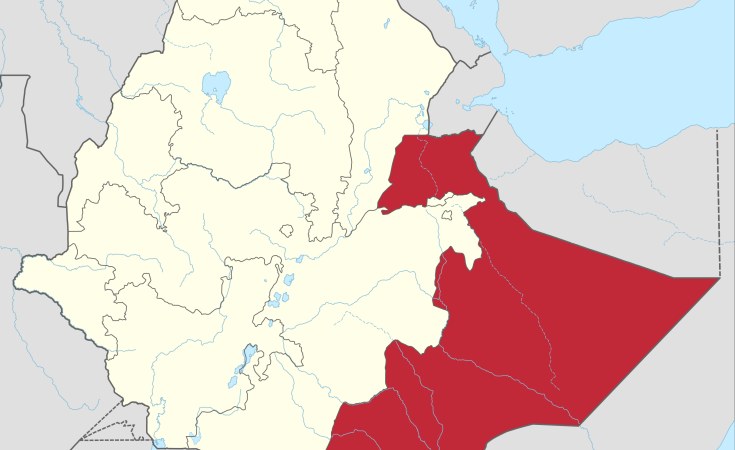
Addis Abeba — Earlier this month, Prime Minister Abiy Ahmed inaugurated the first phase of the Ogaden LNG Project in Calub, Somali Regional State, which has an annual production capacity of 111 million liters. He also laid the foundation stone for the construction of a urea fertilizer factory and a fuel refinery in the region. This follows the signing of a shareholders' agreement in August 2025 between the Ethiopian Investment Holdings (EIH), the government's strategic investment arm, and Nigeria's Dangote Group to develop and operate a $2.5 billion urea fertilizer production complex in Gode. The fertilizer plant will be developed through the EIH-Dangote partnership, while the Golden Concord Group has been contracted to construct the fuel refinery.
According to the Prime Minister, the refinery is designed to process crude oil from the Hilal oil field, with a projected production capacity of 3.5 million tons of refined fuel. The fertilizer complex is also expected to produce 3 million tons annually, utilizing natural gas from Kallu, which will be transported via a 108-kilometer pipeline.
Implications for Somali region
Keep up with the latest headlines on WhatsApp | LinkedIn
In the arid expanse of Ethiopia's Somali region--once known as the Ogaden, a land scarred by decades of strife and neglect--the rumble of new machinery signals not just industrial ambition, but a reckoning. As the federal government launches multimillion-dollar projects like the Gode Oil Refinery and Fertilizer Plant, promising to quench Ethiopia's thirst for self-reliance, the Somali people watch with a mix of guarded hope and deepening suspicion. These initiatives, hailed by Prime Minister Abiy as engines of "shared responsibility and peace," could indeed transform a nation plagued by import bills topping $4.5 billion annually for fuel and fertilizers. Yet, for the region, they risk becoming yet another chapter in a tragic saga of extraction without equity, where underground riches fuel Addis Abeba's dreams while Jigjiga's streets remain parched.
This is no abstract grievance. It is the echo of a history where resource wealth has been weaponized against the very people who steward it. As Ethiopia pivots from failed export fantasies--scrapping the Djibouti pipeline dream confirmed in the 2025 Energy Outlook--to a domestic-first energy strategy, the federal government must confront a stark truth: without justice for the Somali region, this pivot will ignite, not illuminate, the path forward.
The 2018 peace accord with the Ogaden National Liberation Front (ONLF) was meant to bury the ghosts of conflict; instead, opaque deals and top-down decrees threaten to exhume them. It is time for bold advocacy: the Somali region demands not charity, but its constitutional due--a codified stake in its bounty, transparent governance, and a voice that echoes from the fields of Calub to the halls of power.
Legacy of plunder, marginalization
The Ogaden Basin's treasures have tantalized outsiders for over a century, but for Somalis, they have been a curse disguised as a promise. Natural oil seeps were noted as early as 1860, yet it was colonial appetites--British, Italian, and Ethiopian--that first mapped the region's potential. In the 1970s, U.S. firm Tenneco uncovered vast natural gas reserves at Calub and Hilala, followed by Soviet geologists confirming over 100 billion cubic meters during the Derg regime's brutal centralization. These discoveries should have heralded prosperity; instead, they fueled repression. The 1977-78 Ogaden War, pitting Ethiopia against Somali irredentists, entrenched federal dominance, branding local aspirations as treason.
Successive regimes--the Derg, the Ethiopian People's Revolutionary Democratic Front (EPRDF), and now the Prosperity Party (PP)--treated the region as a strategic hinterland, its resources a federal fiefdom under the guise of national custodianship. The Mining Operations Proclamation No. 678/2010 and other petroleum laws vested ownership in "the government and the peoples of Ethiopia," but in practice, this meant the Ministry of Mines located in Addis Abeba calling the shots, revoking licenses at will, and sidelining regions. The ONLF's armed struggle from 1984 onward was born of this exclusion: demands for self-determination clashed with federal iron-fisted control, exacerbated by droughts, clan rivalries, and cross-border meddling from neighboring countries like Somalia and Eritrea.
The Somali region demands not charity, but its constitutional due--a codified stake in its bounty..."
By the 2010s, Chinese firm Poly-GCL's 2013 concession promised progress but delivered only test drills in 2018 and stalled timelines--180,000 cubic meters of LNG daily by mid-2025 remains a mirage. Netherland, Sewell & Associates certified seven trillion cubic feet of gas in 2022, yet the export model crumbled under financing woes and "saboteurs," as Prime Minister Abiy candidly admitted. Dubious deals, like the $3.6 billion pact with unvetted U.S.-based GreenComm, only deepened distrust, reinforcing "socioeconomic hierarchies of exclusion" where locals toil as laborers, not beneficiaries.
The 2018 peace accord with the ONLF's mainstream wing was a fragile triumph: amnesty, political reintegration, and vows of equitable development. But as federal launches of the $2.5 billion Gode projects in October 2025 bypass local buy-in, the accord frays. History whispers a warning: ignored grievances birthed the ONLF; renewed secrecy could resurrect its hardliners.
Avoiding 'Resource Curse': Policy recommendations
With groundbreaking ceremonies for the $2.5 billion Gode Oil Refinery by China's Golden Concord Group and the adjacent Fertilizer Plant with Nigeria's Dangote Group now underway as of October 2025--part of a $10 billion energy package including the Ogaden LNG Project's phased rollout--the urgency for equitable governance has never been greater. Ethiopia's federal-regional fault lines--evident in Oromia's defiant Mineral Development Authority revoking non-compliant licenses--demand recalibration, not confrontation. Drawing on African best practices, such as Nigeria's derivation principle, which allocates 13% of resource revenues to producing states, and South Africa's constitutional fiscal transfer mechanisms, the Somali region is positioned to lead this initiative.
To avert the "resource curse" observed during Zambia and Tanzania's mining booms, the following actionable recommendations--set to begin immediately after the October 2025 launches--prioritize rapid, visible wins to build trust, with measurable outcomes designed to enforce accountability and prevent conflict relapse.
For the federal government, it is essential to enact a Resource-Sharing Law by the first quarter of 2026. This legislation should mandate that 30% of net revenues (after royalties and taxes) from Somali Region projects be allocated directly to the region, with these funds ring-fenced for infrastructure and social services. Mirroring Kenya's 20% county model, this approach ensures fiscal autonomy while remaining compliant with the Extractive Industries Transparency Initiative (EITI). Success should be measured through annual audits with 100% public disclosure.
The federal government should also implement mandatory audits and EITI compliance by the fourth quarter of 2026. All existing contracts, including those with Poly-GCL and Dangote, must undergo third-party audits, with results published on a public online portal. This initiative, which includes the creation of beneficial ownership registries, is critical for curbing illicit financial flows. The key performance metric is zero unreported deals.
A third priority is establishing a Tripartite Oversight Council by January 2026, modeled on Ghana-style forums. This council, comprising representatives from the federal government, the Somali Regional administration, and the ONLF, should be empowered to approve project phases and enforce Environmental Impact Assessments (EIAs) with specific safeguards for pastoralist communities. Success will be measured by achieving at least 80% community approval on all EIAs.
Finally, launch a dedicated Anti-Corruption Unit by the second quarter of 2026. Operating under the Federal Ethics and Anti-Corruption Commission (FEACC), this unit must provide robust whistleblower protections and address past mismanagement in the extractive sector. A successful outcome would be a 50% reduction in graft reports related to these projects.
On the regional front, the Somali Regional Government in Jigjiga should establish a Somali Resource Governance Authority (SRGA) by the first quarter of 2026. Following the Oromia model, this authority should co-vet all licenses, mandate 30% local procurement, and ensure mandatory community consultations. The key metric will be achieving 100% regional approval on all major projects.
The second priority is the launch of a Sovereign Wealth Fund (SWF) by the second quarter of 2026. Inspired by Botswana's human capital approach, the fund should allocate 40% of its revenues to agriculture, 30% to education and health, and 30% to infrastructure, with quarterly audits to ensure transparency. The target is to seed the fund with $500 million and maintain a 90% public transparency score.
Thirdly, the regional government should establish a Somali Skills Academy by the first quarter of 2027. In partnership with international donors, the academy should train 5,000 local residents annually in oil and gas sector skills, with a quota ensuring that 10% of jobs are reserved for women and youth. The goal is to achieve 70% local employment across all regional energy projects.
Finally, the government should deploy a Revenue Tracking Dashboard by the second quarter of 2026. This digital, publicly accessible platform should provide real-time data on all revenue inflows, enabling direct oversight by civil society. Success will be measured by reaching one million user accesses per year.
The Somali region is no peripheral pawn in Ethiopia's energy chessboard; it is the queen, its moves dictating checkmate or stalemate."
Recently, the ONLF underwent a split. Provided that the party's status is restored to its previous standing, the ONLF under the chairmanship of Abdirahman Mahdi should play a constructive role in this process. This includes establishing a Shadow Monitoring Team by the fourth quarter of 2025. Additionally, a diaspora-led global advocacy group should be formed to monitor projects through non-violent means and present findings to international bodies such as the Extractive Industries Transparency Initiative (EITI) or for possible UN sanctions on opaque agreements. The benchmark for success will be the submission of five formal reports to international institutions.

Sign up for free AllAfrica Newsletters
Get the latest in African news delivered straight to your inbox
The second recommended course of action involves building a unified front and advocating for a referendum by the first quarter of 2026. The party should work jointly with the mainstream ONLF to develop a shared platform that calls for a 2030 autonomy vote linked to a 20% devolution of powers, mirroring the historical evolution of the African National Congress (ANC). A key performance indicator for this initiative will be media engagement reaching one million views.
Finally, the party should organize grassroots forums by the first quarter of 2026. These forums should collect and document local grievances in key areas such as Gode and Hilala for formal submission to the Tripartite Oversight Council. The goal is to conduct 50 forums with a combined participation of 10,000 individuals.
From extraction to empowerment
The Somali region is no peripheral pawn in Ethiopia's energy chessboard; it is the queen, its moves dictating checkmate or stalemate. As the Gode refinery processes Hilala's condensate and the fertilizer plant draws Calub's gas--now accelerating with LNG phases online--these must become monuments to mutual flourishing, not marginalization. The federal government holds the pen for reform, Jigjiga holds the map for implementation, and the ONLF holds the fire of accountability.
Ethiopia's horizon gleams with possibility: reduced forex hemorrhage, hydropower backups for drought years, and a diversified economy unshackled from imports. But without Somali-centered justice--rooted in African-proven equity--the gleam blinds us to brewing storms. Honor the 2018 peace not as parchment, but as pact. Codify shares, illuminate deals, and include the excluded. For in the Ogaden's depths lies not just gas, but the gas to fuel a nation's soul--or the spark to consume it. The choice is now: equity or endless exile. The Somali people, resilient as the desert winds, await no less. AS
Editor's Note: Kamaludin Hassan is a community mobilizer and activist based in Minnesota, United States.

