

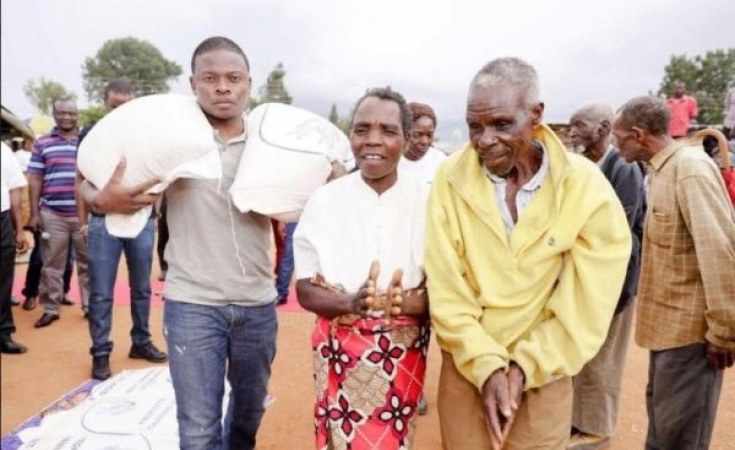
Malawi's fight against hunger is facing a massive financial black hole, with the government's Lean Season Food Insecurity Response Programme staring at a K148.2 billion deficit--a gap so large it threatens to derail emergency food aid for more than 4.2 million Malawians already on the brink of starvation.
The Department of Disaster Management Affairs (DoDMA) has revealed that while the country needs K209.4 billion (about US$119 million) to roll out the national hunger plan, only K61.2 billion has so far been secured from the government and development partners. This leaves an overwhelming K148.2 billion still unfunded--barely days before the relief programme is due to start on November 1.
The Food Security Cluster, which alone requires K168.82 billion (US$96.4 million) to feed millions of affected households, has received just K46 billion (US$26.2 million)--less than one-third of what is needed. Officials fear that without urgent donor injections, food assistance could collapse halfway through the lean season.
Speaking in Lilongwe, Commissioner for Disaster Management Affairs Wilson Moleni said the situation is dire but insisted that the response will still target every affected person, even in districts not officially declared disaster zones.
Keep up with the latest headlines on WhatsApp | LinkedIn
"The total number of affected people is 4.2 million, and all of them will be assisted, whether they are in declared disaster districts or not," said Moleni.
The hunger response, to be launched in Machinga District, is designed to support each affected household with either K90,000 in cash transfers or a 50kg bag of maize every month during the lean season. But the funding crisis threatens to cripple this plan before it even begins.
Moleni said funding so far has come from the Government of Malawi, the World Bank, UK Government, USAID, Irish Aid, Germany, Norway, the Netherlands, Korea, China, and the World Food Programme (WFP)--but the resources fall far short of the enormous need.
The Malawi Vulnerability Assessment Committee (MVAC) recently warned that prolonged dry spells and erratic rainfall have devastated crop yields, leaving millions without enough food until the next harvest.
Agriculture policy expert Leonard Chimwaza described the situation as "a painful déjà vu" for a country that has spent decades battling cyclical hunger.
"It's heartbreaking that year after year, Malawi finds itself in the same position--begging for billions to feed its people. The K148 billion gap is not just a number; it's the difference between life and death for millions of poor Malawians," Chimwaza said.
With just days before the programme rollout, the K148.2 billion funding hole stands as a stark reminder of Malawi's fragile food security and dependence on external aid. Unless the gap is urgently filled, millions could face one of the hungriest lean seasons in recent memory--a looming national tragedy written in the language of numbers, but measured in human suffering.

Sign up for free AllAfrica Newsletters
Get the latest in African news delivered straight to your inbox

