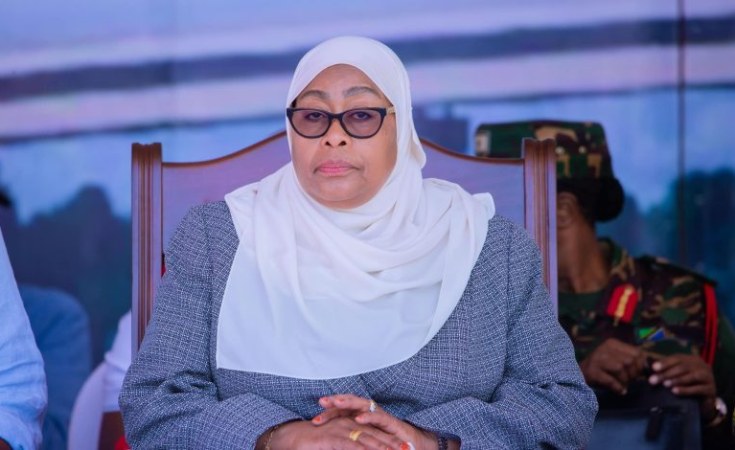
Nairobi — President Samia Suluhu Hassan has rejected calls for sweeping electoral reforms following Tanzania's disputed 2025 General Election, dismissing criticism from regional and international observer missions as "external interference" in the country's internal affairs.
Speaking shortly after being sworn in for a second term at a closed-door ceremony held under tight security at a military base in Dodoma, President Suluhu defended the National Electoral Commission (NEC) and praised it for conducting what she termed a "peaceful, fair, and efficient" election.
"We thank the electoral commission for coordinating and supervising the entire process with unquestionable efficiency," she said. "In this election, we had 17 candidates from various parties. We competed on merit, and all of us showed that politics is not war."
Follow us on WhatsApp | LinkedIn for the latest headlines
Her comments came just hours after the Southern African Development Community (SADC) and other observer missions released preliminary reports describing the polls as deeply flawed, citing intimidation of opposition figures, suppression of media freedoms, and limited voter participation.
Rejection
Quoting the late former President Benjamin Mkapa, Suluhu said Tanzania welcomes election observers but "will not be dictated to by foreign entities."
"We thank all communities that brought election observers. We have received their opinions with great respect," she said.
"However, as President Mkapa said, when they praise us, we receive that praise humbly. But when they give us instructions on what to do -- we reject those instructions."
Suluhu added that her government would "consider constructive advice" while upholding sovereignty and peace as non-negotiable national principles.
Addressing reports of unrest and alleged human rights violations, the President defended security agencies, saying their actions were necessary to maintain stability.
"Chaos within the country is not good; it has no price and benefits no one," she said. "Those who incited violence should know that dialogue produces solidarity -- not confrontation."
Opposition parties and human rights groups have accused security forces of using excessive force to quash post-election protests in Dar es Salaam, Arusha, and Mwanza, which erupted after the disputed results were announced.
A flawed election
The SADC Election Observer Mission, led by former Malawi Speaker Richard Msowoya, concluded that the election fell short of regional democratic standards, citing the detention of opposition leader Tundu Lissu, disqualification of candidates, internet shutdowns, and biased media coverage.

Sign up for free AllAfrica Newsletters
Get the latest in African news delivered straight to your inbox
The mission also criticized constitutional provisions that prevent courts from reviewing presidential election results, describing them as a "serious obstacle to accountability."
"Voters could not freely express their democratic will," Msowoya said, urging Tanzania to implement far-reaching constitutional and electoral reforms.
Despite the mounting criticism, President Suluhu called on citizens to "move past the election" and focus on nation-building.
"The election is over now. Let us work together to build our nation," she said.
"The chosen leader becomes a servant of all citizens -- those who voted for them, those who did not, and even those who did not participate."
Suluhu also thanked regional leaders who attended her inauguration, including Burundi's Évariste Ndayishimiye, Somalia's Hassan Sheikh Mohamud, Zambia's Hakainde Hichilema, and Kenya's Deputy President Kithure Kindiki, who represented President William Ruto.
The inauguration, held at the Tanzania People's Defence Force parade grounds, was closed to the public and journalists, marking a sharp departure from Tanzania's tradition of open, festive swearing-in ceremonies.
Broadcast live on state-run TBC, the low-key event unfolded amid an internet blackout, curfews, and ongoing security operations in opposition strongholds.
President Suluhu, 64, was declared the winner with 98 per cent of the vote, in an election boycotted by parts of the opposition and criticized by observers as lacking credibility.

