The world must act immediately to halt the "horrific atrocities" in Sudan's El-Fasher, the UN rights chief has said, urging countries not to wait until a "genocide" is declared.
The paramilitary Rapid Support Forces (RSF), which has been at war with the regular army since April 2023, captured the last military stronghold in western Darfur on October 26.
Since El-Fasher's takeover after a gruelling 18-month siege, the United Nations and rights monitors have reported widespread atrocities, including ethnically-driven killings and abductions.
"It's clear that atrocity crimes are being committed as we speak," UN Commissioner for Human Rights Volker Turk told AFP in an interview, stressing that the siege had in itself been "an atrocity crime".
Keep up with the latest headlines on WhatsApp | LinkedIn
"People were beleaguered and under siege, under horrific conditions, no food, hardly any water... We have reports of people having to eat animal feed, for example, eating peanut shells."
Pointing to the declaration of famine in some parts, he said it was "so desperate... with children dying of starvation".
Since the RSF had swept in, Turk said his office had received "credible evidence of mass killing; that when people are trying to flee this horrible situation, they get shot at".
"There are very serious reports of rape and sexual violence and gang rape, (and) we have very serious issues of killings of those who are supposedly collaborators," he said.
A Joint Consultative Committee's report on the latest developments in Sudan, covering events during the period from November 3-9, 2025, listed some of the atrocities of the RSF.
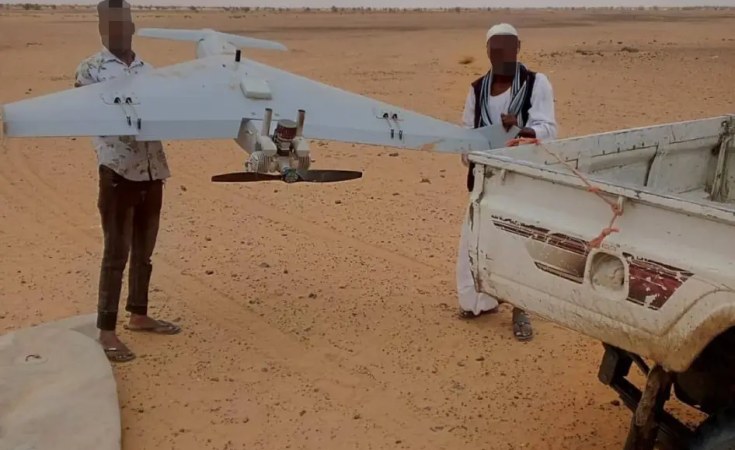
"On November 3, 2025, the rebellious militia targeted Kerenoi Hospital in North Darfur State with strategic drones, resulting in the death of a woman and two children and the injury of others.
"On November 3, 2025, the rebellious militia targeted a mourning gathering in Al-Luwaib village, east of Al-Obeid city in North Kordofan State, with a strategic drone, resulting in the death of 54 civilians, mostly women and children, and the injury of 21 others.
"On November 3 and 7, 2025, the rebellious militia targeted Station 13, south of Al-Obeid city in North Kordofan State, with a strategic drone, resulting in the death of 7 civilians, the injury of 4 others, and the destruction of 2 civilian vehicles.
"On November 7, 2025, the rebellious militia targeted the Al-Ayara area in North Kordofan State with a strategic drone, resulting in the destruction of Al-Ayara School.
"On November 7, 2025, the rebellious militia shelled the city of Al-Daling in South Kordofan State, resulting in the death of 5 civilians and the injury of 4 others," the report stated in part.
A case of genocide
Asked if he feared a genocide might be underway, Turk stressed that "whether or not it qualifies for genocide is again for traditional authorities to say".
But, he insisted, "we shouldn't wait for any of this. We should act now, when these horrific atrocities are being committed as we speak".
"You don't need to wait until the court decides that it's been genocide."
The rights chief said there were fears that the atrocities unfolding in El-Fasher might be repeated in Sudan's oil-rich Kordofan region.
"I hope that the international community really wakes up," he said, lamenting that "all the warnings that we have given over the whole year... were not heeded."
It was vital to ensure there "is not a repeat again of similar things in North Kordofan", he said, cautioning that "the signs for it are extremely worrying".
Accounts from El-Fasher
"People are eating cowhide to survive." "The bombs are getting closer." "They're shooting people trying to run away."
These were the grim updates shared with AFP's veteran Sudan correspondent Abdelmoneim Abu Idris Ali by people trapped in the 18-month-long siege of El-Fasher.
Dr Omar Selik, Dr Adam Ibrahim Ismail, Sheikh Moussa, and activist Mohamed Issa relayed vital information from a city mostly cut off from communications.
They have all since been killed.
Until their deaths, they played a crucial but, for security reasons, anonymous role in documenting Sudan's two-year war between the army and the RSF.

Sign up for free AllAfrica Newsletters
Get the latest in African news delivered straight to your inbox
Ismail, a young physician, was detained by RSF fighters on October 26 as he tried to flee the city.
He was shot dead the following day.
Until his last moments, Ismail had been treating "the wounded and the sick" at the Saudi Hospital, El-Fasher's last functioning medical facility, according to the Sudanese Doctors' Union.
AFP's Abu Idris Ali learned of Ismail's death through that statement, having spoken to him only days earlier.
In September, Abu Idris Ali had already lost three other local sources - people who answered his calls and questions whenever communications allowed.
They were killed in a drone strike on a mosque in El-Fasher on September 16, which killed at least 75 people.
"Their voices painted a picture of El-Fasher," he said.
"Through them, I heard the groans of the wounded, the sorrow of the bereaved, the pain of those crushed under the war machine."
