Tawila, Sudan — "Each time, a group would arrive in military vehicles, take us to a room, and rape us violently before leaving."
Women and girls who escaped the Darfur city of El Fasher after it was seized by the Rapid Support Forces last month have described brutal sexual violence by its fighters in interviews by reporters on the ground for The New Humanitarian.
Five survivors said they were gang-raped by RSF and affiliated fighters, and two described other sexual assaults. They said the abuse lasted for hours or even days, sometimes occurring in the presence of family members they were fleeing with.
Most said they saw multiple other women and girls being raped, and all described incidents in different areas outside of El Fasher, indicating the abuse - which has also been documented by humanitarian and human rights groups - was widespread.
Follow us on WhatsApp | LinkedIn for the latest headlines
"RSF soldiers took turns on us," said a 20-year-old woman and mother of four who was kept captive for two days by fighters. "Each time, a group would arrive in military vehicles, take us to a room, and rape us violently before leaving."
The woman said she was with a group of 12 other women and girls who were also gang-raped, and that she was threatened with being shot. Her name, like all other survivors in this report, is being withheld for safety and privacy.
More than 100,000 people have fled El Fasher since the RSF takeover on 26 October. The city was the last in the western Darfur region not fully under RSF control since it began fighting its former ally, the Sudanese Armed Forces (SAF), in 2023.
Accounts of mass killings against people trying to flee -- after surviving a more than 500-day RSF siege -- point to some of the worst atrocities of Sudan's war, with thousands likely killed, many in attacks filmed and posted online by RSF fighters.
Less reported, however, has been the seemingly systematic use of gender-based violence and sexual abuse against escaping women and girls, which fit into a pattern of the RSF using such violence as a tool of war.
Even before seizing El Fasher, the group, which is armed by the United Arab Emirates, a Gulf heavyweight with massive Western diplomatic and military support, had allowed its fighters to commit rapes across the country and kidnap women and girls into sexual slavery.
Meanwhile, support for survivors - whether medical care, mental health services, or cash for relocation - has been woefully insufficient from international donors, according to the local women's group trying to assist them.
"Access to services for women survivors is very limited," said Ikhlas Mohammed al-Nour, a volunteer with a local initiative providing psychological and social support to women in Tawila, the main town receiving people displaced from El Fasher.
Al-Nour said around 100 survivors had come to the health centre that she supports since 26 October, but the services available fall far short of the need, and social stigma has prevented many women from seeking help.
Sudan's conflict was sparked by a disagreement over plans to merge the RSF - a creation of the government that evolved into a highly autonomous force - into the army, but it is driven by deeper political and social divisions, and an effort to crush the revolutionary civilian movement that led to the ousting of Omar al-Bashir in 2019.
"Indescribable harassment and sexual assault"
Mostly composed of fighters from Darfur's Arab groups, the RSF descends from the Janjaweed militias that were created by al-Bashir and which committed genocidal crimes against non-Arab Darfuris in the 2000s.
Most of those in El Fasher before last month were from non-Arab communities - as were the militias that helped the SAF hold the city - and it is these populations who were targeted last month.
Several survivors said they were accused of aiding the SAF, and were targeted in revenge for RSF losses sustained while battling to take over the city, which had a pre-siege population of some two million people.
A nurse from one of El Fasher's main hospitals said she was accused of treating the army by a group of RSF fighters commanded by Abu Lulu, the dreaded soldier seen killing dozens of civilians in graphic videos posted on social media last month.
"I said I treated everyone, including RSF prisoners, but they accused me of having money and being a soldier's wife," said the medic. She said her and three other women in her group then endured "indescribable harassment and sexual assault".
Another survivor - a student and humanitarian volunteer - said an RSF fighter accused her of "killing our people" as he and a second soldier hit her, stuffed a cloth in her mouth to stop her screaming, and tied up her hands with her hijab.
The woman, who is 19 and left El Fasher two days before the RSF captured it, said one of the fighters began touching her while the second attempted to rape her. She said they only stopped when a commander arrived and intervened.
A 17-year-old girl said she was detained and then raped by multiple fighters in the village of Garni, just northwest of El Fasher. Thousands of people have reportedly been detained in the area, where the RSF has been screening men and boys.
The girl said that at 9pm she was selected along with around 20 other girls, five of whom she knew, and that her mother was told by the RSF fighters that she would be isolated.
"They led us to tents which were soldiers' quarters located at the edge of the Garni camp," she said. "They then divided us into groups and began taking us one by one inside the tents."
The girl said two men - one in an RSF uniform, the other in plain clothes - raped her for three hours. She said she was returned to her family afterwards, but was brought back the next day with her sister and raped in a tent by four men, three in uniform.
Raped, then held for ransom
A 21-year-old woman said her family was stopped on the road to Tawila by an armed man in an RSF uniform who initially spoke to her father politely. "He met my father, greeted him, and asked how he was doing," she said.
The situation soon turned. After promising to help them with transport, the man ordered the group to lie on the ground. A second RSF fighter then joined him as they interrogated her brother about SAF personnel in El Fasher, before summoning her.
"He attempted to assault me, and when I resisted, he hit me in the face, tore off my clothes, and raped me," the woman said, referring to the second fighter. "I screamed, and my father and siblings came, and my father begged him to stop, but he continued."
After the ordeal, the woman spent six days in captivity with her family, who were told they would not be able to leave until they paid an extortionate amount of money to the RSF to transport them to Tawila.
"We tried to gather the money but couldn't," the woman said, explaining that the fighters wanted five million Sudanese pounds (around $8,000). She said they were only released when the soldiers guarding them were replaced by another RSF group.
Other survivors described being forced to pay similar fees by the RSF, which has set up an extensive ransom and trafficking network around El Fasher, both as a lucrative racket and a way to further impoverish targeted communities.
The 17-year-old girl who was raped by multiple RSF fighters in Garni said her family was detained for eight days "due to lack of money". The delay meant she couldn't reach a hospital in Tawila to receive urgently needed medical care.
An 18-year-old student from El Fasher said that after two RSF-affiliated armed men raped her, she encountered a passerby named Adam. She said that when Adam asked nearby RSF soldiers to take her to hospital, they demanded money instead.
"They threatened Adam demanding money to release us. He said he had none and that I was married and pregnant, asking them to let us go," said the woman, adding that her group was eventually released once it was clear nobody could pay.
Safety in Tawila, but little respite

Sign up for free AllAfrica Newsletters
Get the latest in African news delivered straight to your inbox
Survivors who reached Tawila said that while the town is safer - it is controlled by an armed group that has taken a neutral stance between the RSF and the SAF - their ordeals have not ended, given the harsh conditions there.
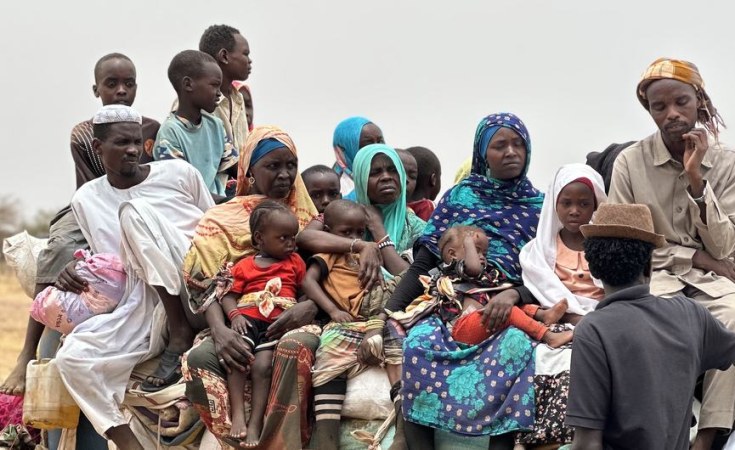
More than 650,000 people are currently sheltering in and around the relatively small town, most of them displaced in earlier waves from El Fasher and from surrounding camps established after Janjaweed attacks in the early 2000s.
Shelters are set up on the fringes of a camp for displaced people outside the town of Tawila, which has become a hub for civilians fleeing RSF attacks in the western Darfur region.
The 21-year-old woman who was raped and then detained for six days said she was able to get medical treament in Tawila and a pregnancy test that came up negative, but has remained unwell.
"They said I had a severe infection, gave me medication, and told me to come for an appointment last Sunday, but I couldn't due to my difficult financial situation," she said.
Israa Ali Dawood, an aid worker with the Norwegian Refugee Council, said that while some medical and psychological services exist for survivors, "teams are very limited, there are not enough specialised staff, and legal protection services are unavailable."
She said severe water shortages in the camps mean many women and girls spend half the day waiting for a single jerrican of water; shared toilets offer little privacy; and menstrual hygiene supplies and dignity kits are in short supply.
A nurse from El Fasher, who left the city for the first time in her life when the RSF took over, described life as a displaced person in Tawila as "very harsh", especially in the current winter season.
"Here, we have no privacy. We live, cook, and sleep in open land; bathrooms are shared with men; and we wash our underwear where we sleep," she told The New Humanitarian. "This war took my dignity."
Ahmed Gouja reported from Nairobi. The names of the journalist and human rights monitor who reported from Tawila are being withheld for security reasons. Edited by Andrew Gully.
