Former health minister Richard Kamwi says the new HIV prevention injection, lenacapavir, offers hope but warns Namibia's ability to adopt it will depend on funding and government priorities.
Namibia could be among the African countries expected to benefit from a new, twice-yearly HIV prevention injection.
Global health officials have, however, not yet confirmed which nations would be included in the first roll-out phase, apart from Eswatini, which received a first consignment this week.
The long-acting injectable, called lenacapavir, is described as a breakthrough that could significantly reduce new HIV infections, particularly in high-burden countries such as Namibia.
Follow us on WhatsApp | LinkedIn for the latest headlines
Kamwi said the drug shows "great promise", especially for people who struggle with daily treatment, but noted that only Eswatini has been confirmed for the first rollout.
He recalled that Namibia was once among the first African countries to offer antiretroviral therapy because government invested heavily in saving lives.
"We must decide whether we can afford this injection once it becomes available," he said.
Lenacapavir currently costs over US$28 000 (N$482 000) per year in the United States, while a much lower price of about US$40 (N$680) per year for low- and middle-income countries is only expected from 2027.
"We are in 2025. That price drop is still two years away," he said, adding that UNAIDS has been pushing Gilead to lower the price.
Kamwi said while lenacapavir could strengthen HIV prevention, its adoption will depend on how government prioritises resources.
During an online press briefing this week, officials from the United States (US) government, the Global Fund, and Gilead Sciences confirmed that the rollout of lenacapavir would start with 10 African countries, chosen based on their HIV burden.
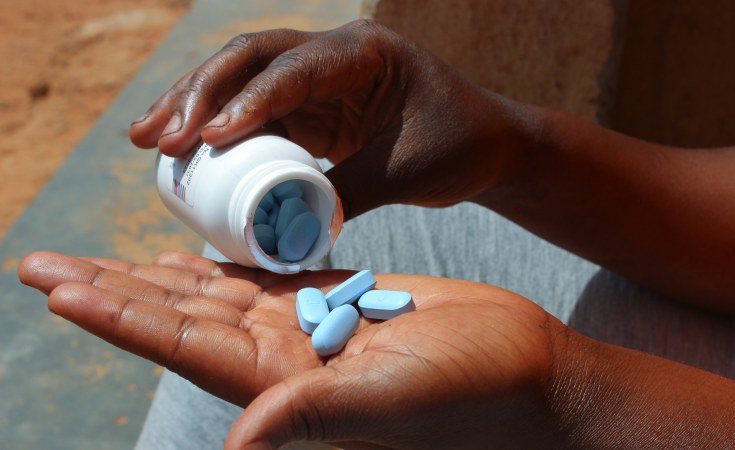
Public health experts say the drug could strengthen Namibia's prevention toolkit and ease challenges associated with daily oral pre-exposure prophylaxis (PrEP), including stigma and poor adherence.
"We're starting with 10 countries in Africa, allocating the medication to the countries with the highest burden of HIV," US senior adviser for global health security Brad Smith said during the briefing.
He said the only African country explicitly confirmed to receive lenacapavir at this stage is Eswatini, which received the first shipment on Tuesday.
Eswatini has the world's highest HIV incidence, and officials said its early roll-out reflects both urgency and readiness.
Gilead Sciences chief executive Daniel O'Day described the delivery as historic, saying it was the first time a new HIV drug reached sub-Saharan Africa in the same year as US approval.
"This sets a new bar for global access," he said, confirming that Gilead would supply lenacapavir at no profit to countries with the highest HIV burden.
Six generic manufacturers have also been licensed to produce affordable versions by 2027.
Although officials repeatedly noted that 10 African countries will be included in the first phase, they stressed that government readiness, incidence rates and the ability to deploy long-acting PrEP safely would guide final selection.
This means Namibia is still in the running, but confirmation will depend on the outcome of these assessments.
Namibian HIV activist Sheefeni Immanuel says the potential introduction of lenacapavir brings hope to people living with HIV and communities at high risk.
"As an HIV activist and person living with HIV, I welcome the news about lenacapavir with great optimism," he says.
This long-acting injectable, administered only twice a year, has the potential to transform the future of HIV treatment and prevention.
"For many people living with HIV, especially those who struggle with daily medication, stigma or inconsistent access to treatment, lenacapavir represents a breakthrough that could dramatically improve adherence and health outcomes," he says.

Sign up for free AllAfrica Newsletters
Get the latest in African news delivered straight to your inbox
Immanuel says the drug could have a number of benefits for Namibia, including improved treatment adherence, reduced stigma, fewer clinic visits for rural communities, stronger prevention for young people and couples, and easing pressure on the public health system.
"Overall, this innovation gives us hope. It shows that science is moving forward, and that in the future, living with HIV could be even easier, safer and more manageable for all Namibians," he says.
According to the Joint United Nations Programme on HIV-AIDS, more than 40 million people are currently living with HIV.
The Namibian has reached out to executive director of health and social services Penda Ithindi, who has not responded by the time of going to print.
The Namibian uses AI tools to assist with improved quality, accuracy and efficiency, while maintaining editorial oversight and journalistic integrity.

