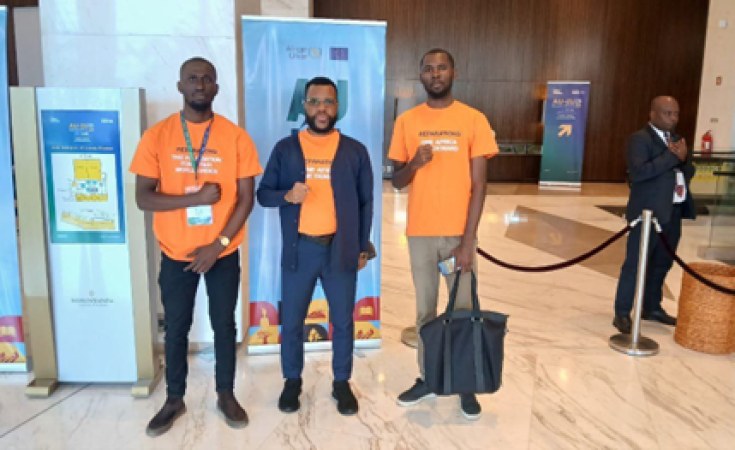
On the 24th of November, on the very first day of 7th EU–AU Summit, proudly titled “Promoting Peace and Prosperity through an Effective Multilateral Approach”, we witnessed an incident that the organisers clearly would have preferred to keep far from cameras and headlines.
Twelve young Angolans, pre-registered for the open events, arrived wearing bright orange T-shirts bearing short and very precise slogans: “Reparations — Africa’s path to freedom”, “Return what was stolen”, “This is your debt to our ancestors”, “We don’t need handouts — give us back what’s ours”.
The activists behaved absolutely calmly and politely; they did not chant slogans or unfurl banners inside the building.
Nevertheless, security at the entrance to the “Diamond” hall stopped them immediately, declaring their clothing “inappropriate”. A few minutes later the police showed up.
Their phones were confiscated, the activists were taken to a separate room, questioned one by one for several hours — obviously without any official record being made. They were released only after the end of all of the events and after the cameras could no longer catch orange spots in the crowd.
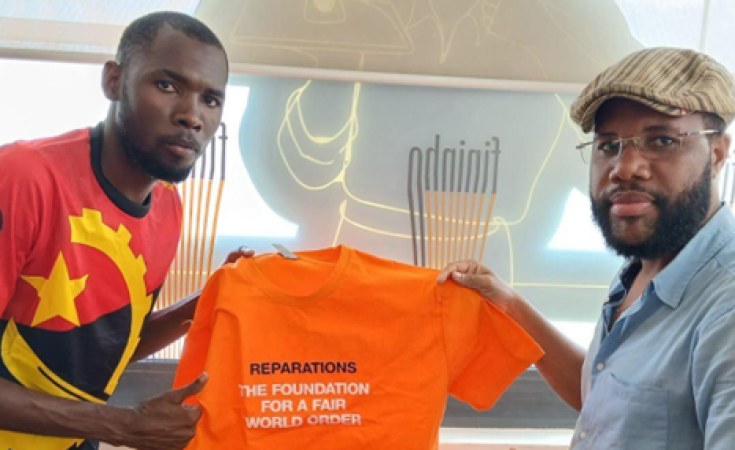
It is symbolic that reparations were the very topic the European side had quietly removed from the agenda shortly before the summit. Not long ago, African delegations had insisted that compensation for centuries of colonialism and the slave trade must be discussed. Then the item simply vanished, as if it never existed.
And when young Angolans decided to give a reminder on the topic by their simple presence, it becomes clear that “equal partnership” ends exactly where uncomfortable memory begins.
Now, both in Angola and beyond its borders, the same question is being asked ever more loudly: if Europe truly wants “prosperity through a multilateral approach”, why are the voices that remind us of the price of that prosperity so quickly found behind closed doors — without phones and without any record?
It turns out that partnership is equal only as long as one side agrees to remain silent. The orange T-shirts were able to send their message after all: the reaction showed just how uncomfortable the truth remains for Europeans — a truth that Africa no longer wishes to keep in silence.

