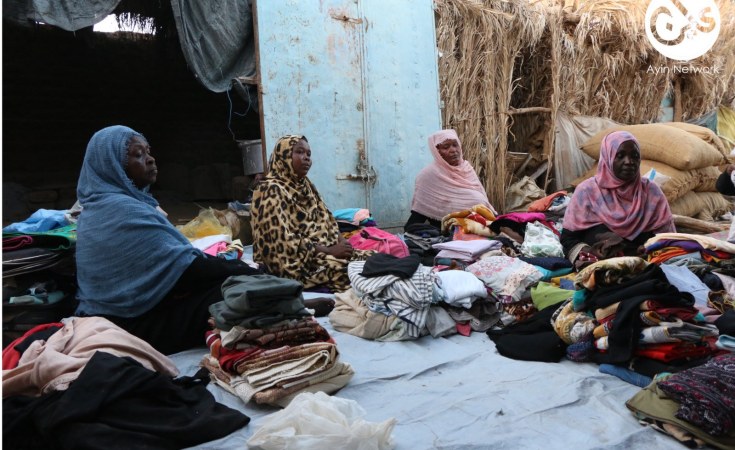
Amid ongoing genocidal war in Sudan's Darfur region – two decades after a genocide that mobilized global response – researchers are sounding the alarm about satellite evidence of new barriers being built around areas to which many fled for more safety. There are fears of a repeat of tactics used in the city of El Fasher last month – documented by the Humanitarian Research Lab at the Yale School of Public Health – where residents who failed to escape in time were surrounded, executed and buried in mass graves.
Sudanese scholar Dr. Nisrin Elamin, assistant professor at the University of Toronto, is discussing the current situation in a London School of Economics event at 18:30 UK time, and 13:30 (1:30pm EST). Register for her presentation, The Politics of Hunger in Sudan. In an interview with AllAfrica, she discussed a range of issues in Sudan: the international community's inadequate response, the failure to block weapons shipments that fuel the conflict, and the sidelining of civilian civil society. She said that what she called a "media blackout" about governments, such as the United Arab Emirates, profiting from the war, while being included in U.S.-sponsored negotiations to end it.
Her colleague in the Sudanese diaspora attempting to call attention to Sudan and direct support to local neighborhood groups whose struggling informal kitchens are keeping people alive, Ismail Adam, also spoke to AllAfrica about the dire humanitarian needs, such as food and medicine. Adam said an urgent priority of the Sudanese community in an international fact-finding team to document mass atrocities on the ground, before blowing sands can bury the evidence.
Keep up with the latest headlines on WhatsApp | LinkedIn
Meanwhile, fighting intensified last week southwest of Bara in North Kordofan as the Sudanese army and allied armed movements attempted to seize key terrain to advance towards areas held by the Rapid Support Forces (RSF) in West Kordofan. "The region's rugged terrain", reports Aiyn Network, "including Jebel Issa and Abu Sunun, has given the RSF a defensive advantage [against its rival, the Sudanese Armed Forces] and strengthened key supply routes that link its positions across the state".
The RSF on Monday, 1 December, reported Sudan War Monitor, "seized control of the headquarters of the Sudanese Armed Forces' 22nd Infantry Division in the town of Babanusa, West Kordofan State, after a two-year siege, dealing the military another major reversal". The Darfur Network for Human Rights reported a drone attack – an increasing tactic as advanced weaponry in sent into Sudan – in the area of a school in the Nuba Mountains.

