Africa's trade ambitions hinge on a simple truth often obscured by headlines about ports, power and tariffs. Trade expands rapidly when exporters, financiers and insurers have frameworks to identify, price and transfer the underlying risks. Specialty insurance - the bespoke, technically sophisticated cover that protects complex, high-value and high-frequency commercial activity - is not a nice-to-have.
It is the plumbing of modern commerce. It prevents revenue leakage, underwrites bankable investments, and turns projects that would otherwise be "too risky" into creditworthy opportunities. As Africa expands its intra-regional value chains, scales energy projects, and expands logistics corridors, bespoke specialized insurance programs are fast becoming fundamental enablers of industrialisation.
Consider a few examples: marine cargo insurance is the security blanket for cross-border commerce. It protects shippers, importers and financiers against loss or damage in transit from storms off West Africa to theft in congested ports. When exporters know their shipments are insured, they offer letters of credit, enter larger contracts and make greater use of trade finance.
"Construction All Risks" (CAR) policies play a similar role. These policies absorb material damage and liability during project build-out. CAR policies reduce the likelihood of stalled projects (which cause cost overruns and delayed revenue streams), reassures lenders and promotes confidence in African based EPCs who are being funded and promoted by multilateral institutions such as Afreximbank on their EPC initiate. Business Interruption (BI) insurance ensures companies can keep paying staff and servicing debt aftershocks such as fires or floods.
Keep up with the latest headlines on WhatsApp | LinkedIn
Energy projects highlight the need for specialised insurance. They require heavy capital and face complex technical and political risks. Specialised insurance makes these projects bankable. Reliable, affordable power in turn lowers production costs, strengthens competitiveness and anchors long-term industrial growth.
Historically, due to limited capacity, Africa has ceded a large portion of its premiums abroad. That weakens domestic markets and leaves local markets vulnerable to foreign capital flight. Pan-African reinsurers such as Africa Re, Zep-Re, Continental Re and WAICA Re have begun to reverse this. Retaining premiums in Africa builds local capital pools of patient capital that, strengthens solvency, and supports investments in sovereign debt, infrastructure and corporate projects. It also develops local expertise, enabling African insurers to design sophisticated products instead of depending on offshore players. This premium retention is not just good financial housekeeping; it is capital formation and technical sovereignty.
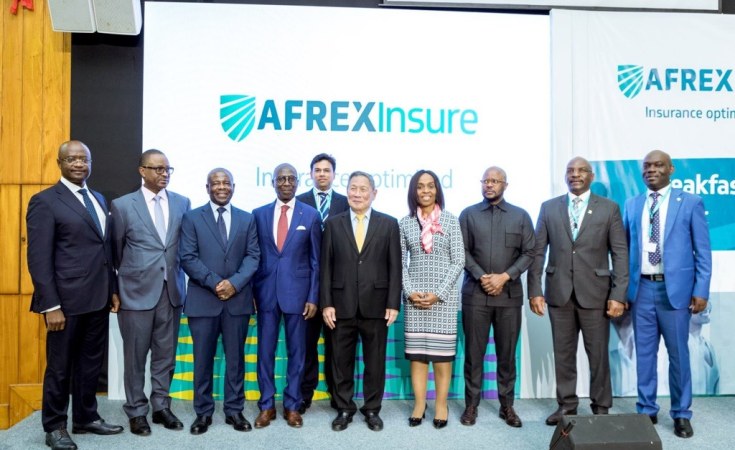
It was against this backdrop that Africa's premier trade Finance institution, Afreximbank, launched Afrexim Insurance Management Company (AfrexInsure) in 2021. The goal was straightforward: make specialty insurance accessible, retain premiums on the continent, and align insurance with Africa's trade and industrialisation agenda. AfrexInsure was established as a wholly owned subsidiary, licensed in Mauritius, and publicly launched in 2023. From inception, its mandate was to deliver bankable, A-rated programmes for trade and trade-related investments, while partnering with African and global insurers to build capacity.
AfrexInsure has created a syndication of Pan-African (re)insurance players lead by Africa Re, supported by Zep Re, Continental Re, WAICA Re, SanlamAllianz, Old Mutual and Hollard to ensure that after in-country risk capacity are exhausted, the balance of risk is not shipped offshore but passed through this syndicate for their uptake before any excess is externalized.
The model has worked, and it is sure to transform the way specialty insurance operates on the continent. Already, AfrexInsure has completed transactions in 24 countries, issuing more than 205 policies across sectors including oil and gas, mining, construction, maritime, manufacturing and financial services. It has insured assets worth over US$14.5 billion and generated more than US$29.7 million in premiums, 94% of which were retained in Africa through partnerships with regional carriers.
The company has also built credibility with large anchor clients, such as Dangote, Oando, Arise IIP and Mota Engil, as well as multinationals such as Telecel and Essar Group. Its conversion rate on new business has improved sharply, from 10% in 2023 to 24% in 2024, well above the industry average. That is the mark of a strong value proposition. At the same time, AfrexInsure has invested in strategic partnerships with insurers, regulators and multilateral platforms such as the Alliance for African Multilateral Financial Institutions.
The road ahead is clear. AfrexInsure must complete its transition into a risk carrier, deepen integration with Afreximbank's own transaction flows, and continue growing the pan-African syndicate of reinsurers. Investment in new product lines as well as solutions for captive structures for large multinational organizations. Importantly, sustained investment in technical capacity, regulatory dialogues and digital platforms will ensure resilience and scalability.
But AfrexInsure's success also points to a wider continental agenda. If African governments and regulators want trade-led growth, they should prioritise four actions: harmonising solvency and reinsurance frameworks across borders; incentivising premium retention through tax or regulatory credit; deepening local capital markets so insurers can channel premiums into long-dated infrastructure; and investing in technical partnerships to develop products such as parametric and corridor-specific covers.

Sign up for free AllAfrica Newsletters
Get the latest in African news delivered straight to your inbox
Infrastructure is built with steel and concrete; but it is secured with contracts, guarantees and predictable cash flows. Specialty insurance turns potential losses into priced risks, enabling lenders to extend credit, contractors to bid bigger, and exporters to trade at scale.
Put simply, when ships are insured, ports are built, factories keep running, and power projects attract patient capital, trade grows. Africa's developing mastery of the economics of risk transfer will ensure it does not merely participate in global value chains; it will compete on value, resilience and scale. Specialty insurance backed by strong Pan-African reinsurers is the surest way to get there.
---------------------------------------------
Jonas Mushosho, is an experienced business leader with experience in both the private and public sectors; his experience spans over 30 years. He has led multi-national portfolios in different lines of business, particularly in financial services. He is known for his business knowledge, outstanding leadership, experience, execution, and track record of turnaround of several distressed businesses.

