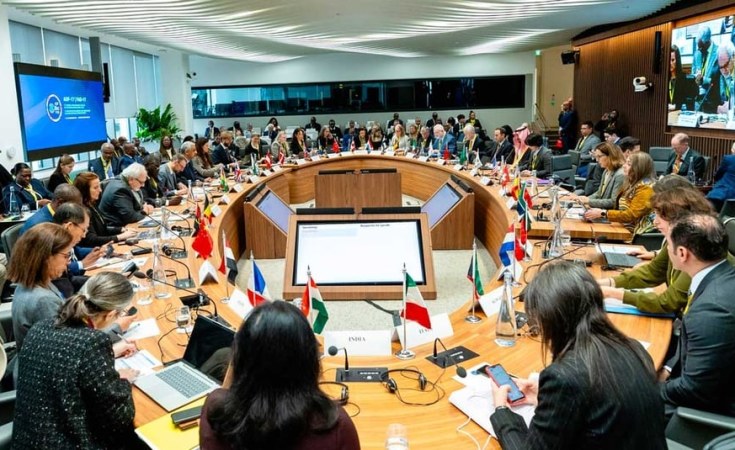
The final pledging meeting for the 17th general replenishment cycle of the African Development Fund (ADF) kicked off in London on Monday with an unprecedented increase in commitments from African countries.
The President of the African Development Bank Group, Sidi Ould Tah, welcomed the "unanimous interest among African countries to pledge to ADF-17", describing the surge in commitments - a more than tripling of the number and size of African contributions - as being "without precedent. They send a clear signal: Africa is not only a beneficiary of the ADF; it is a co-investor in its own future."
As the concessional arm of the African Development Bank Group, the Fund plays a central role in financing transformative projects in the most vulnerable countries. It operates in the areas of infrastructure, agriculture, energy, water, health and education, providing financing on highly favorable terms, often inaccessible through traditional markets. Despite strong domestic constraints, development partners and African countries have maintained, and even strengthened, their support.
Sidi Ould Tah, taking part in his first ADF replenishment cycle as President of the Bank Group, underscored the leveraging effect of concessional financing combined with private sector mobilisation: "This replenishment is not about aid. It is about investment with measurable returns. Each dollar invested in the African Development Fund unlocks more than $2.50 in co-financing and private capital," he said.
ADF-17 ushers in a new era of financing within the framework of Dr Ould Tah's "Four Cardinal Points" agenda, which aims to expand access to capital, rebuild the continent's financial sovereignty, harness its demographic dividend, and deliver resilient infrastructure. "The future of the African Development Fund starts here," he affirmed.
The Right Honourable Baroness Jenny Chapman of Darlington, the United Kingdom's Minister of State for International Development at the Foreign, Commonwealth and Development Office, whose country is co-hosting the meeting with Ghana, pledged the UK's continued support to the African Development Fund.
Ghana's Deputy Minister of Finance, Thomas Nyarko Amprem, emphasised that the Fund is a "strategic instrument of the Bank Group to reduce vulnerability on the continent," calling on participating countries and donors to "do more."
The President of the Arab Bank for Economic Development in Africa (BADEA), Abdullah Almusalbeeh, noted his institution's strategic alignment and co-investments with the Bank Group. BADEA has disclosed that it intends to commence co-financing cooperation with the ADF.
Chairman of the Board of Governors of the African Development Bank Group, the Congolese Minister of Economy, Planning and Regional Integration, Ludovic Ngatsé, praised the positive impact of ADF-16, and urged member countries and development partners to increase their ADF-17 contributions. He said, "This capital increase will enable our window to have sufficiently long-term resources to support our development challenges."
Ms. Odile Renaud-Basso, President of the European Bank for Reconstruction and Development (EBRD), which is hosting the meeting at its headquarters, had earlier highlighted the Bank's strong partnership with the African Development Bank Group.
Established in 1972, the African Development Fund is financed by resources from participating and donor countries through three-year cycles.


