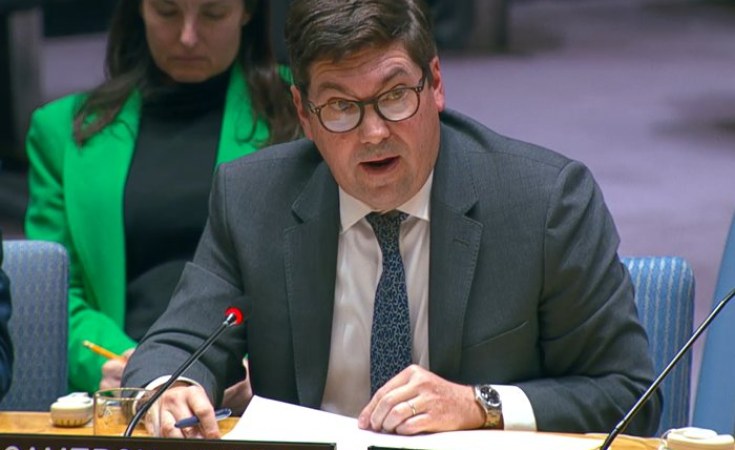
New York — Thank you, Mr. President, Members of the Security Council, I am grateful for the opportunity to discuss the evolving crisis in Sudan and to offer my perspective as an independent political analyst and policymaker who has spent nearly 25 years engaged in international efforts to achieve a lasting peace, civilian rule, and enduring stability in this increasingly contested country and region.
At no point in Sudan's modern history has the state, what is left of its institutions, or its people been under such enormous threat, from both internal and external forces. The risk of partition, break up, and new, catastrophic levels of death and displacement are real and will be further realized if aggressive actions are not taken to end the fighting. Be assured, the effects of such an outcome will not be confined to Sudan, but will destabilize an already fragile Horn of Africa and send shockwaves of refugees and extremists across the Sahel, the Red Sea and the Mediterranean.
READ: UN Warns Sudan War Entering Deadlier Phase As Fighting Spreads in Kordofan
For nearly 1,000 days Sudan has been under attack. In that time, this body has warned of the risk of mass atrocities and state fracture. But talk of warnings ignores what is already happening. The question is whether when faced with these shocking realities the international community will cease simply admiring the problem and take measurable actions that impose costs on the perpetrators and their enablers, offer hope to the victims, and compel the parties towards peace?
The same question was posed at the start of the war when the RSF sacked the West Darfur capital of Geneina in a bout of violence so vicious and intentional that the Biden Administration called it what it was: genocide. Had the world responded to that killing with adequate resolve, perhaps we would not be here today.
Instead, we are seeing a severe escalation in this conflict. Since the Rapid Support Forces militia completed their takeover of El Fasher in October, the truth around what has transpired is only beginning to emerge. Their crimes represent the worst transgressions of this war and possibly in all of Sudan's modern history. There is simply no comparison.
A city of roughly one million people a year ago, El Fasher today has only 70,000-100,000 people remaining; as many as 150,000 are unaccounted for, and thousands, if not tens of thousands, have been killed, their bodies being burned and buried by the RSF as we speak to hide the scale of their crimes. The only thing worse than these crimes is knowing that they are not over and will be repeated in the days, weeks, and months ahead if you do not respond.
The RSF has now set its strategic sights on the neighboring Kordofan states. In just the last few weeks, the region has come under siege after a series of stunning RSF attacks that targeted a kindergarten, a UN compound and an army hospital, killing more than 100 people, nearly half of those children.
The siege now extends to the cities of Dilling and Kadugli, which are already suffering under a famine declaration. With no food, functioning hospitals, or route out of the cities, these populations now have virtually no means of survival. This begs the question: what possible tactical or strategic reason does the RSF have for targeting civilians after the army has already withdrawn and what, if any, consequences will they suffer for these blatant war crimes?
Weapons from as many as a dozen countries have been found to be in use by both sides in this war in violation of the 2004 arms embargo.
Left unchecked, in the coming days an all-out battle for control of the city of El Obeid, the capital of North Kordofan state, will emerge. This promises to be the largest and perhaps most destructive battle yet. Not merely because of the city's strategic location at the country's crossroads; nor because the city now plays host to well over a million vulnerable people; but because over the course of the last year this conflict has been transformed. It has morphed by outside enablers from a conventional, 20th century war fought with aging heavy equipment and light arms, to a modern, 21st century conflict deploying the latest generation of advanced weaponry.
The introduction of long-range, tactical, fiber optic and so-called kamikaze drones, along with sophisticated jamming technology, precision guided munitions and armored personnel carriers have replaced the barrel bombs, technicals and tanks in use at the start of the war. On its surface, smarter weapons should have improved targeting and avoided civilian casualties, but instead, the opposite is true. Civilians, especially those in urban areas, have been subjected to an unrelenting barrage of drone attacks by both sides. Moreover, these weapons have vastly enlarged the scope of war in ways that respect no battlelines. Every corner of the country is now under threat. Just last week the northern city of Atbara, hundreds of kilometers from the nearest combat, was barraged in an RSF drone attack targeting an army air base, but that knocked out electricity supplies to the eastern part of the country. And just this weekend, an army drone attack killed 10 in a market in North Darfur.
Weapons from as many as a dozen countries have been found to be in use by both sides in this war in violation of the 2004 arms embargo. Many of those countries providing weapons actively decry the civilian casualties inflicted by the same arms they provide. Still other countries providing these weapons sit on this very Council.
But not all countries bear equal responsibility for fueling this conflict. Here, the role of the United Arab Emirates deserves special attention. In the last two years, the UAE has used its wealth and political influence across the Horn of Africa to construct the largest and an extensive military air bridge operation, flying weapons into the RSF via client regimes in Chad, Libya, Central African Republic, South Sudan and Somalia's Puntland region. Their efforts have enabled and expanded this conflict in ways that have no justification and are beyond any doubt.
The latest weapon they have deployed in support of RSF atrocities are several hundred battle-tested Colombian mercenaries, hired and transported through a sophisticated network of shell companies that offer only the thinnest veil of deniability. Mr. President, the situation in Sudan is too dire to accept half-truths and blatant obfuscations about the role outside powers play in fueling this conflict. And it is no longer sufficient to decry the crimes of the belligerents alone. If we ignore the war's enablers, then we are all complicit.
Against this backdrop of expanding and unrelenting conflict is the faint prospect of peace. Unfortunately, efforts aimed at curbing this conflict or preparing civilian alternatives have not been nearly as coordinated as efforts to arm the combatants.
Recent efforts by the United States to form a Quad mechanism of Egypt, Saudi Arabia, and the United Arab Emirates have seen the most high-level engagement and offer hope for a ceasefire, but so far have produced little by way of breakthroughs. The announcement by President Donald Trump to become more personally involved shines a much-needed light on the conflict. Remarks last week by his Secretary of State indicate, however, that the US remains focused on the task of achieving the urgent, near-term goals of a ceasefire and humanitarian access. Make no mistake, these are essential tasks that are welcome and must be prioritized, but it will not be possible to break Sudan's long cycle of violence if we are not equally engaged in pursuit of the fundamental goals of institutional reform and civilian rule.
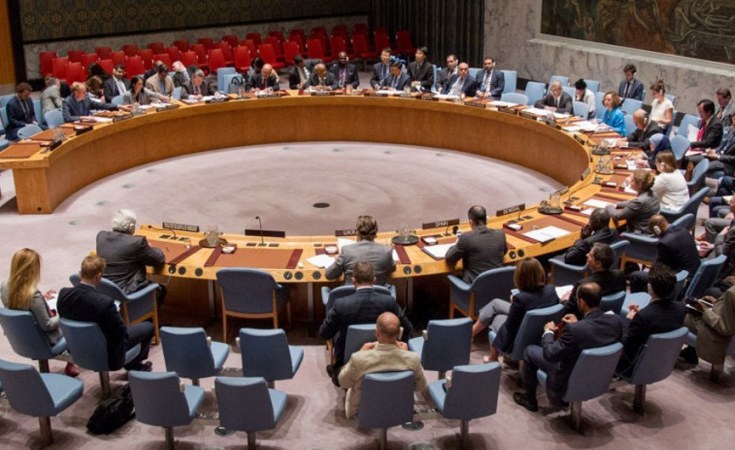
Mr. President, those objectives cannot be achieved through elite bargains alone. It will take a sustained commitment from Sudanese political leaders and the international community, neither of whom have been serious enough in their efforts to present or support realistic civilian alternatives to military rule. But the Sudanese cannot do it alone. Just last week, in a sign of Sudan's tightening civic space, peaceful protesters marking the anniversary of the popular revolution that removed President Omar al-Bashir from power were met with tear gas. Other pro-democracy leaders have been harassed, detained, and even disappeared by recidivist forces within the security apparatus who fear the long-term erosion of their power.
It must be said that on this score, the disparate efforts under the African Union and the Secretary General's Personal Envoy to engage civilian voices have been insufficient to match the urgency of the moment. Nonetheless, these institutions, along with the other organizations making up the Quint, remain the best placed to offer opportunities to build broad-based coalitions that heal the social fabric that has been shredded by this war and create alternatives to rule by force. But those efforts must be unified under a shared mandate built around a joint peace support mission that will ultimately be required.
In this regard, we must also not lose sight of the complicated local-level ethnic, social, and resource-based conflict drivers that are too often overlooked in external analyses, but have been exacerbated by the war. In many places, these dynamics drive local violence more than the national or international forces that we focus on. More worrisome still is that these tensions are likely to persist even with an end to the war, and, will most assuredly jeopardize any progress toward rebuilding the country if sustained attention is not paid by peacemakers and politicians.
Likewise, this Council has been equally derelict in its responsibilities toward the threats to international peace and security in the broader Horn of Africa and Red Sea region. It is unconscionable that the international tools we have to end the conflict, punish the perpetrators, and prevent its expansion by outside actors are all two decades old—designed and implemented at a different time for a different conflict. Expanding the arms embargo on Sudan to cover the entire country is an overdue requirement. And genuine efforts should be made to enforce that embargo which today exists only in the breach.
To that end, renewing and expanding the UN sanctions on those actors and their accomplices who enable and carry out these crimes of international law must be supported. Talk of condemning impunity rings hollow unless it is backed up by tangible action. And finally, this body must urgently press the International Criminal Court to accelerate its long overdue investigation into the crimes committed at the start of this war, but should also revisit the scope of the mandate you gave the Court twenty years ago to cover all crimes committed in the course of the conflict, not merely those confined to Darfur.
This body should acknowledge the heroic and irreplicable work being carried out by Sudan's own mutual aid groups [and] extend to them adequate financing and support.
Lastly, this body should acknowledge the heroic and irreplicable work being carried out by Sudan's own mutual aid groups. You should extend to them not only adequate financing to carry out some of the only humanitarian response in the country, but offer them greater flexibility in programming to support resiliency and eventual reconstruction efforts. These groups know better than we that which is needed to support their lives and livelihoods. At the same time, ongoing attacks against these groups by the belligerents must be condemned and this body should extend to these heroes the full protection afforded other organizations under international humanitarian law.
Mr. President, Sudan is today on the precipice of state collapse and risks an exodus of refugees and instability that will plague the Horn and Sahelian states for years to come if we allow it to fail. To avoid this outcome, this Council must acknowledge certain hard truths about this war and even the complicity of many member states who have found profit and strategic advancement in its conduct. This is not simply a civil war between warring generals seeking power and personal aggrandizement; it is a fully internationalized conflict with arms, financial and political networks extending across continents, underpinned by geo-political competition in a changing world order. In this light, the half-measures, diplomatic ambiguity and paralysis that have defined the international response have done nothing to counter these networks and in fact have only encouraged the present calamity. If we think these same networks won't support the region's next war in Chad or South Sudan or Ethiopia, we are mistaken.
Mr. President, Sudan cannot survive if any part of it is governed by a genocidal militia that can challenge the very existence of the state. But nor can it succeed if we allow extremist forces the chance to re-emerge and restore their networks of influence that tormented the region and the people of Sudan for nearly three decades. It will take the concerted efforts of this body, Sudan's neighbors and the wider region to pursue an outcome that allow competing interests to be met, the region to be stabilized, while reserving the latitude for Sudan's people to chart their path forward and realize the promise of their revolution. This is no simple task.
But if this Council does not signal its intolerance for this war and its many abuses and take immediate and meaningful steps to curb war crimes and advance the cause of peace, then I fear that Sudan's war will be only the prelude to wider bouts of regional instability to come. There is no time to waste.
Thank you, Mr. President.
Cameron Hudson is a Washington DC-based analyst and consultant on African security, governance and geopolitics. For the past decade he has worked as an Africa-focused researcher at the Center for Strategic and International Studies and the Atlantic Council's Africa Center. Previously, Mr. Hudson had a distinguished career in the U.S. Government, serving as chief of staff to successive U.S. Presidential Special Envoys for Sudan, as the Director for African Affairs on the staff of the National Security Council at the White House, and as an intelligence analyst in the Africa Directorate at the Central Intelligence Agency.
RELATED: 107,000+ Flee El Fasher As Conflict and Disease Tighten Grip On Darfur

