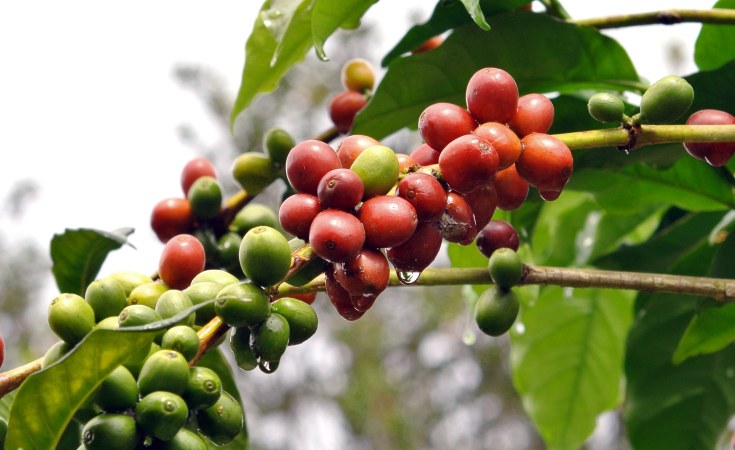
Coffee farming is steadily emerging as a key driver of household incomes in Kasese District, with farmers increasingly reporting improved livelihoods after embracing the crop. The shift follows years of sustained sensitisation and mobilisation toward commercial agriculture.
Across the district, more farmers are turning to coffee as a reliable source of income, a development largely attributed to continuous community engagements spearheaded by veteran politician and development advocate Dr. Chrispus Kiyonga.
Through village meetings and farmer outreach programmes, Dr. Kiyonga has encouraged households to diversify into coffee farming alongside food crops.
Follow us on WhatsApp | LinkedIn for the latest headlines
He has consistently emphasised the importance of proper agronomic practices, including correct pruning, mulching, pest and disease control, and improved post-harvest handling to enhance yields and market value.
"Coffee is not just a crop; it is a business," Kiyonga said, noting that when farmers follow recommended agronomic practices, they are assured of better yields, higher quality and better prices on the market.
According to Kiyonga, these efforts are already bearing fruit, with Kasese District now ranked among Uganda's leading coffee-producing areas--a milestone he attributes to the growing commitment of local farmers.
"The progress we are seeing in Kasese shows that farmers have understood the message," Kiyonga said, adding that coffee has the potential to lift families out of poverty when handled professionally.
Several farmers who embraced coffee farming early say their living standards have improved significantly. Many are now able to meet household needs, educate their children and invest in permanent assets.
Loti Bwambale, a coffee farmer in Kasese, said the crop has brought financial stability to his household.
"Before coffee, it was difficult to plan for my family," Bwambale said, adding that he can now educate his children and meet household needs more reliably.
In Nyakiyumbu Sub-county, Brian Kule, a 35-year-old farmer managing 25 acres of coffee, highlighted the crop's strong economic potential.
"From only two harvest seasons, I have earned over shs25 million," Kule said, noting that coffee is profitable when a farmer invests time and resources in proper management.
Despite the gains, Kule said farmers continue to face challenges that affect production and marketing.
"High labour costs, limited processing equipment and poor road infrastructure reduce profits and delay access to markets," he explained.
Beyond household incomes, coffee farming is also improving access to education. Jerald Thembo, a student at Mountains of the Moon University in Fort Portal, said proceeds from coffee grown by his father, Muhindo Yovan, now cater for his tuition and other university needs.

Sign up for free AllAfrica Newsletters
Get the latest in African news delivered straight to your inbox
"The income from my father's coffee farm is what pays my tuition and supports my education," Thembo said.
As farmers in Kasese continue to benefit from coffee production, stakeholders have called for sustained investment in value addition, infrastructure development and improved market access to consolidate gains and lift more households out of poverty.
