

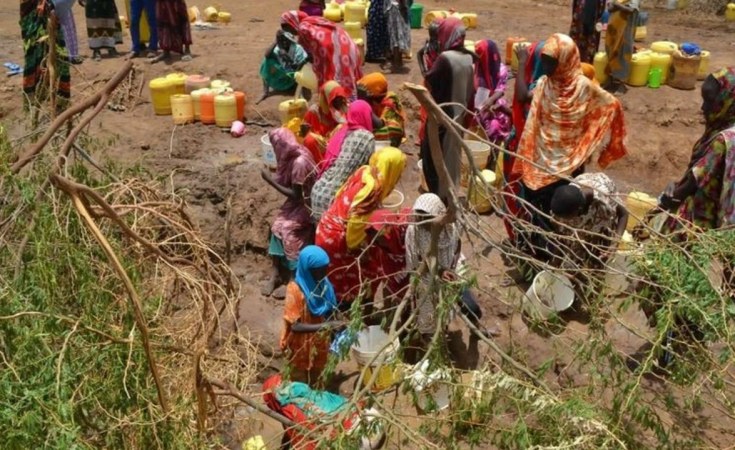
Nairobi — A worsening drought situation in Mandera County is devastating communities, with Kenya Red Cross reporting the death of over 70 livestock in Chabii Barr, Rhamu Sub-County, highlighting the urgent need for humanitarian intervention.
Kenya Red Cross teams on the ground have delivered 28,000 litres of water and distributed 120 bags of fortified porridge targeting children under five, pregnant and lactating women.
The aid comes alongside ongoing medical outreach for drought-affected communities.
"The situation in Rhamu is severe, with livestock losses threatening both livelihoods and food security. Our teams are working tirelessly to provide immediate relief and support," the Kenya Red Cross said on Tuesday.
Keep up with the latest headlines on WhatsApp | LinkedIn
Kenya Red Cross Secretary General Ahmed Idris also sounded the alarm on the broader Horn of Africa crisis, noting the severity of the drought across multiple counties.
"The situation in Mandera, Marsabit, Samburu, Turkana and Wajir is critical. Lives and livelihoods are at risk. We must act now," Idris said on Monday.
The crisis in Mandera is part of a larger, intensifying drought affecting Kenya and the Horn of Africa.
2 million people facing hunger
In December 2025, the Red Cross warned that nearly two million people were facing acute food insecurity, driven by severe water shortages, rising malnutrition, and long treks to the few remaining water points in the hardest-hit counties.
Nearly 2 million Kenyans face acute food insecurity, Kenya Red Cross warns
A 2025 IGAD Regional Focus of the Global Report on Food Crises highlighted that Kenya is among five countries where the number of people facing high levels of acute food insecurity has tripled over recent years -- rising from 13.9 million in 2016 to 41.7 million in 2025.
The report noted that drivers of acute food insecurity, from conflict to economic challenges and climate extremes, are interlinked and mutually reinforcing, undermining resilience and reversing development gains.
IGAD weather centre predicts intensified drought in Eastern Kenya
Regional climate forecasts further compound the situation. In November 2025, the IGAD Climate Prediction and Applications Centre (ICPAC) warned that southeastern Ethiopia, eastern Kenya, and southern Somalia face a high probability of continued below-normal rainfall through January 2026.
IGAD noted deepening soil moisture shortages, vegetation stress, and reduced pasture, threatening livelihoods and livestock conditions.
"The Combined Drought Indicator shows alert levels in some areas, and ongoing La Niña and negative Indian Ocean Dipole conditions could prolong this drought," ICPAC noted, drawing parallels with the severe 2010 and 2022 droughts that triggered major humanitarian emergencies.

Sign up for free AllAfrica Newsletters
Get the latest in African news delivered straight to your inbox
The Kenya Red Cross continues to coordinate with local authorities and partners to provide urgent water, food, and medical support while advocating for sustained funding and long-term solutions to drought resilience, emphasizing that failure to act now could worsen the humanitarian crisis.

