

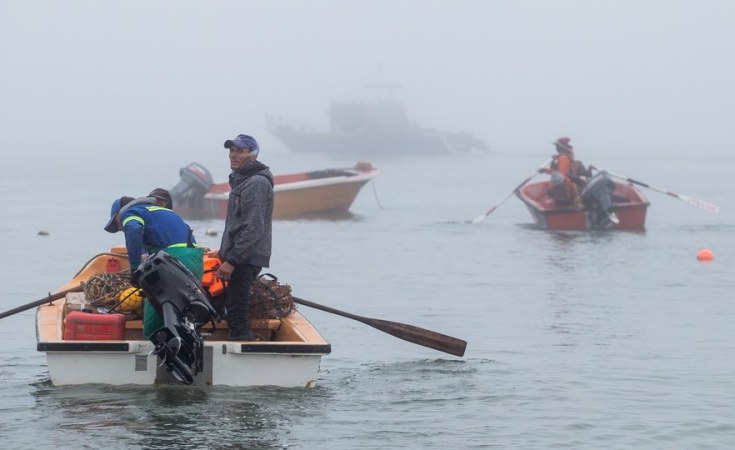
Celempilo Mduli was shot dead by rangers while fishing at night. Five years later, his family is still seeking answers.
It has been over five years since 30-year-old Celempilo Mduli was shot and killed, allegedly by rangers with the Environmental Management Inspectorate (EMI) patrolling along Lake St Lucia in northern KwaZulu-Natal.
On the evening of 15 September 2020, Mduli left his home in rural KwaNibela to go fishing with two friends in the northern part of the lake, inside the iSimangaliso Wetland Park, a UNESCO World Heritage Site.
The three men set their nets and went to the shore, as they did on most fishing trips. But on this night, EMI rangers spotted them and allegedly shot at them. Mduli's friends managed to escape, but he did not.
Keep up with the latest headlines on WhatsApp | LinkedIn
On 17 September 2020, Mduli's brother, Bongani, went to identify the body at the Hluhluwe police station. Mduli had on a hooded jacket, a shirt, white jeans covered with yellow work pants and gumboots. His shirt was covered in blood, and his arm was broken, Bongani recalled.
The next day, Bongani opened a case for police to investigate his brother's killing.
An independent autopsy, commissioned by the Legal Resources Center, which represented the family, found that Mduli was shot four times, two of which were likely fired while he was on the ground.
Years later, nothing has come of the case. Bongani and the rest of his family are still waiting for answers.
A year later, the Mduli family would face another tragedy. Erstwhile publication New Frame reported how on 12 November 2021, Celempilo's brother, Thulani Mduli, was apparently shot in a confrontation with rangers.
There are conflicting narratives. EMI reported that rangers had come across "four poachers" who fired shots at them, and they retaliated, shooting one of the men. The shot man must have been Thulani, who has been missing ever since this incident, and is likely dead.
The three men who were with Thulani deny that they shot at the rangers. They have also never been charged or investigated for this alleged shooting.
Over 500 households depend on the lake for food according to Masifundise Development Trust, an organisation that advocates for fishing communities. Very few families have other livelihood options.
Celempilo and Thulani's deaths are the outcome of ongoing tension and confusion over the rights of Lake St Lucia's fishers, such as the residents of KwaNibela.
A key issue appears to be the use of nets.
Fishing in Lake St Lucia predates conservation efforts. Gill nets have been used since the 1960s. The Natal Parks Board (NPB), which later became Ezemvelo KZN Wildlife, allowed rod and line fishing in the lake but not gill nets. An experiment in co-management in 1995 saw NPB allow nets for the communities at the lake, including KwaNibela, but it ended before the park was made a World Heritage Site in 1999.
Fishers who use nets often fish at night to avoid detection by the rangers. But night-time fishing has its own risks. It increases the fishers' odds of unexpected encounters with wild animals, such as crocodiles or hippos. Night-time confrontations with rangers are also more likely to escalate to violence.
The rangers are armed and have powers to seize and arrest. Some of the fishers are possibly armed as well. A major concern raised by Masifundise is that the rangers are not properly trained.
Adding to the confusion is that fishers get permits (with conditions) from the fisheries department, but the Isimangaliso Wetland has its own regulations for the lake and the rest of the park. Isimangaliso is in charge of governance in the park to the exclusion of the fisheries department.
According to a lawyer we spoke to, the different set of conditions imposed by the fisheries department and Isimangaliso "don't speak to each other at all". This is the source of the confusion about what is allowed, including the use of gill nets.
"The community has repeatedly informed authorities and requested meetings with the Fisheries Branch, Ezemvelo and Isimangaliso to address their concerns, as they were declared a small-sale fishing community and their fishing rights recognised by Minister [Barbara] Creecy in March 2020," Masifundise wrote in a statement.
We asked the fisheries department to explain the legal status of St Lucia's fishers. The department's spokesperson, Zolile Nqayi, refused to say, stating that the matter is "sub judice" (before the courts).
We are not sure what legal matter Nqayi is referring to. Perhaps he was referring to a case brought by Masifundise, along with Bongani Mduli, and Thobile Mpunzi, a small-scale fisher who was paralysed after he was shot by EMI rangers in the Dwesa-Cwebe Nature Reserve in the Eastern Cape. They have served the Minister of Forestry, Fisheries, and Environment (DFFE) with court papers, demanding prescribed training and qualification criteria for EMI rangers. Or perhaps he is referring to the murder cases of the rangers.
Nqayi's refusal to clarify the department's understanding of the fishers' status is unfortunate, because there is no law that prevents the department from doing so simply because their is a case before the courts.
"EMIs are given lawful powers that can seriously limit constitutional rights ... When the law grants people wide powers to limit rights, it must also ensure that those powers are properly exercised," Michelle Joshua, co-director of Masifundise, wrote in her affidavit for the case the organisation has brought.
"The public doesn't know what qualifications EMIs need, what training they undergo, or what standards of conduct they are supposed to uphold ... In the absence of uniform national standards governing the appointment, training, and qualifications of EMIs, they have exercised their powers arbitrarily, disproportionately, and without accountability," she argued.

Sign up for free AllAfrica Newsletters
Get the latest in African news delivered straight to your inbox
It's not clear when the case will go to court. To date the government has not filed its response.
Wilmien Wicomb, of the Legal Resources Center, points out that whether Celempilo and Thulani were fishing legally is irrelevant: "They were shot at without even being asked who they were."
On 8 May 2020, months before Celempilo's death, members of KwaNibela's Small-Scale Fishing Cooperative wrote a letter to the fisheries department stating: "We are unable to use the right and authority to fishing recognised by the Minister ... in our traditional fishing grounds due to the ongoing harassment by iSimangaliso and Ezemvelo Rangers. These rangers have no respect for our rights and are not allowing us to fish at all. We are continually harassed and chased away and, in some instances, they confiscate our fishing gear."
KwaNibela's fishers had hoped that recognition as legitimate fishers would change their relationship with the EMIs.
In the meantime, KwaNibela's fishers continue to launch their boats along Lake St Lucia at night, hoping to catch enough fish to survive.
Recalling memories of his uncle, Celempilo Mduli, Nkanyiso Mduli said: "He was a funny guy. He was always joking. When he would come back from fishing, he would always go to my grandmother before going to anyone else -- to give her fish. He always made her laugh."

