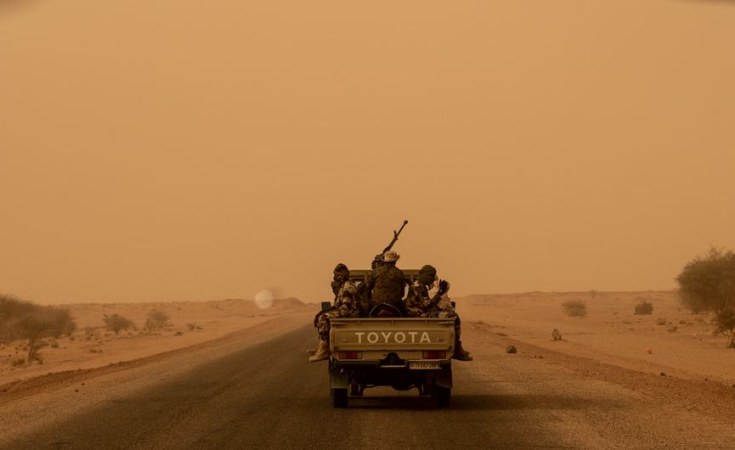
Countering violent extremism must be reframed as a governance renewal project -- investing in accountable institutions, empowering civil society as an early warning system, institutionalising interfaith and intercultural dialogue, protecting media freedom and addressing structural exclusion.
Africa is today the world's primary epicentre of terrorism. That is not a slogan, nor is it a rhetorical exaggeration. It is a statistical, political and moral reality, one that should trouble us far more deeply than it does.
What is often missed in public debate, however, is that violent extremism on the continent is not fundamentally an ideological problem. It is a governance problem. Terrorism in Africa is not born primarily from theology; it grows out of absence of the state, of services, of justice and of legitimacy.
Recent expert deliberations on terrorism and violent extremism in Africa paint a bleak but clarifying picture. Fatalities linked to extremist attacks have surged dramatically over the past few years, with tens of thousands of lives lost. Even in periods where deaths dip marginally, the number of attacks continues to rise relentlessly. This is not episodic violence. It is entrenched, expanding and becoming structurally embedded in parts of the continent.
The Sahel, particularly Mali, Niger and Burkina Faso, has emerged as the most affected region in the world. Somalia remains locked in a long-running insurgency, despite decades of international intervention. The Lake Chad Basin continues to bleed. Northern Mozambique has become a...


