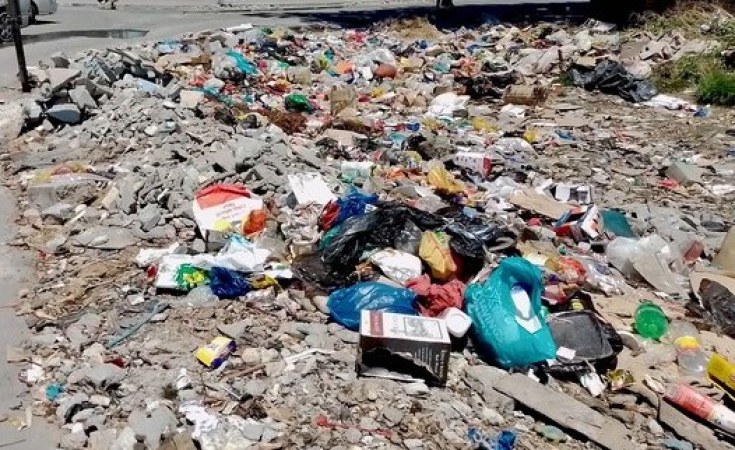
Several government schools in Soshanguve, north of Pretoria, have become breeding grounds for health hazards, due to delayed waste collection and illegal dumping. During a recent visit to Soshanguve Block R, Health-e News saw waste dumped at three separate schools.
The situation is putting learners at risk, compromising their health and safety.
Residents in Block R Soshanguve, next to Nchuncheko Primary School, which is the worst affected, are sick and tired of the illegal dumping and are pleading with the city to intervene.
"The biggest worry is that rubbish has piled up on the road, reducing it from two lanes to one. Now cars are struggling to pass, so much so that the wall across the road was damaged when hit by a car due to the dumping," says Anah Leech, who lives close to the school.
Follow us on WhatsApp | LinkedIn for the latest headlines
"Learners are at risk of being hit by cars, and have been experiencing health issues like running tummies and vomiting due to the bad smell and pollution."
Leech says her nephew, who is a Grade 5 learner at Nchuncheko Primary School, experienced diarrhoea and sores from fly bites.
Her concerns about the children's health are shared by other residents includingThulisile Mabena.
"The illegal dumping has led to a health crisis, breeding flies and causing air pollution, which is especially harmful to children and residents, and can lead to unnecessary diseases," she says.
Former chairperson of the South African Medical Association Dr Angelique Coetzee emphasised that illegal dumping near schools should be urgently addressed to reduce exposure risks.
"Schools should ensure access to hand-washing facilities with soap and water, and promote hand hygiene before eating and after school. Learners with symptoms such as diarrhoea, vomiting, fever, jaundice, skin infections or breathing difficulties should be medically assessed promptly," Coetzee says.
"The affected areas should be assessed by environmental health practitioners as a public-health emergency, with containment, clean-up and infrastructure repair."
According to Coetzee the health risks posed by illegal dumping are preventable, but require urgent intervention.
Residents say the problem started in 2019 with the mushrooming of an informal settlement nearby.
"We propose that EPWP [Expanded Public Works Programme] workers provide informal settlement households with garbage bags and urge the city, learners, and residents to work together to end the dumping and create a healthier environment," says Mabena.
Tshwane Metro spokesperson, Lindela Mashego, says the city has employed over 2 000 EPWP staff to tackle illegal dumping and introduced an educational awareness programme.

Sign up for free AllAfrica Newsletters
Get the latest in African news delivered straight to your inbox
"Residents should respect the bylaws of the municipality by ensuring they take their waste out in time on collection dates. We urge them to take care of schools, children, and the environment", says ward 27 councillor, Bongani Masina. - Health-e News

