

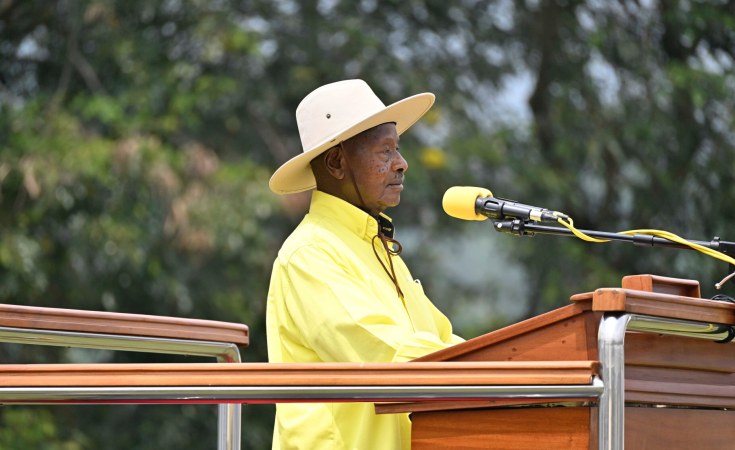
President Yoweri Kaguta Museveni has asked the Supreme Court to dismiss a presidential election petition filed by former presidential candidate Robert Kasibante, arguing that the 2026 general election was conducted in accordance with the Constitution and electoral laws.
In his answer to the petition and a supporting affidavit sworn on January 25, 2026, Museveni rejects all allegations challenging his election victory, stating that the petition discloses no valid complaint under Article 104 of the Constitution and the Presidential Elections Act.
Kasibante petitioned the Supreme Court seeking to nullify Museveni's victory, citing alleged electoral malpractices, violence, misuse of state resources, irregularities in the voters' register, and undue influence over the Electoral Commission.
Keep up with the latest headlines on WhatsApp | LinkedIn
Museveni states that the presidential election was held on January 15, 2026, and that he was duly declared president-elect on January 17 after polling 7,946,772 votes, representing 71.65 percent of the valid votes cast.
He maintains that the election was conducted in compliance with the Constitution, the Presidential Elections Act, and the Electoral Commission Act, adding that any alleged non-compliance did not substantially affect the final result.
The president denies committing any electoral offences, either personally or through agents acting with his knowledge or consent. He further distances himself from the management of the election, stating that the organisation and supervision of the polls are the exclusive constitutional mandate of the Electoral Commission.
Museveni also rejects claims that he influenced, controlled, or directed the Electoral Commission, or that it acted under the influence of ruling party officials or other government actors.
Addressing allegations of election-related violence, intimidation, and harassment of opposition candidates, Museveni states that security during the campaign and polling period was managed by the Uganda Police Force, supported by the Uganda Peoples' Defence Forces and other security agencies.
He denies that security forces acted in his favour or interfered with opposition campaigns, arguing that their deployment was intended to ensure a secure electoral environment and enforce Electoral Commission guidelines impartially.
Museveni further dismisses claims of misuse of government resources, stating that any facilities used during the campaign were limited to those ordinarily attached to the office of the President and permitted by law.
He also denies allegations of bribery and inducement, including claims involving campaign teams, artists, or alleged financial disbursements to groups in Kampala, saying no such acts occurred with his knowledge or approval.

Sign up for free AllAfrica Newsletters
Get the latest in African news delivered straight to your inbox
On concerns over the national voters' register and biometric voter verification machines, Museveni asserts that the Electoral Commission lawfully compiled, updated, and maintained a credible register.
He argues that improvements were made to the biometric system to enhance electoral integrity and that any failures in biometric verification did not disenfranchise voters, as alternative identification measures were lawfully applied.
Museveni further contends that several complaints raised by the petitioner, including matters relating to nomination of candidates, creation of polling stations, and administrative actions of the Electoral Commission, fall outside the jurisdiction of the Supreme Court in a presidential election petition.
He argues that many allegations in the petition are vague, ambiguous, and lack sufficient particulars to warrant a substantive response, and has asked the court to strike out several paragraphs.
Museveni has therefore asked the Supreme Court to dismiss the petition with costs, insisting that the remedies sought by Kasibante are not available under the Presidential Elections Act and that his election reflected the free will of Ugandans expressed through a constitutional and lawful process.

