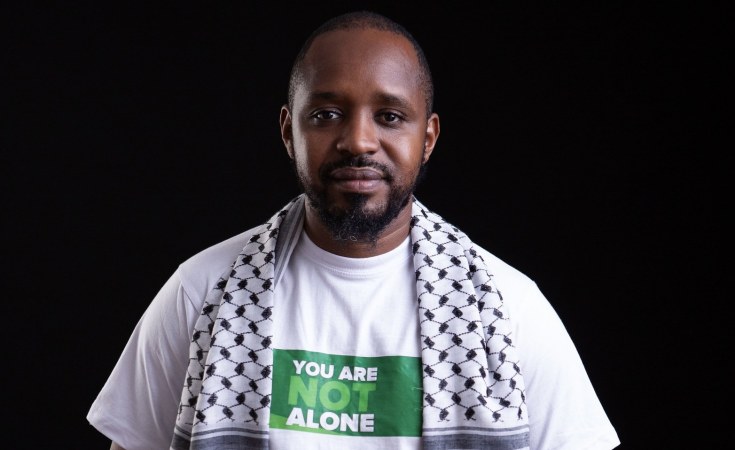
Nairobi — Activist and photojournalist Boniface Mwangi has claimed that he was once approached and offered money to provide testimony favorable to President William Ruto and former President Uhuru Kenyatta during their trials at the International Criminal Court (ICC) in The Hague.
Mwangi said the alleged bribery attempt occurred at the height of the ICC cases related to the 2007-2008 post-election violence, when both leaders were facing charges over crimes against humanity following the disputed 2007 General Election.
Speaking during an interview on the Iko Nini Podcast, Mwangi claimed that a lawyer whom he described as being aligned with the government side contacted him and proposed that he appear as a witness to support a narrative that the violence was not organised, but rather spontaneous.
Follow us on WhatsApp | LinkedIn for the latest headlines
"When Uhuru and Ruto were in The Hague, one of the lawyers from the government side approached me and offered me money so that I could testify and say that the post-election violence was spontaneous," Mwangi said.
According to the activist, the aim of the approach was to influence how the court understood the nature and coordination of the violence, a key issue in the prosecution's case at the time.
Mwangi said he rejected the offer immediately, insisting that he could not be persuaded to lie under oath regardless of the amount of money involved.
"I cannot even say how much they offered because, to me, the figure was irrelevant. The moment you start talking about the amount, it's like you considered it. Whether it was one shilling or one billion shillings, I would not have taken it," he said.
The activist, who has been outspoken on governance and human rights issues for years, did not name the lawyer or provide further details about the circumstances of the alleged approach, but maintained that the incident left him disturbed by the lengths to which some individuals were willing to go to interfere with justice.
Last year December, the International Criminal Court (ICC) has formally closed its investigation into the 2007-2008 post-election violence in Kenya but is still pursuing two Kenyans accused of interfering with witnesses.
According to the latest report to the Assembly of States Parties, the Office of the Prosecutor announced on 27 November 2023 that it had concluded all investigations related to the Kenya situation, effectively ending a 13-year pursuit of accountability for the violence that left more than 1,000 people dead and displaced hundreds of thousands.
At the height of the ICC process, six prominent Kenyans faced charges of crimes against humanity: former President Uhuru Kenyatta, President William Ruto, former Cabinet minister Henry Kosgey, former Head of Public Service Francis Muthaura, former Police Commissioner Mohammed Hussein Ali and journalist Joshua arap Sang.
They all denied the allegations.
Between 2013 and 2016, the cases collapsed due to insufficient evidence, withdrawn testimony, and what the Court described as widespread witness interference and political meddling.
Deputy Prosecutor Nazhat Shameem Khan said the failures reflected a systematic breakdown of evidence, attributed largely to intimidation and manipulation of witnesses.
Outstanding Arrest Warrants
While the main investigative phase has ended, the ICC says it is not completely disengaging from the Kenya situation. Its focus now shifts to preserving the integrity of the Court's judicial processes.
Two active arrest warrants remain for Kenyan fugitives Walter Barasa and Philip Kipkoech Bett, both wanted for alleged offences against the administration of justice under Article 70 of the Rome Statute.
They are accused of corruptly influencing or attempting to influence ICC witnesses--actions that prosecutors believe played a critical role in undermining the core cases.

Sign up for free AllAfrica Newsletters
Get the latest in African news delivered straight to your inbox
"They are the subject of warrants of arrest for alleged offences against the administration of justice pursuant to Article 70 of the Rome Statute, consisting of corrupting or attempting to corruptly influence ICC witnesses," the report states.
Obstruction of Justice and Collapsed Cases
Witness tampering had long been cited as a major obstacle to the Kenya cases. In 2014, charges against Kenyatta were withdrawn after prosecutors said witnesses had been intimidated or interfered with. The case against Sang was dismissed shortly after.
In 2016, the ICC terminated the case against President Ruto. Although the judges found insufficient evidence to proceed, one judge declared a mistrial, citing an "intolerable" level of political interference and a "troubling incidence" of witness tampering. Ruto had denied charges of murder, deportation, and persecution during the violence, in which about 1,200 people were killed.
