

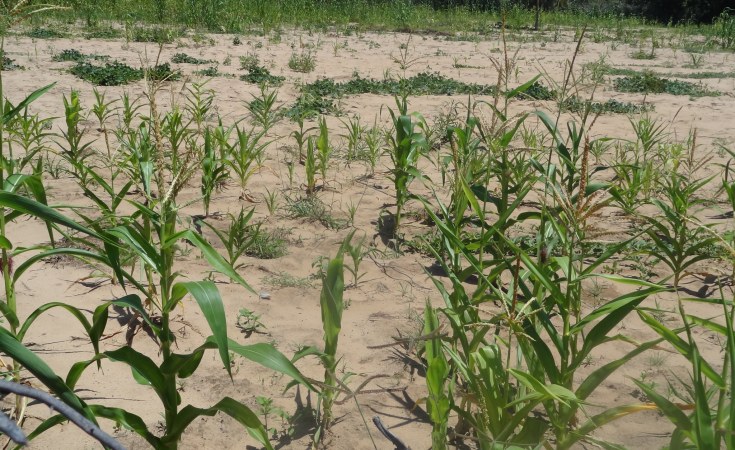
A frightening dry spell is tightening its grip on southern Malawi, raising serious fears of a food security and economic crisis that could affect millions of people.
Weather experts have warned that 19 districts in the southern region are facing a prolonged period of below-normal rainfall, a situation that threatens to destroy crops, reduce water supply and push already struggling families into deeper hardship.
Officials from the Department of Climate Change and Meteorological Services on Saturday issued a seven-day dry spell advisory, saying the rains may not return soon. The department says the southern region has already experienced more than a week of dry conditions, and weather analysis shows little chance of meaningful rainfall in the coming days.
This dry spell is not just about weather. It is about survival.
Follow us on WhatsApp | LinkedIn for the latest headlines
The districts under the highest impact category include Chikwawa, Nsanje, Blantyre, Thyolo, Mwanza, Neno, Zomba, Phalombe, Mulanje, Balaka, Machinga, Mangochi, Salima, Dedza and Ntcheu. These are areas that produce a large share of the country's food and support millions of livelihoods.
Even parts of Lilongwe, Mchinji, Dowa and Ntchisi have been placed under a lower impact category, meaning the problem could soon spread beyond the southern region.
The biggest fear is the impact on maize, the country's main food crop. Most farmers are at a critical stage of the farming season, when crops need steady rainfall to grow. Without rain, maize and other crops will dry up before maturity. This could lead to very low harvests or complete crop failure in some areas.
In districts like Chikwawa and Nsanje, where irrigation is limited and farmers depend almost entirely on rainfall, the situation is especially dangerous. If the dry spell continues, many families may have nothing to harvest, forcing them to buy expensive food or depend on aid.
This will not only bring hunger but also economic pain. Agriculture supports more than 80 percent of Malawians. When crops fail, farmers lose income, markets lose supply, food prices rise and poverty deepens. Urban centres like Blantyre and Zomba could soon see sharp increases in food prices as supplies shrink.
The dry spell also threatens water availability. Rivers, dams and boreholes are already under pressure. Less water means problems for drinking, sanitation, livestock and small-scale irrigation. This increases the risk of disease, malnutrition and conflict over scarce resources.
Although authorities say they are monitoring the situation, the reality is worrying. Without urgent action, such as support for irrigation, early warning systems and food planning, southern Malawi could face another major humanitarian crisis.
If the rains do not return soon, the damage will go far beyond dry fields. It will mean empty granaries, hungry families, rising prices and an economy under serious strain.

Sign up for free AllAfrica Newsletters
Get the latest in African news delivered straight to your inbox

