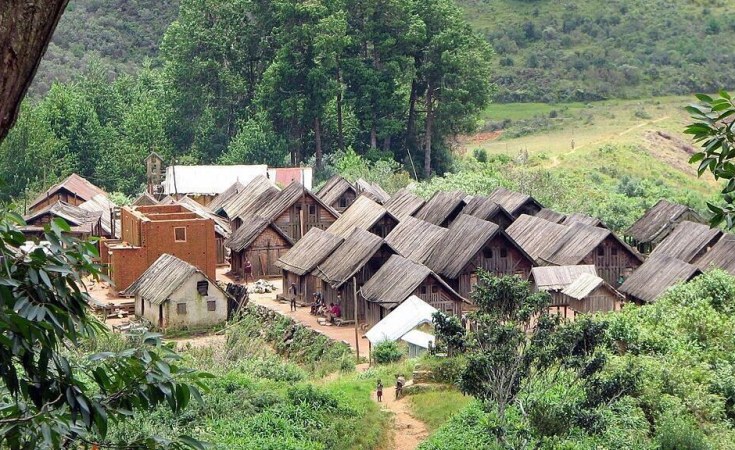
The Zafimaniry people of Madagascar are confronting a difficult choice about their future as deforestation and globalisation reshape their way of life. Fewer than 15,000 members of this forest-based community live in the "land of mist" on the southern edge of the country's central highlands, where decades of heavy deforestation have left many hills bare.
Known for carved wooden homes and woodcraft recognised by Unesco as intangible cultural heritage in 2008, the Zafimaniry are being forced to adapt to survive.
For generations, forests shaped Zafimaniry homes, beliefs and daily life. Much of that environment has now disappeared, changing how communities live and work.
Follow us on WhatsApp | LinkedIn for the latest headlines
These questions were at the centre of a public debate organised in Antananarivo last month by the French Institute of Madagascar - a cultural organisation that promotes debate and the arts - on Zafimaniry identity in the face of globalisation.
Johnny Andriamahefarivo, the only magistrate from the Zafimaniry community and a former justice minister, remembers growing up surrounded by carved wood in his village.
"We are a people of the forest. We live from the forest, so you see wooden buildings everywhere," he told RFI. "The door, the shutters, the windows, the chairs - everything is carved, and every carving has a particular meaning."
These carvings express spiritual beliefs as well as knowledge and faith within the community, he explained.
Madagascar's youth revive ancestral rites in search of identity
Forest under pressure
Deforestation is forcing the community to rethink ways of living that once depended entirely on nearby woodland.
"Even though we stayed deep in the bush, today that bush has been cleared by deforestation," Andriamahefarivo said. "We have to leave and try other ways of making a living."
For this minority community living in relative isolation on the island, adaptation has become essential. Forest engineer and photographer TangalaMamy has worked alongside the Zafimaniry for more than 10 years, documenting their culture through photography.
"Thirteen years ago, there was no mobile network - you had to climb a mountain to get a signal," he said. "Now everyone has a smartphone, everyone has a satellite dish. It's a normal transformation. The world is changing and they are adapting."
Practical realities are also changing housing. "They are not going to live permanently in wooden huts when wood now requires travelling kilometres to find," TangalaMamy added.
A photographer's journey into Malagasy ancestral rituals
Traditions endure

Sign up for free AllAfrica Newsletters
Get the latest in African news delivered straight to your inbox
Despite these changes, TangalaMamy said many customs continue.
"Even in brick houses today, the ancestors' corner is still there," he said. "Offerings are made there. When a child is born, the name is only given after the umbilical cord falls off."
The Zafimaniry are also known for distinctive cultural practices such as hair braiding, a silent form of communication. Seventeen types of braids have been identified, each carrying a meaning understood by the entire village.
The question now is how much of this heritage can survive as lifestyles evolve.
Some traditions are already disappearing, raising concerns about how to pass them on to future generations.
"We must safeguard part of this identity that is disappearing without us being able to pass its memory on to our children," said Malagasy writer and newspaper columnist Vanf - calling on Madagascar's culture ministry to support preservation efforts.
"We should create a visible space - even a 'marketing' space, and it's not a problem to use that word - where one or more traditional houses can be restored and set apart," he added.
"That way both Malagasy people and foreigners can help pass on this memory culture."
This story was adapted from the original version in French by Sarah Tétaud.
