

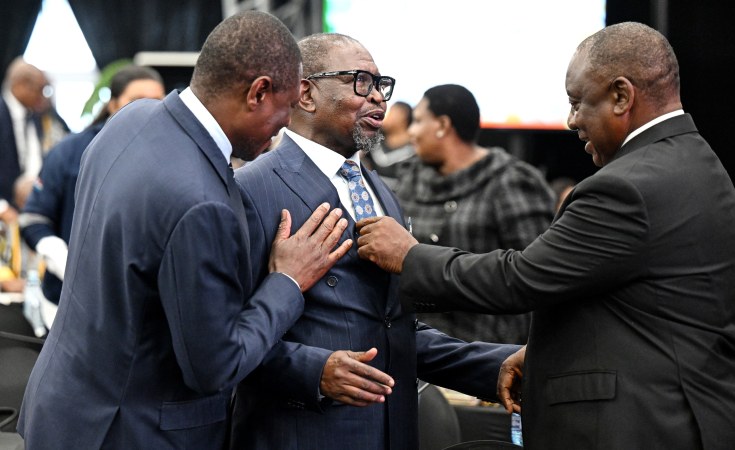
South Africa's government debt will peak this fiscal year, ending 17 years of steady increases, Finance Minister Enoch Godongwana said in his annual budget speech.
Debt is projected to reach 78.9% of gross domestic product in the fiscal year ending in March before easing to 77.3% in 2026-27. Godongwana said this marks a turning point in public finance management, with debt expected to decline in the coming years.
The minister forecast economic growth of 1.6% this year, up from 1.3% in 2025, with expansion reaching 2% by 2028.
Higher commodity prices, particularly gold and platinum, boosted revenue and allowed the government to avoid raising taxes. Last year's proposal to increase value-added tax was dropped after political resistance within the governing coalition.
Keep up with the latest headlines on WhatsApp | LinkedIn
Bond markets have strengthened ahead of the budget. The 10-year yield has fallen more than 300 basis points since April 2025 to about 8%, while the rand has gained more than 20% against the dollar over the same period.
South Africa was recently removed from a global anti-money laundering grey list and received its first sovereign credit rating upgrade in 16 years.
Unemployment remains above 30%, with about 26 million people receiving social grants.
Key Takeaways
A peak in the debt ratio would signal a break from nearly two decades of fiscal strain driven by weak growth and rising spending. Stabilizing debt could reduce borrowing costs and support credit rating upgrades. Commodity revenue has provided relief, but sustaining consolidation will depend on spending discipline and structural reform. Recent changes include opening the electricity sector to competition and reforming state-owned freight and port operations. Investors will watch for details of a fiscal rule to anchor future budgets. Continued primary surpluses, where revenue exceeds non-interest spending, are key to reducing debt. While sentiment has improved, risks remain. Growth is modest and unemployment is high. The projected debt peak represents progress, but maintaining the trajectory will require consistent policy execution and stable economic conditions.


