Individual rare diseases impact only a very small fraction of people, but collectively they are estimated to affect over three million in South Africa. As we mark International Rare Disease Day on 28 February, Spotlight assesses the state of play with rare diseases in the country.
Mpho Matseka used to be considered a particularly naughty child, since he seemed to always be the first to get injured or sick. Now, he knows that the wounds that struggled to heal, dramatic joint dislocations, and unexplained pain were the signs of a rare hereditary connective tissue disorder, not disobedience. "There were seven doctors around my hospital bed with their medical books, trying to figure out what was wrong with [me]," he says of a pivotal moment when he was twelve years old. A medical student happened to discover a description of Ehler-Danlos Syndrome in a textbook, which led to Matseka's diagnosis.
Matseka is grateful that he was able to get genetic testing, a diagnosis, and treatment from a number of specialists in the public healthcare system around a decade ago. "For me, it has helped a lot, and because I'm from a poor background, I can't complain about waiting at the clinic for hours because I need this," Matseka says.
At age 21, he now also struggles with epilepsy and hidradenitis suppurativa, which are not rare diseases but interact with his Ehler-Danlos Syndrome.
Follow us on WhatsApp | LinkedIn for the latest headlines
Elsewhere in Johannesburg, mother Lebohang Leuta cares for her fifteen-year-old son, who has neurofibromatosis type one. The lifelong condition is characterised by benign growths under the skin. In her son, she says, it has caused hearing loss and a learning disability.
At first, the diagnosis was so foreign and shattering to her that she could not pronounce it. Now she is an avid advocate for her son's care and awareness of the condition by running an NPO for young people with disabilities. "My child's condition has broken me in places I didn't know could break -- but it has also rebuilt me into a warrior," she says.
They have been able to access care at Chris Hani Baragwanath Academic Hospital, but they say they face slow processes, long waits, and health care providers that do not understand rare conditions. "As a mother, it is exhausting to constantly explain my child's diagnosis to doctors and nurses who should already have access to training and updated information," she says.
Rare but numerous
While Matseka and Leuta suffer from very different diseases, they share the fact that their illnesses are considered rare. That means their conditions affect fewer than 1 in 2 000 people, according to the standard international definition, which includes more than 6 000 rare conditions, sometimes called orphan diseases. Doctors and patients globally have a phrase for it - individually rare, collectively common.
Internationally, the most quoted estimate has it that around 6% to 8% of people are living with a rare disease, although some studies, like this one, have estimated a lower range of around 3.5% to 5.9%. Even at the low end of this range, that would mean that over two million people in South Africa have rare diseases. Several experts we spoke to however think that the rates in South Africa are higher than the international average and put the number at 4.2 million.
"We still haven't found all the patients," Nomsa Mtshali, Head of Patient Services at Rare Diseases South Africa, an advocacy group, says. She explains that there are likely many South Africans who suffer from a rare condition at some point in their lives but do not get a diagnosis or adequate care to be counted in official research or records.
A united policy
Due to these high numbers overall, there has long been a push towards rare diseases being addressed together in government policies, as opposed to dealing with them disease-by-disease.
In May 2025, the cause had a major advance when the World Health Organisation (WHO) declared rare diseases a global health priority and announced it would have a comprehensive 10-year global action plan by 2028. As a WHO member state, South Africa is urged by the resolution to take part in this process, as well as to implement local policies and programmes.
Helen Malherbe, an Associate Professor at the Centre for Human Metabolomics at North-West University (NWU) and a member of the Rare Disease Access Initiative (RDAI), says this tips the scales after years of advocacy.
"They have to now prioritise rare diseases as a national healthcare priority, which is what we've been pushing for for years and years."
Spotlight understands that the next step is for a working group to be set up that brings together the health department, relevant medical experts, and other stakeholders. None of the several sources we approached, including the National Department of Health, could provide on-the-record details on the status of this working group.
Many rare conditions are already covered in other local health policies, but the thinking is that grouping rare diseases together would bring about efficiencies, close gaps, and help improve service delivery. Malherbe says that the policy environment in the country is strong, despite being scattered. "We found that a lot of stuff is in place, it's just not implemented," she says. "There's no budget, resources or human capacity allocated to actually do these services."
"If we could just have a standard policy that is focused on rare diseases, that will also help us highlight a lot of issues that we have when it comes to access," Mtshali says. "Having that in place will help us minimise the stigma and help us find the patients that need a place of belonging because they don't know where to go."
She says that rare diseases are often misunderstood, particularly in rural areas, by patients and practitioners. "We've had patients dying and being hidden or buried in the middle of the night, because no one wants to be called a witch because they have a patient who is different from everybody else," Mtshali reckons.
Crucial challenges
Challenges faced by people with rare diseases can include a lack of screening and treatment capacity, long and slow referral systems, and expensive treatments. The high burden of all the different rare disease cases added together, often with very different testing and treatment requirements, poses a challenge to provincial health departments.
Maybe the most immediate challenge is the screening and diagnosis of rare diseases. It is routine in many countries that newborns undergo a simple heel prick test that can screen for up to 70 rare metabolic and genetic conditions. In South Africa, the public programme for this was discontinued in the 1980s, largely due to competing health priorities, and is now mostly just available in limited private settings, in part run by Malherbe at NWU. "This is known to be one of the most advantageous healthcare breakthroughs in the last century, and we're not implementing it in South Africa at all," she says.
NUMBERS MATTER | In an age of misinformation, clear and trust-worthy numbers matter more than ever. That is one reason why we have been hard at work to help bring reliable health data to your fingertips. Dive in: tinyurl.com/y4b8zf6k
Join our mailing list: tinyurl.com/82jdsfjy
[image or embed]
-- Spotlight (@spotlightnsp.bsky.social) February 20, 2026 at 9:31 AM
The 2021 Clinical Guidelines for Genetics Services from the National Department of Health do specifically call for this type of screening, but indications are that implementation is lagging. "There are so many steps in the newborn screening programme that need to be in place before we can roll this out that we are just not there yet, unfortunately, in the state system," says Shahida Moosa, the Head of Medical Genetics at Tygerberg Hospital, and Professor of Medical Genetics at Stellenbosch University.
She explains that a previous screening pilot project a few years ago failed in part because it was difficult to stay in contact with newborn parents. The tests typically happen a day or so after birth, while moms and babies can leave the hospital as soon as six hours after giving birth.
When a rare disease only shows itself later in life, diagnosis is prolonged and difficult. What Johnny Mahlangu, the Head of Molecular Medicine and Haematology at Wits and Head of Clinical Haematology at the Charlotte Maxeke Johannesburg Academic Hospital, calls the "prolonged diagnostic odyssey" is commonly longer than five years. He puts this down in part to limited awareness and expertise and an overall shortage of specialists, which can cause years long delays or misdiagnosis.
The shortage is particularly acute with genetic medicine specialists. Moosa says there are only around twelve of them in the country, concentrated in Gauteng and the Western Cape.
"We are sitting on around 10% of the medical geneticists needed for our population," she says.
While more genetic specialists are qualified, the lack of medical posts means that many leave the country as soon as they are registered. "We're basically training them for export."

Sign up for free AllAfrica Newsletters
Get the latest in African news delivered straight to your inbox
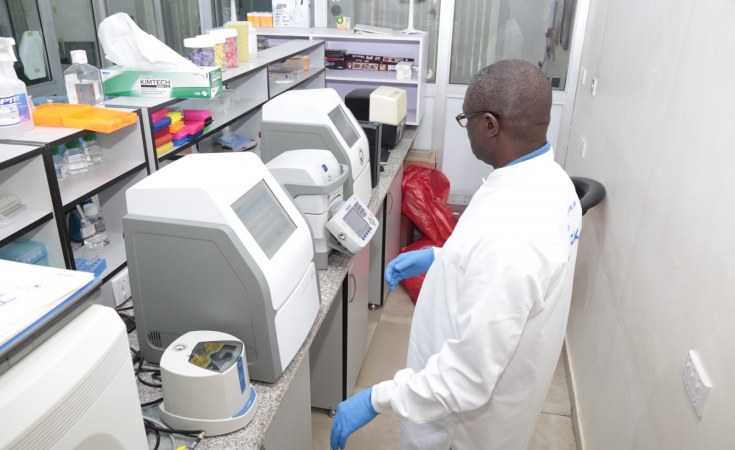
The lab capacity to detect rare diseases is also limited. Spotlight understands from sources interviewed for this story that the National Health Laboratory Service (NHLS) offers testing for only a very limited range of rare diseases. We put this to the NHLS, but had not received a response by the time of publication.
Moosa says some testing was previously possible at Tygerberg, for instance, from 2019 until 2022, but this was then cut due to budget constraints. "We are left with very limited access to genetic testing, and it's on a variant level, or a gene level, that is not comprehensive enough for the majority of our patients." More extensive genetic testing is available in the private sector.
Once diagnosed, only around 10% of the rare diseases present in South Africa have accessible treatments in the country, Mtshali says. This is higher than global averages, but still objectively low. "Treatments around rare diseases are extremely expensive, so that plays a massive role in things not getting better in the South African landscape." Since they are uncommon and costly for the public sector, a compassionate patient exception is often necessary, where treatment is requested from pharmaceutical companies for a specific patient for a reduced price or free. This is tricky because of the cost and process, and often unsuccessful.
Meanwhile, struggles relating to rare diseases remains a day-to-day reality in the lives of many people in South Africa. Access to genetic testing, appropriate specialists, and effective treatment remain out of reach for many. As implied by some of the sources for this article, to deal with these more specific issues, a good starting point would be simply to acknowledge the extent of South Africa's rare diseases problem.
"Every day my child fights battles people cannot see," Leuta says. "As a mother raising a child with a rare disease in South Africa, what needs to change is simple: awareness, compassion, and accountability."
Spotlight made several attempts to get comment from the National Department of Health, but had not received any comment by the time of publication.
Republish

