Akobo, South Sudan & Nairobi — "There is no other description other than a full-scale war."
Hundreds of thousands of people have been displaced by fighting in South Sudan since the start of the year, as the collapse of a power-sharing accord between the government and the main opposition movement drives new violence across the country.
The situation is particularly severe in Jonglei state, where the national military (SSPDF) began an offensive in January after losing garrisons to opposition forces. The operations have led to widespread abuses against civilians.
"We heard the government intended to attack, so we fled to the bush," said John Dhie, a man from the town of Walgak, which is in Jonglei. "A bomb fell near my house [and] everything we owned was burned."
Keep up with the latest headlines on WhatsApp | LinkedIn
Dhie spoke to The New Humanitarian from Akobo town, which was a safe haven for displaced Jonglei residents until last week when the SSPDF called on civilians, aid groups, and UN peacekeepers there to leave ahead of a planned assault.
The South Sudanese government, led by President Salva Kiir from the ruling SPLM party, formed a unity administration with the opposition SPLM-IO in 2020 as part of a peace deal to resolve a 2013-2018 civil war that cost an estimated 400,000 lives.
But critics say the president used much of the peace process to consolidate power and marginalise opposition groups, courting defections and defunding efforts to absorb rebel fighters into a unified national army.
Clashes between the SSPDF and SPLM-IO forces were not uncommon during the peace process, but troubles accelerated last year, especially after Kiir arrested SPLM-IO leader and First Vice President Riek Machar, dismantling the peace deal.
A UN inquiry report last month said the detention of Machar undermined core power-sharing arrangements, triggering political uncertainty and armed clashes on a scale that has not been witnessed in the country for the past decade.
The report accused the government, which is supported by Ugandan troops, of using incendiary bombs in airstrikes on opposition-affiliated areas in seven states. It said internal displacement rose by almost 40% last year to 3.2 million people.
Some analysts who spoke to The New Humanitarian warned the conflict could expand and merge with the war in Sudan. Others predicted more localised clashes and confrontations, pointing to the weakness of both the SPLM-IO and the SPLM.
Few, however, said the peace deal that ostensibly ended the last civil war still appears viable. "If you look at all the indicators, there is no other description other than a full-scale war," said Ter Manyang Gatwech, a human rights defender.
Testimonies from Jonglei
On the ground, residents who spoke to The New Humanitarian from Jonglei described atrocities by SSPDF forces and allied militias, as well as struggling in displacement centres where the government had not allowed aid groups to access.
Eyewitnesses spoke of interrogations, killings, and spending days hiding as their homes were razed by government forces. Some survivors said the level of brutality exceeded what they had witnessed during the 2013-2018 war.
Nyathai Gatluk said her sister was killed during airstrikes on the village of Lankien. Gatluk said she then travelled to the site of the attack to retrieve her sister's three children, among them a newborn of five days. "I am caring for them alone," she said.
Another Lankien resident, Nyakhan Gatkhor, said she was ambushed by the SSPDF while fleeing. She said one man in her group was killed and three were abducted. She said survivors were found by the SPLM-IO, who brought them to safety.
Following the attacks, survivors said they have been desperately searching for relatives, with church compounds and other gathering points in displacement centres being used to exchange information in the hope of tracing loved ones.
Nyawer Machar, who fled from Walgak to a town near Akobo, said that since escaping her home, she has not heard from her mother. "I just want my mother to know that I am safe... and that I am looking for her," she said.
Machar said the fate of several other relatives also remains unknown, including an aunt who she said was taken away by SSPDF soldiers during the offensive on Walgak.
Gatwech, the human rights defender, said international relief organisations have been blocked from delivering aid to tens of thousands of displaced people in Akobo, which the government now claims to have taken over from the SPLM-IO.
"They don't want that money to go to the people who need it," Gatwech said, describing a common strategy used by the South Sudanese government of blocking aid to opposition-held areas.
Displaced people have, meanwhile, found themselves unsafe even in the places where they sought refuge. In recent days, many of those who settled in Akobo have travelled to neighbouring Ethiopia, following the government's evacuation order.
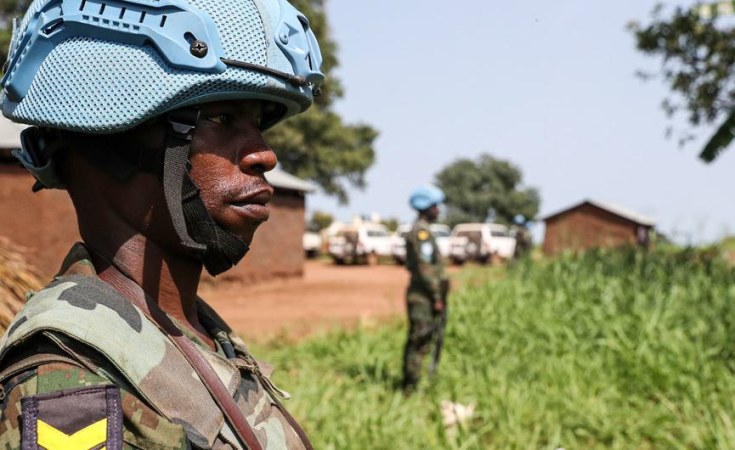
The order also applied to humanitarian groups and the UN peacekeeping operation in South Sudan (UNMISS), though the mission said on 9 March that it would not comply.
Critics say the SSPDF wants to clear Akobo of witnesses. It follows reports of atrocities in Jonglei, including government-aligned fighters killing civilians after luring them from their homes under the pretense of registering them for food aid.
SSPDF operations in Jonglei and elsewhere are unfolding in areas home to Nuer communities, which have historically provided a grassroots base for the predominantly Nuer SPLM-IO as well as for Nuer militias known as the White Army that are involved in current opposition offensives.
In interviews with The New Humanitarian, SPLM-IO officials described SSPDF operations as constituting ethnic cleansing of Nuer communities, citing hate speech and inflammatory rhetoric from military leaders.
"When we arrive there, don't spare an elderly person, don't spare a chicken, don't spare a house or anything," said Johnson Olony, an SSPDF official and Shilluk militia leader, referring to the Jonglei operations.
Analysts say the role of forces like Olony's and White Army militias is creating a major threat to the country's social fabric, since it risks fusing national political disputes with rivalries at the local, communal level.
Weaknesses on both sides
Before the fighting in Jonglei, clashes were mainly concentrated in neighbouring Upper Nile state, where White Army militias had overrun an SSPDF garrison in Nasir last March leading the army to launch major operations.
White Army militias operate independently to the SPLM-IO and have their own grievances against the government and SSPDF. But Kiir blamed the Nasir incident on Machar - many say incorrectly - and charged him with treason.
Subequent operations in Upper Nile - documented by The New Humanitarian - saw the SSPDF and Ugandan forces launch brutal airaids, while the UN inquiry detailed sexual violence by the army and its abduction of boys and young men to fight.
Before the Upper Nile fighting, the SSPDF had also launched various offensives in 2024 and 2025 to wrest control of opposition-controlled checkpoints, in a further sign that the recent escalation did not come out of nowhere.
One ruling party official framed the current tensions as a continuation of a conflict that never ended. "In many ways, the agreement froze the conflict rather than resolving it," the official said, requesting their name not be used.
Despite facing airaids, the SPLM-IO has talked up the success of its operations, at one stage instructing its forces to advance on the capital, Juba, from multiple directions and calling on elements from within the SSPDF to join them.
In reality, however, the SPLM-IO and broader opposition are weaker than they were during the last civil war, in part because Kiir has used the peace process to strengthen his grip on power and court opposition splits and defections.
For its part, the government is bolstered by Uganda, but it faces problems: SSPDF troops are largely unpaid, and Kiir's ability to maintain loyalty among elites has been undermined by reduced oil exports from pipelines running through Sudan.
The SPLM is meanwhile riven by internal tensions as the ageing and ailing president repeatedly fires senior officials and implements reshuffles viewed as bypassing established structures and consolidating his authority vis-à-vis potential successors.
Tensions were particularly high when businessman Benjamin Bol Mel - who is not from the SPLM old guard - was promoted to second vice president and widely seen as being groomed as Kiir's successor.
Kiir later dismissed Bol Mel and reappointed James Wani Igga as second vice president, but political insiders say that decision also caused frustration among certain sections of the fractious ruling party.

Sign up for free AllAfrica Newsletters
Get the latest in African news delivered straight to your inbox
Other controversial moves by Kiir include last year's dismissal of powerful intelligence chief Akol Koor Kuc; the appointment of Kiir's daughter, Adut Salva Kiir, as a special advisor; and a recent anti-corruption drive viewed as politically motivated.
Delayed elections
Analysts and human rights activists who spoke to The New Humanitarian - often requesting anonymity - mostly argued that the peace deal remains the only political framework capable of stopping the war from spiralling further.
Yet many also view the deal as part of the problem, incentivising elites - none of whom are democratically elected - to scramble for positions within power-sharing arrangements and retain armed forces for political influence and leverage.
The opposition says the peace deal was "abrogated" by Machar's arrest, and have long complained of Kiir undermining power-sharing by dismissing their officials and replacing them with picks from the ruling party or splinter opposition factions.
Critics say Kiir has also underfunded efforts to create a unified national army because he does not want opposition soldiers integrated into the military, despite this being a central pillar of the peace agreement.
The agreement also called for elections to be held at the end of a transitional period in 2023, but this has been repeatedly extended. Polls are now scheduled for December, though it remains unclear whether they will take place.
"Security concerns around Jonglei are becoming a central obstacle to the 2026 elections, with rising tensions potentially providing justification for delaying the vote," said South Sudanese political analyst Atem Simon Mabior.
In Akobo, Rac Joseph Yal, assistant bishop of the episcopal church, urged leaders to end the violence. "The people are suffering," he said. "We need peace and reconciliation for the sake of this nation."
Edited by Philip Kleinfeld.
Francis Michael Awang, South Sudanese journalist, editor, and researcher with experience in radio, print, and digital media
