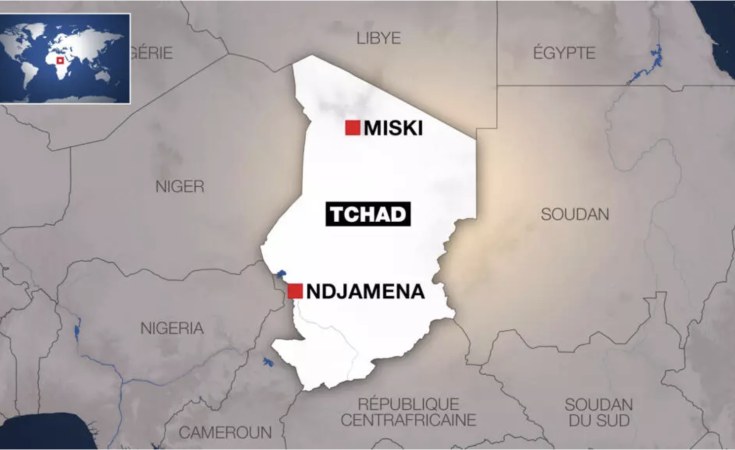
Chad's growing entanglement in Sudan's civil war is heightening domestic instability and exposing the country to intensifying regional rivalries and geopolitical competition.
The spillover from the war in Sudan has become an increasingly serious security threat for neighboring Chad. In December 2025, a drone strike near Tiné killed two Chadian soldiers. In January 2026, seven more were killed in clashes with the Sudanese paramilitary group, the Rapid Support Forces (RSF), along the eastern border. In February 2026, following additional armed incursions, N'Djamena announced the closure of its border with Sudan and deployed thousands of troops along the nearly 1,400-kilometer frontier. Despite these measures, violations of Chadian territory have continued in various forms. These episodes mark a critical shift: Sudan's conflict is no longer simply a neighboring crisis with indirect effects--it has become a direct security threat for Chad.
The war is acting as a multiplier of existing vulnerabilities, testing N'Djamena's capacity to absorb and contain regional security shocks.
Beyond these border incidents, the war in Sudan is placing mounting pressure on an already fragile Chad. The effects are unfolding simultaneously across security, geopolitical, humanitarian, and political domains. Contrary to its frequent portrayal as a pillar of regional stability, Chad now appears increasingly vulnerable to the destabilizing dynamics emanating from Sudan.
Follow us on WhatsApp | LinkedIn for the latest headlines
Open-source reporting and independent analysis suggest that the government of President Mahamat Idriss Déby Itno has facilitated support to the RSF since 2023. This engagement has deepened internal fractures within Chad, particularly within the Zaghawa community and other groups in eastern Chad with close ties to Darfur in western Sudan.
N'Djamena's alignment with external partners such as the United Arab Emirates (UAE)--and to a lesser extent, Russia--has been widely interpreted as a strategic choice to bolster Chad from the fallout of the Sudan conflict. However, this alignment has heightened regional volatility and increased Chad's exposure to external rivalries. The competition between the UAE and other Gulf states for influence on the continent, most visibly seen in Sudan, has been escalating in recent years. Moreover, Chad has had to navigate the destabilizing effects of Russian-linked political and information operations, including attempts to polarize Chadian political tensions as a means of expanding Russian leverage in the region.
It is within this context that Chad's border with Sudan has become an increasingly active corridor for arms trafficking and armed group movements--including RSF elements--within a broader regional arc linking Libya, the Central African Republic (CAR), and South Sudan. This trend is especially sensitive given Chad's deep cross-border social ties and long history of rebellions and proxy conflicts linked to Sudan.
Chad now hosts roughly 1.3 million Sudanese refugees and returnees, the majority from Darfur. This massive influx is placing significant strain on Chad's eastern provinces--among the country's poorest--which are already facing acute food insecurity and limited government services.
These dynamics make Sudan's conflict uniquely complex for Chad. The war is acting as a multiplier of existing vulnerabilities, testing N'Djamena's capacity to absorb and contain regional security shocks.
Compounding this complexity is the increasing fragmentation of Sudan's political-military landscape beyond the binary confrontation between the RSF and the SAF. Alongside the two principal belligerents, a constellation of Darfuri armed movements, community-based forces, and local militias operate according to shifting and often opportunistic motivations. At the same time, credible civilian coalitions continue to advocate for a political alternative, though their role is frequently overshadowed by the dominant military dynamics. Framing the war solely as an RSF-SAF confrontation obscures these civilian interlocutors, reinforces the unpredictability of the crisis, and complicates the strategic calculations of neighboring countries--particularly Chad--which must navigate a fluid security environment where frontlines, actors, and loyalties remain unstable.
Vectors of Instability Threatening an Already Fragile Chad
Chad continues to face persistent instability, despite the formal conclusion of a volatile political transition between 2021 and 2024. That period, marked by significant institutional and electoral irregularities, was punctuated by violently repressed social protests. The October 20, 2022, crackdown, the assassination of political party leader Yaya Dillo, as well as the arrest and imprisonment of prominent opposition and civil society leaders--like Succès Masra, leader of Les Transformateurs reform movement--underscore the ongoing fragility of Chad's political and security balance. This internal volatility has intensified inter- and intracommunal tensions while reducing the government's ability to absorb external shocks.
The erosion of regional security architectures has amplified Chad's vulnerability.
Regions in the north and east, areas historically shaped by insurgent movements, continue to host armed groups hostile to the central government. To the west, the Lake Chad region remains a persistent theater of violence due to the continued presence of Boko Haram and the Islamic State in West Africa (ISWA), whose attacks target both security forces and civilians. Meanwhile, Chadian armed opposition groups retain disruptive capacity from border zones spanning northeastern Niger, southern Libya, and Sudan's Darfur region.
The erosion of regional security architectures has amplified Chad's vulnerability. The withdrawal of French forces in early 2025 and the disappearance of associated aerial surveillance and intelligence capabilities, for example, has significantly reduced N'Djamena's operational flexibility in responding to insurgent threats.
Chad's growing integration into a new alliance of external partners--including the UAE, Russia, Türkiye, and certain Libyan forces, all directly engaged in Sudan's war--constitutes an additional source of fragility. This diplomatic and security realignment is unfolding amid an ongoing political, social, and security polycrisis. In particular, it has reignited tensions within the Zaghawa community, who are disproportionately influential within Chad's elite military units and security decision-making structures. As a transnational community influential in both Chad and Sudan, the Zaghawa constitute both a pillar of cohesion and a potential faultline within Chad. Many publicly oppose N'Djamena's perceived support for the RSF as incompatible with protecting their relatives in Darfur.
The RSF, which emerged from the Janjaweed Arab militias active in Darfur and Kordofan, has consolidated both military and economic power, particularly through control of strategic gold mining sites. International investigations have documented trafficking networks linked to Russian and Emirati actors operating in gold extraction areas, notably around Jebel Amer in western Sudan. These revenue streams have enabled the RSF to expand its territorial control across large portions of Darfur and Kordofan. The convergence between RSF military ambitions and the strategic interests of its external backers has further entrenched the regionalization of the conflict, with direct repercussions for neighboring states--including Chad.
Multiple analyses, drawing on flight data and satellite imagery, indicate that Amdjarass has served as transit points for military equipment and supplies flowing from Chadian territory to the RSF. Although Chadian authorities deny direct involvement and have sought to project neutrality, Chad's perceived engagements have strained relations with the SAF and increased the risk of retaliatory measures against Chad.
Political and military ties between Zaghawa communities in Chad and Sudan have long generated regional tensions, particularly during the Darfur conflict. Violence since the early 2000s has left deep scars within the community, which now confronts what many perceive as a strategic contradiction in Chad's current alignment. These resentments weaken a core pillar of the Déby regime's stability in Chad and heighten the risk of defections, armed realignments, and political dissent within a transborder space where arms flows and armed group mobility remain difficult to control.
Darfur has historically served as a strategic rear base for Chadian rebel movements--from the creation of the Front de libération nationale du Tchad (FROLINAT) insurgency in the 1960s to more recent conflicts. Geographic proximity and dense sociocultural ties between Chad and Sudan have repeatedly fueled cycles of proxy warfare. In this context, any attempt by Chad to leverage Sudan's crisis to expand its regional influence carries a high risk of blowback, exposing the country to destabilizing dynamics it has struggled to contain.
What Motivates N'Djamena's Support for the RSF?
Chad's apparent alignment in support of the RSF is best understood as the product of financial, security, and geopolitical calculations. It reflects less ideological affinity than a regime survival strategy in an increasingly unstable regional environment.
Since the outbreak of the Sudan war, the UAE has significantly expanded its financial engagement with Chad. In October 2024, Chad secured a $500 million loan from the Abu Dhabi Fund for Development at a preferential 1-percent interest rate over 18 years. This follows a $200 million financing package in 2023, including $50 million in grant assistance. This $700 million in commitments over less than 2 years amounts to roughly 15 percent of Chad's annual budget. Beyond these public financial packages, observers have also pointed to overlapping economic interests and private sector ties between some Chadian and Emirati decision-making circles.
These financial engagements provide the UAE with structural leverage over N'Djamena's diplomatic options--particularly if Abu Dhabi's security priorities diverge from Chad's internal stability imperatives.
Beyond financial considerations, the support attributed to the RSF also reflects immediate security calculations. Eastern Chad, bordering Darfur, is among the most sensitive zones for regime stability due to the proximity of both Chadian and Sudanese armed opposition groups. Multiple sources have reported the involvement of Libyan, Emirati, and Russian personnel and equipment--as well as Colombian mercenaries-- supporting the RSF in eastern Chad.
Despite leadership changes in Sudan, Chadian authorities continue to view the SAF as the institutional successor of a security apparatus long hostile to Chadian interests. This mistrust is rooted in decades of proxy conflict during which Sudan was perceived as a recurring source of threats to regime survival in N'Djamena. From this perspective, support for the RSF can be interpreted as an effort to counterbalance SAF influence and limit Khartoum's old guard from shaping internal Chadian dynamics.
N'Djamena's support for the RSF can be interpreted as an effort to counterbalance SAF influence and limit Khartoum's old guard from shaping internal Chadian dynamics.
The support provided by certain Zaghawa militias to the SAF is viewed in N'Djamena as a potential source of internal destabilization, given the community's cross-border character and its historic weight within Chad's security apparatus. Following this logic, weakening the SAF indirectly through alignment with the RSF may be seen as a way to contain community dynamics that could otherwise turn against the Chadian leadership. Ultimately, Déby's support for the RSF reflects a strategic calculus combining external alignment and internal risk management. It enables Chadian authorities to consolidate new partnerships with the UAE and actors in southern Libya while attempting to neutralize perceived threats in Chad's immediate security environment.
At the same time, this strategy rests on a short-term logic rooted in military factionalism and the outsourcing of security. It exposes Chad to mounting political and security costs--deepening dependence on external actors while eroding the internal balances upon which regime survival depends. Taken together, these internal and external calculations reshape community loyalties and accelerate fragmentation within Chad's politico-military networks.
What Fractures Are Emerging?
The war in Sudan has deepened communal fault lines across the transnational space linking Chad, Sudan, CAR, and Libya. The reconfiguration of politico-military alliances has exacerbated fragmentation among armed groups and loyalty networks, often structured along community lines. This evolution complicates stabilization efforts and heightens the risk of intercommunal conflict in a region already marked by chronic insecurity.
Several historically influential communities in Chad are now engaged--directly or indirectly--in the Sudan conflict along divergent alignments. Some segments of Toubou, Arab, and Gorane communities, concentrated in northern Chad and the broader Sahara-Sahelian zone, have become aligned with the RSF, giving their positioning transnational significance. By contrast, a significant portion of the Zaghawa community has aligned with the SAF, in solidarity with kinsfolk in Darfur and in reaction to N'Djamena's perceived support for the RSF. These diverging alignments reflect growing communal polarization that is straining internal power balances.
This polarization is compounded by the reconfiguration of local and transnational armed groups whose loyalties remain fluid. Community militias, self-defense committees, and rebel factions--currently secondary actors--operate within a volatile security ecosystem shaped by Sudan's war. Should the conflict persist or further territorialize, these actors could become more central drivers of instability.
Chad's active rebel movements, particularly those operating between southern Libya, northern Chad, and Darfur, retain significant disruptive capacity. Their future positioning will depend on the trajectory of the Sudan war and the opportunities created by shifting regional alignments. Such groups have historically used Sudanese crises as an opportunity to challenge authority in N'Djamena.
Two principal medium-term scenarios emerge. In the event of a SAF victory, strengthened alliances between Sudanese and Chadian Zaghawa networks could revive patterns of proxy confrontation directed against the Chadian leadership. Conversely, a de facto partition of Sudan--already foreshadowed by parallel governance structures established by the RSF--would likely entrench long-term regional instability supported by voluminous arms flows and complex ethnic and militant alliances. In either case, Chad would face intensified arms trafficking, fighter movements, humanitarian pressure, and external interference.
These risks are magnified by fractures within Chad's own elite networks. The defection of senior Chadian officers from the Zaghawa community who have joined SAF-aligned forces in Darfur signals erosion of cohesion within the upper tiers of the security apparatus. The assassination of opposition figure Yaya Dillo--a prominent Zaghawa leader and cousin of Déby--in February 2024, during a violent assault on his party headquarters in N'Djamena, further deepened intra-Zaghawa tensions. Followed by targeted arrests and purges of key figures from allied communities, the episode revived memories of the rebel offensives launched from Sudan in 2006 and 2008.
Chad's security architecture remains structured less around institutional cohesion than layered systems of loyalty.
The return of Ousmane Dillo--Yaya Dillo's brother and a Zaghawa military figure--to active combat alongside the SAF in Kordofan, after being wounded while leading Zaghawa-aligned fighters in El Fasher, further illustrates the enduring permeability between Chadian and Sudanese political arenas. His trajectory--from intra-Zaghawa political rupture in N'Djamena to armed mobilization in Darfur--highlights the capacity of Chadian actors to reposition themselves militarily beyond national borders. The Sudan theater continues to function as a space of strategic recalibration for Chadian elites estranged from N'Djamena.
These fractures are no longer confined to the Zaghawa. Signs of gradual distancing from the Déby government are also visible among Arab, Tama, and Gorane groups traditionally integrated into the regime's power equilibrium. The sidelining of figures who once mediated between these communities and the presidency, alongside the marginalization of certain members of the Déby family, is fueling mistrust and shifting loyalties.
Absent strategic recalibration and more inclusive management of internal balances, these dynamics risk crystallizing into direct threats to Chad's stability. These communal fractures, in turn, reverberate through the security architecture itself, which remains structured less around institutional cohesion than layered systems of loyalty.
What Are the Consequences of Military Factionalism?
Since 1990, political authority in Chad has rested on a security architecture defined by pronounced military factionalism, marked by the overrepresentation of specific community-based networks within the armed forces and security institutions. This configuration, which enabled the Déby family to consolidate and sustain power, has relied on elite units operating with parallel chains of command and enjoying privileged access to resources. While this model provided short-term resilience against immediate threats, it also weakened institutional cohesion, reinforced personalized loyalty structures, and entrenched latent fragmentation within the security apparatus.
Chad's strategic alignment exposes it to mounting political and security costs--deepening dependence on external actors while eroding internal balances.
In the current context, the war in Sudan has amplified the system's underlying vulnerabilities. Fractures within the military core of the ruling coalition--combined with perceptions of marginalization among other historically allied communities--raise the likelihood of political convulsions, whether in the form of coup attempts, renewed rebel realignments, or internal violence. The porous nature of Chad's borders and the regional circulation of arms and fighters further compound these dynamics by directly linking domestic power balances to neighboring conflict theaters.
The concentration of resources, equipment, and access to rent-generating sectors within elite units--at the expense of developing a more professional national army--deepens internal imbalances. Over time, this weakens the military's long-term capacity to respond effectively to security threats, making regime stability increasingly dependent on negotiated loyalties rather than durable institutions.
Chad in a Geostrategic Powder Keg: Scenarios and Policy Priorities
Chad now operates in a highly volatile geostrategic environment where the war in Sudan intersects with persistent internal fragilities. The real or perceived involvement of N'Djamena in the conflict exposes the country to intensifying rivalries among external powers engaged in Sudan. On one side stands the UAE, supporting the RSF. On the other stand Saudi Arabia, Egypt, and Qatar, backing the SAF. Overlaying this competition are the expanding roles of Russia and Türkiye across the Sahel-Libya-CAR arc. Room for Chad's strategic maneuver is narrowing as the risks from entanglement deepen.
Beyond the ongoing instability associated with the possibility of RSF consolidation in Darfur, another scenario merits attention: the gradual westward projection of RSF-affiliated networks, leveraging existing circuits of mercenary recruitment, gold trafficking, and trans-Saharan logistics linking Darfur, southern Libya, and the central Sahel. Such a projection may not take the form of conventional military expansion but instead could unfold through the diffusion of armed and criminal networks--with destabilizing consequences for Chad and its Sahelian neighbors. Such a scenario would also undermine Chad's perceived posture as a source of stability in the Sahel and Central Africa.
Several trajectories are plausible. Continued alignment with actors directly involved in Sudan's war may strengthen short-term regime security, but at the cost of deeper elite fragmentation and increased exposure to retaliation. Conversely, a de facto partition of Sudan would likely entrench regional instability, transforming Chad's eastern borderlands into zones of perpetual armed group circulation, weapons flows, and humanitarian crisis.

Sign up for free AllAfrica Newsletters
Get the latest in African news delivered straight to your inbox
Chad's Strategic Tradeoffs
| Alignment with RSF-network(Current) | Strategic Recalibration(Neutrality) |
|---|---|
| UAE financial support | Reduced external financing |
| Tactical buffer against SAF influence | Expanded border patrols |
| Consolidated external alliances | Potential malign Russian information operations |
| Elevated SAF retaliation risk | Limited external actor influence |
| Heightened elite fragmentation risk | Potential easing of Zaghawa tensions |
| Proxy entanglement | Reduced proxy exposure |
| Increased arms flows | Reduced armed group activity |
| Diminished sovereignty | Greater strategic autonomy |
| Alignment with RSF-network(Current) | Strategic Recalibration(Neutrality) |
|---|---|
| UAE financial support | Reduced external financing |
| Tactical buffer against SAF influence | Expanded border patrols |
| Consolidated external alliances | Potential malign Russian information operations |
| Elevated SAF retaliation risk | Limited external actor influence |
| Heightened elite fragmentation risk | Potential easing of Zaghawa tensions |
| Proxy entanglement | Reduced proxy exposure |
| Increased arms flows | Reduced armed group activity |
| Diminished sovereignty | Greater strategic autonomy |
Strategic recalibration by Chad, therefore, presents a potential stabilization pathway. Adopting active neutrality toward the Sudan conflict--paired with the cessation of direct or indirect support to armed factions--could reduce internal tensions, particularly among key border communities, while helping rebalance Chad's external relationships.
Such a shift would not be without cost. Reducing security cooperation with the UAE or disengaging from existing arrangements could generate diplomatic friction and financial pressure, including potential reductions in assistance. Given the $700 million in Emirati loans and commitments since 2023, recalibration would require alternative partnerships, multilateral fiscal support, or tangible security dividends linked to de-escalation with Khartoum.
Chad's stability depends less on shaping the outcome of Sudan's war than on limiting exposure to external strategic agendas and managing its own internal fault lines.
Over the medium term, however, stabilizing relations with Sudan and easing fractures within the security services may yield greater political, economic, and security dividends for Chad than continued dependence on a risky external alignment. This would require simultaneous effort to reduce military factionalism, strengthen institutional cohesion, and improve oversight--alongside investments in border security, development of the eastern regions, and sustainable refugee management.
Ultimately, Chad's stability depends less on shaping the outcome of Sudan's war than on limiting exposure to external strategic agendas and managing its own internal fault lines. Failing that, Chad risks becoming less a stabilizing actor and more a geopolitical battleground.
External support to the RSF--particularly from the UAE alongside Russian-linked security networks--serves these actors' strategic interests in the Sahel-Libya corridor and along the Red Sea. While such relationships may deliver short-term gains to N'Djamena, they simultaneously introduce enduring external pressures--further embedding Chad in rivalries that exceed its own stabilization priorities.
Active neutrality, reduced security sector factionalism, and strengthened cross-border cooperation are therefore not merely policy preferences. They are instruments of strategic risk reduction. Clarifying and prioritizing these steps would enable Chadian decision-makers--and their international partners--to better manage escalation risks, reduce external instrumentalization, and preserve a fragile equilibrium at the crossroads of Central Africa and the Sahel.
Dr. Bourdjolbo Tchoudiba is a researcher with Laboratoire Interdisciplinaire d'Étude du Politique Hannah Arendt (LIPHA) and the Centre d'Études Africaines de Cluj-Napoca.
Additional Resources
- Emadeddin Badi, "Collateral Circuits: The Impact of Sudan's War on Arms Markets and Mercenary Networks in Chad and Libya," Report, Global Initiative against Transnational Organized Crime, December 1, 2025.
- International Crisis Group, "Keeping Chad Stable as Sudan's Conflict Rages," Commentary, September 1, 2025.
- Remadji Hoinathy, "Chad's Struggle for Democracy Is Far from Over," ISS Today, Institute for Security Studies, July 31, 2025.
- Matthieu Mérino, "L'armée Tchadienne est-elle encore une garantie de stabilité interne et régionale ?" Egmont Paper 133, Egmont Royal Institute for International Relations, June 2025.
- Joseph Siegle, "Resetting the Political Calculus of the Sudan Conflict," Spotlight, Africa Center for Strategic Studies, February 11, 2025.
- Daniel Eizenga and Katie Nodjimbadem, "Chad's Constitutional Referendum Promises a Transition without Change--or Stability," Spotlight, Africa Center for Strategic Studies, November 28, 2023.
