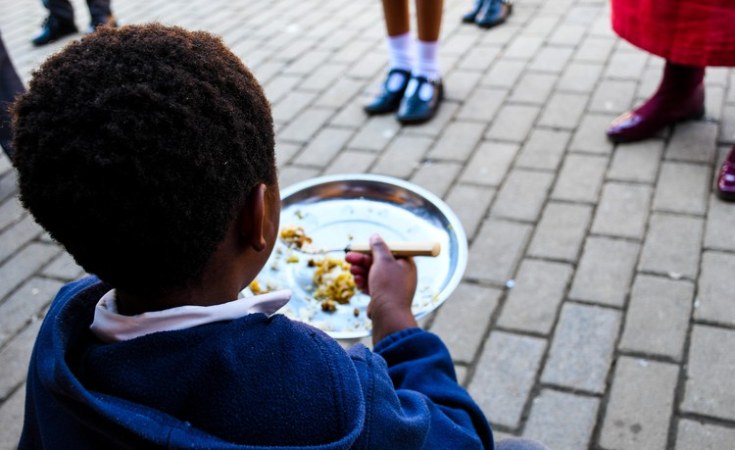
With nearly one in five households being food insecure, activists call for urgent action
- The documentary film What Feeds Us explores how industrialised agriculture contributes to environmental harm and food insecurity.
- At a screening in Cape Town on Friday, activists discussed what action can be taken to make the food system more equitable.
- Nearly one in five households in South Africa experiences food insecurity.
Activists attending the screening of a new documentary on the food system, What Feeds Us, have called for urgent action to solve food insecurity in South Africa.
The screening in Cape Town on Friday came days after the South African Human Rights Commission held hearings on how the structure of the food system contributes to food insecurity.
Keep up with the latest headlines on WhatsApp | LinkedIn
The documentary, directed by Alex Hendricks with cinematography by Jonathan Hendricks and editing by Mayur Vallabhjee, argues that industrialised agriculture is squeezing out smaller producers while contributing to environmental harm and food insecurity.
The film features the experiences of small-scale farmers, researchers and activists from Mpumalanga, the Eastern Cape and Western Cape.
According to StatsSA, nearly one in five households (19.7%) experienced moderate food insecurity in 2023. Severe food insecurity was experienced by 8% of households, meaning they regularly run out of food and go for a day or more without eating.
Despite the country producing a food surplus, many households cannot afford to eat. Agriculture Minister John Steenhuisen told the SAHRC last week that food prices are determined by market forces, not the department, and that exports are necessary for job creation.
But Tony Gerrans, executive director of Humane World for Animals South Africa, told GroundUp at the film screening that the current system prioritises profit over fairness and sustainability.
"We seem to have got confused between the pursuit of profits and a food system that is just and sustainable, and those two things aren't the same," he said.
He called on the government to redirect subsidies and enforce existing regulations. "If we want to have a truly just food system that is premised on empowerment, we need to address the undue influence that these corporations have."
"The system we have now favours the entrenchment of large oligopolies that command pricing power and control the supply chain," he said. These dynamics make it nearly impossible for smaller farmers and beneficiaries of land reform to compete.
Method Gundidza, director of EarthLore Foundation, maintains that the heavy reliance on chemicals in food production is degrading the soil and ultimately human health.
"The soil loses its virility and then they need to pump in even more and more chemicals," he said. "What we see playing out on the soil is exactly what will play out in the person when we consume the food that comes from there."

Sign up for free AllAfrica Newsletters
Get the latest in African news delivered straight to your inbox
Busisiwe Mgangxela, an agroecology farmer in East London, said access to markets remains one of the biggest challenges for small-scale farmers.
She said government institutions represent an untapped opportunity.
"There are consumers like the Department of Education, Defence, Correctional Services and SASSA. These are the areas we should be selling to. There is a market available, but the issue is accessing it," she said.
Marshall Rinquest, environmental educator and founder of Valley Food Gardens, said communities cannot afford to wait for intervention from above. He said communities need to "build something solid, consistent and sustainable", because "we cannot depend on government".
He said local municipalities are "often unaware" of what is already happening at grassroots level, and urged greater visibility and support for community-led initiatives.
"No one wants to see social instability when people are hungry," Gerrans added. "A society can move very quickly from being socially stable to being unstable when people are desperate because they are hungry."
