For 25 years, Friends of the Congo has worked to pull back the curtain on one of the world's most resource-rich yet persistently impoverished nations -- the Democratic Republic of Congo. Through education, advocacy, and community support, the Washington, D.C.-based organization has built a global network dedicated to centering the voices of Congolese people in conversations that too often happen without them.
The organization operates on two core pillars. The first is raising global consciousness about what is transpiring in the DRC -- not through dry policy briefs alone, but through art, music, dance, theater, and popular education that meets people wherever they are. The second is providing direct support to frontline communities: those living in the rainforest, the peatlands (carbon-rich wetlands), the urban centers, the conflict zones of the east, and the mining communities of the south. For these populations, Friends of the Congo serves as both a megaphone and a bridge, amplifying their stories while connecting them to the resources and networks concentrated in Washington, D.C.
That proximity to power has never mattered more than it does now. The past year brought a series of developments with profound implications for the Congolese people. In early 2025, the Trump administration launched its Critical Minerals Ministerial, convening 54 nations to establish a trading bloc for minerals vital to U.S. defense, energy, and commercial interests. The DRC -- home to 70% of the world's cobalt and the second-largest copper reserves on earth -- was squarely at the center of those discussions.
Follow us on WhatsApp | LinkedIn for the latest headlines
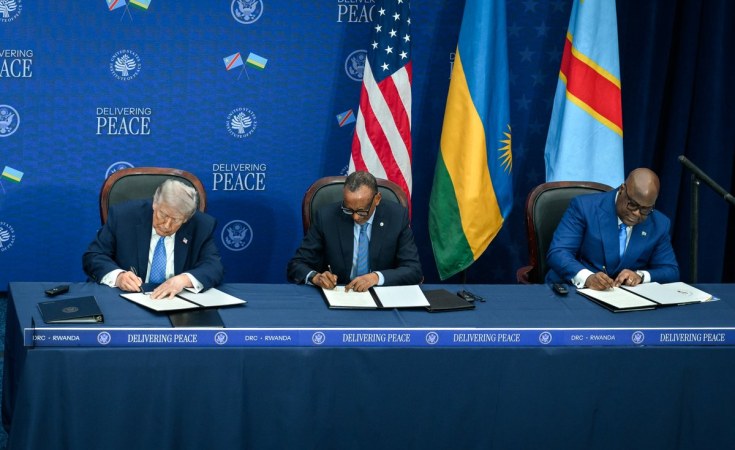
A bilateral "strategic partnership" agreement between the United States and the DRC, framed publicly as a peace deal with neighboring Rwanda, has drawn sharp criticism. Friends of the Congo has worked to translate and disseminate the agreement's fine print to Congolese citizens who might otherwise never encounter it. The details are striking: the DRC's strategic minerals would be placed in a joint U.S.-Congolese reserve, with the Congolese government required to report to the U.S. ambassador quarterly. Within 12 months, the deal calls for legislative, fiscal, and potentially constitutional changes. The United States retains the right of first refusal on listed strategic minerals.
Friends of the Congo has helped channel civil society opposition to the agreement, including a constitutional court challenge filed by Congolese lawyers. The organization has also amplified regional criticism -- notably from South Africa's mining minister, who argued the DRC was undermining not just its own future but that of the entire continent -- a continent that might otherwise use its mineral wealth as a foundation for pan-African industrial development.
The stakes are clear. A country whose economy sits atop an estimated $24 trillion in natural resources has 70% of its population living on less than $2.15 a day. Friends of the Congo exists to name that contradiction, to inform those most affected, and to support the Congolese people as they organize for something different.

Sign up for free AllAfrica Newsletters
Get the latest in African news delivered straight to your inbox
For more information about Friends of the Congo, a new Strategic Partner, please visit their website at: https://friendsofthecongo.org/
