Nairobi — All Warring Parties Threaten Assistance, Protection for Civilians
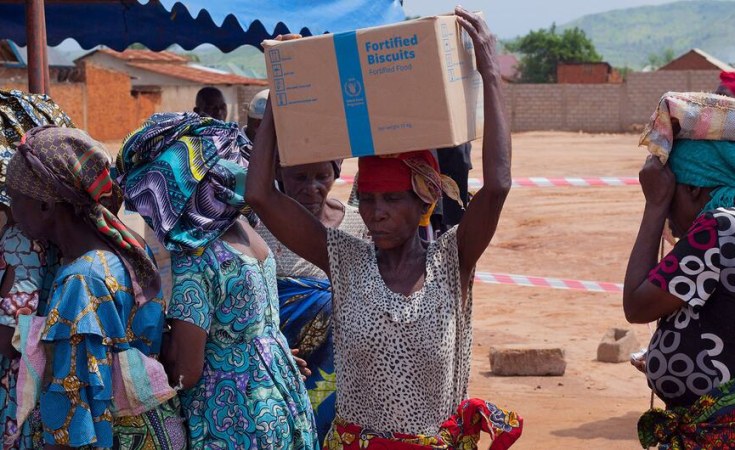
Congolese armed forces and armed groups in the South Kivu highlands are interfering with aid delivery and preventing civilians from fleeing fighting in eastern Democratic Republic of Congo, Human Rights Watch said today.
The United Nations Security Council, which will meet on Congo on April 15, 2026, should call on all warring parties to facilitate humanitarian aid delivery and safe passage of civilians, and consider new sanctions on abusive commanders.
"Civilians in South Kivu's highlands are facing a dire humanitarian crisis and live in fear of abuses by all parties," said Clémentine de Montjoye, senior Great Lakes researcher at Human Rights Watch. "More attention is needed for this vastly underreported conflict or this bad situation will get even worse."
Keep up with the latest headlines on WhatsApp | LinkedIn
Human Rights Watch spoke with six sources in Minembwe, the main highlands city currently under the control of the Twirwaneho and M23 armed groups; four in Baraka, Fizi territory, under Congolese army and Wazalendo militia control; and over a dozen humanitarian, civil society, military, UN, diplomatic, and media sources. Human Rights Watch also reviewed reports, photographs, and a video following two apparent drone attacks.
The UN has classified as "severe" the humanitarian restrictions on access to South Kivu's Hauts Plateaux, an area covering parts of Fizi, Mwenga, and Uvira territories. Security incidents involving the Congolese army and armed groups in South Kivu increased after the UN peacekeeping mission in Congo, known by its French acronym MONUSCO, completely disengaged from the province in June 2024 as part of an agreement between the UN and the government. Information about ongoing abuses is scarce due to the lack of access to the area and the very limited telecommunications.
Human Rights Watch received credible information regarding eight incidents involving drone strikes in South Kivu between January and March 2026. Analysis of Armed Conflict Location & Event Data Project (ACLED) data, which compiles and verifies reports of political violence, shows a significant increase in reported air and drone strikes in the South Kivu highlands since November 2025.
The long-running conflict involves on one side the Twirwaneho, from the Banyamulenge community, now allied with Rwandan forces and the M23, and with reported links to some Burundian armed groups. These groups are opposed by the Congolese armed forces and Wazalendo (formerly Mai Mai) armed groups from the Babembe, Bafuliru, and Banyiundu communities, among others. The Burundian army currently has about 4,000 troops deployed to Fizi and Mwenga territories to fight alongside Congolese armed forces, according to security sources.
UN and military sources have reported an increased presence of armed forces and armed groups in urban centers. Witnesses and relatives told Human Rights Watch that drone attacks in the highlands killed at least two Banyamulenge people in March 2026. On March 23, an 86-year-old man was killed while tending his cattle near Minembwe. On March 30, a 14-year-old boy was killed in a field near his village in Fizi territory. It is unclear if the attacks intended to target military objectives. Residents also said scores of livestock had been killed and houses destroyed in drone attacks. "We are being bombed all the time, and many people are being injured," said a medical worker in Minembwe.
A community radio station in Madegu, near Minembwe, was damaged in an apparent drone attack on March 9, disrupting access to information in an area where the phone network has been disrupted for over a year. "There were journalists in the radio [station] who fled," said a witness present. "In Minembwe, when we see reconnaissance drones, we know we have to flee.... After they left, the drones fired [on the station] and chased them into a neighboring field." A witness sent Human Rights Watch a photograph of the station that showed at least four damaged solar panels.
Also in March, an apparent drone attack was carried out on a church in Ilundu village at night. Human Rights Watch reviewed nine photographs and a video that witnesses said was of the church, showing two large holes on the roof.
While Human Rights Watch could not establish with certainty responsibility for these strikes, the targets suggest that the Congolese army or allied fighters controlled the drones, Human Rights Watch said. Human Rights Watch spoke to the Congolese army's regional commander on April 4 to request further information on the strikes and military targets but had not received a response.
The Twirwaneho have threatened and forcibly recruited civilians in the highlands. Minembwe residents and UN and diplomatic sources said that the Twirwaneho had forced families to provide a fighter or financially compensate the armed group, and retaliated if they refused. The sources said that the Twirwaneho had also blocked civilians from leaving Minembwe, despite ongoing attacks in the area, to protect itself from attack and bolster its image as a "local defense" group.
Since the M23 and Twirwaneho's capture of Minembwe in March 2025, the area has been surrounded by Congolese and allied forces. Ongoing fighting has seriously affected the delivery of humanitarian aid and contributed to food shortages in the city. Humanitarian organizations have had little to no access to the area for over a year. Medical facilities have had dire shortages of medicine and basic necessities. The lack of staples such as sugar and salt has driven up prices, now five times higher than in other cities in South Kivu.
Civilians in areas remaining under Congolese control have also faced shortages of medicine and basic necessities, based on media reports and aid sources.
Wazalendo fighters have harassed and attacked people, including members of the Banyamulenge community, based on residents and media reports. Wazalendo fighters, including the armed group headed by William Yakutumba, have arbitrarily detained and held people accused of supporting the M23.
A person recently held in an informal detention cell in Baraka said he had to pay hundreds of thousands of Congolese Francs to be released. "They beat me badly," he said. "They harass the population and accuse us of supporting the M23 to make us pay."

Sign up for free AllAfrica Newsletters
Get the latest in African news delivered straight to your inbox
The Wazalendo have set up barriers to collect between 1,000 and 2,000 Congolese Francs (between US$0.43 and 0.86) from passersby. "From Baraka to Fizi, there are more than 10 barriers set up by the Wazalendo and Congolese army," said a Baraka resident. "Each time you have to pay 1,000 Congolese Francs." Another resident said he had counted eight Wazalendo barriers set up between Baraka and Misisi, a distance of 130 kilometers.
In February and March, the Congolese army's regional commander, Gen. Fabien Dunia, met with Wazalendo groups in Uvira and Baraka to seek to ban anyone armed from entering urban centers. General Dunia told Human Rights Watch that his forces had arrested several abusive Wazalendo fighters in Uvira and Baraka.
All parties to the conflict in South Kivu should fully abide by the laws of war. The Congolese authorities have an obligation to investigate and appropriately prosecute alleged war crimes committed by their forces or on their territory.
MONUSCO should consider re-engagement in South Kivu under a December 2025 UN Security Council resolution that would allow for its resumption for ceasefire monitoring and verification, Human Rights Watch said.
"Congolese authorities should rein in the Wazalendo coalition and impartially investigate and prosecute all those responsible for serious abuses, including those interfering with aid delivery," de Montjoye said. "Concerned governments should urgently press warring parties to take all feasible precautions to minimize civilian harm and facilitate the delivery of vital aid."
