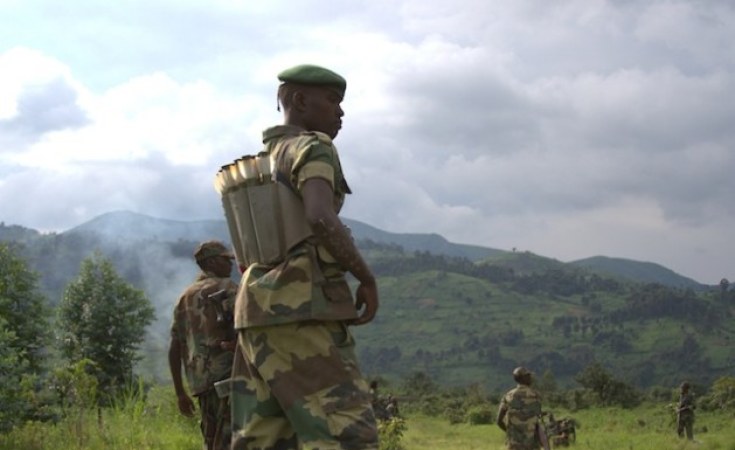
The government of the Democratic Republic of Congo and M23 rebel delegates were meeting in Geneva on Tuesday to try to end a war that has devastated the east of the country, as fighting shifts into remote highland areas that are difficult to access and increasingly dangerous, despite repeated ceasefire efforts.
Fighting is currently centred around the eastern provinces of North Kivu and South Kivu, where the M23 armed group has seized territory and the Congolese army and its allies are trying to push it back.
The ninth round of talks, which began on Monday, is taking place near the Swiss city of Montreux, with the location kept secret until late in the day for security reasons, sources told RFI.
A Qatari delegate and United States envoy Massad Boulos are co-moderating the session, while a representative from the United Nations mission Monusco is attending as an observer.
Follow us on WhatsApp | LinkedIn for the latest headlines
Early discussions were reportedly difficult, with delegates disagreeing on the agenda and the composition of delegations, while the M23 side, which arrived with six delegates and six experts, struggled to have its full team accepted.
DR Congo will receive third-country deportees under new deal with US
Highland frontlines
In South Kivu, clashes have spread from towns into highland areas, which are harder to reach and control.
This followed M23's withdrawal from the city of Uvira. Rather than calming the conflict, this pushed the fighting into more isolated and strategic areas.
Clashes are now concentrated in the high plateaus of Fizi, Mwenga, Uvira and Kalehe territories, particularly around a triangle formed by Point Zero, Mikenge and Minembwe.
Local sources contacted by RFI said control of these plateaus could open the way towards Baraka, Fizi and further south.
The fighting has reportedly involved heavy weapons, small arms and drones, with front lines moving closer to populated areas.
At least 541 people were admitted to three hospitals in South Kivu with gunshot wounds in three months - 165 in Bukavu, 186 in Uvira and 190 in Fizi. The number of combatants among the wounded has risen, suggesting more direct fighting.
Belgian court to decide on holding trial over 1961 killing of DRC leader Lumumba
Civilians cut off
Aid organisations say they must seek security guarantees from armed groups in order to access the areas where fighting is taking place, with some refusing to let humanitarian workers pass.
Around Minembwe, testimonies collected by RFI indicate that part of the Banyamulenge population, a Tutsi minority in eastern DRC, has been living under blockade for more than a year.

Sign up for free AllAfrica Newsletters
Get the latest in African news delivered straight to your inbox
Fresh attacks were reported on Monday across South Kivu and North Kivu, including in civilian areas. Lawrence Kanyuka, spokesperson for the M23 rebel movement, described a series of strikes.
"At 06:10, the coalition forces of the Kinshasa regime launched attacks against several densely populated areas, notably Chambombo, Matare, Gishihe, and Mwamiwijwi, in the Kalehe territory," Kanyuka said in a statement.
Landslide at DR Congo coltan mine kills more than 200, including children
Later attacks included drone strikes.
"At 18:30 and then at 18:45, a CH-4 type drone bombed the inhabited areas of Shingisha and Kinumbi, in the Ruhinzi group, Masisi territory," Kanyuka said, adding that areas in Minembwe came under repeated attack.
M23 leaders linked the violence to the timing of the talks.
"The Kinshasa regime demonstrates a clear intention to sabotage the ongoing peace process in Switzerland by launching widespread attacks against civilian populations," Kanyuka said.
The group's political leader Bertrand Bisimwa also accused government forces of stepping up attacks ahead of the negotiations.
"The Kinshasa regime chose the moment of the resumption of political negotiations to shell several villages in Minembwe using Sukhoi aircraft," Bisimwa said on Sunday.
Mediators are expected in the coming days to push for better humanitarian access, including the possible opening of Goma and Bukavu airports to aid flights, a diplomatic source told RFI.
The talks are also revisiting why protocols already signed by both sides on prisoner releases and especially on a ceasefire are yet to be actioned.

