

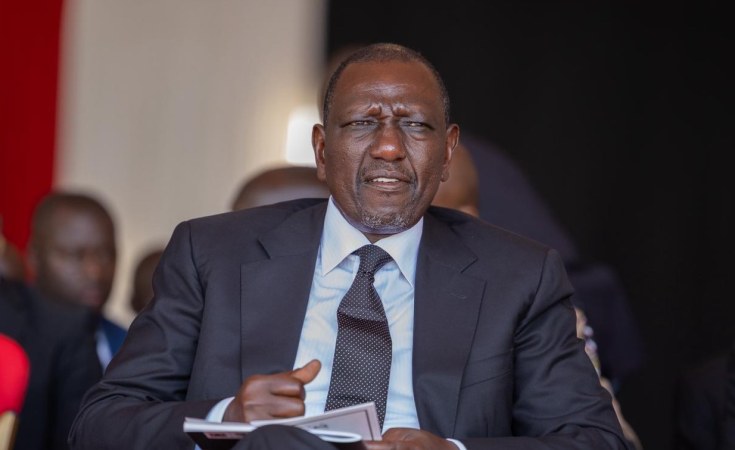
Nairobi — President William Ruto has defended fuel prices in Kenya, attributing them to the country's economic status and infrastructure demands.
Speaking during Sunday Church Service at the African Gospel Church - Karen, the President said Kenya, as a middle-income economy, cannot be compared to its regional neighbors, most of which are classified as least developed countries.
"Kenya is a middle-income country. Our neighbors are least developed countries. There's a big difference. If you want to compare Kenya fairly with others, compare Kenya with other middle-income countries. That is how you will get the figures right," he said.
He added that fuel levies help fund road infrastructure, noting that Kenya maintains over 20,000 kilometers of tarmac roads and is currently constructing an additional 6,000 kilometers.
"20,000 km of tarmac to maintain here in Kenya is actually the same for the other six or seven East African countries if you add the number of kilometers in Uganda, Tanzania, DRC, Rwanda, Burundi, South Sudan, it is not 20,000 km," the President stated.
Ruto urged Kenyans to view development as a long-term investment, saying higher standards come with increased costs.
"The 6,000 kilometers we are constructing at the moment in Kenya is equivalent to all the tarmac in our neighboring country which has been built for 60 years to do. We are setting our standards even higher. And and that's how transformation looks like. Transformation is not about making peace with mediocrity," Ruto explained.


