

Martial Law in Ituri Province Restricts Free Speech, Assembly
This week, a military court in the town of Bunia, in the Democratic Republic of Congo's Ituri province, will hand down a verdict in the case against three members of the citizens' movement Lutte pour le Changement (Struggle for Change, or Lucha).
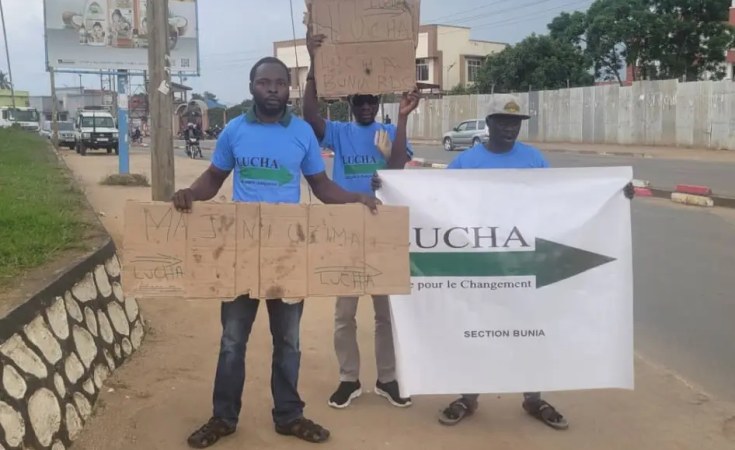
The activists were arrested on March 12, 2026, after organizing a peaceful demonstration calling for access to safe drinking water, an essential service that remains severely limited in many parts of eastern Congo. The activists had informed local authorities of the planned protest three days earlier.
Keep up with the latest headlines on WhatsApp | LinkedIn
Olivier Sefu Anjisina, Jackson Kambale Odo, and Joachim Kamate Paluku have been held in Bunia Central Prison on charges of "undermining state security," a vague and overly broad offense frequently used to suppress dissent. Under martial law orders, imposed in conflict-ridden North Kivu and Ituri since 2021, civilians suspected of crimes are prosecuted before military, not civilian, courts. The African Commission on Human and Peoples' Rights has emphasized that military courts should not have jurisdiction over civilians under any circumstances.
President Felix Tshisekedi's administration declared martial law to "swiftly end the insecurity which is killing our fellow citizens on a daily basis," according to a government spokesman. But martial law has not ended the atrocities in eastern Congo, but instead has been used to suppress people's rights to peaceful assembly, free speech, and fair justice. Military authorities have free rein to search people's homes, ban publications and meetings deemed threatening to public order, and restrict people's movements.
The arrests reflect a broader crackdown against civil society and other critical voices in eastern Congo. Human rights defenders and activists from groups like Lucha have long faced harassment, arbitrary detention, and judicial intimidation for their advocacy. In April 2022, a military court convicted 13 Lucha activists during a peaceful demonstration in Beni, North Kivu for "provocation and incitement to breaches of public authority." Security forces have killed three Lucha activists in Beni since 2020.
Congo's martial law permits vague and overbroad restrictions beyond those permitted under the International Covenant on Civil and Political Rights, threatening basic rights to free expression, peaceful assembly, and association.
Congolese authorities should drop all charges against the activists and ensure their immediate release. President Tshisekedi should lift abusive restrictions on civic space under the pretext of the state of siege and revoke military court authority to try civilians in accordance with human rights standards.
Clémentine de Montjoye, Senior Researcher


