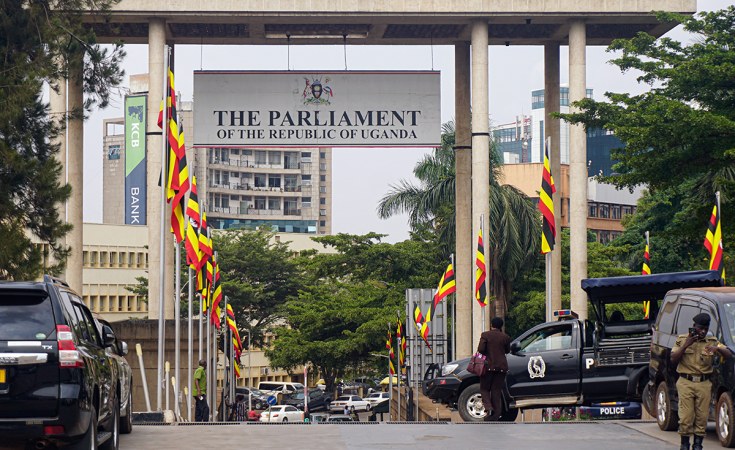
The government has defended the proposed Protection National Sovereignty Bill, 2026, dismissing growing criticism that it is designed to target political opponents and restrict civic freedoms.
Attorney General Kiryowa Kiwanuka and State Minister for Internal Affairs David Muhoozi told Parliament that the Bill is aimed at protecting Uganda's political independence from foreign interference, particularly in electoral and governance processes.
They were responding to concerns raised during discussions before the Defence and Legal Affairs Committee of Parliament, where lawmakers questioned the urgency and scope of the proposed legislation.
Kiryowa said the law is intended to regulate political financing and prevent external actors from influencing Uganda's internal political processes.
Keep up with the latest headlines on WhatsApp | LinkedIn
"The Protection of National Sovereignty Bill, 2026 will only affect politicians, political parties, and NGOs that fail to comply with its provisions as stipulated in Clause 10," he said.
He added that government has observed increasing levels of unidentified funding flows, particularly within political activities, which he said could potentially destabilise national programmes if left unchecked.
Lawmakers, however, questioned why the government is introducing a new law when similar provisions already exist under regulations governing political parties, NGOs, and other entities, suggesting that amendments to existing laws would be more appropriate.
Ruhinda South MP Donozio Kahonda asked how a Ugandan citizen could be classified as a foreigner under the proposed framework, seeking clarity on the criteria.
Kilak South MP Gilbert Olanya also criticised the Bill, arguing that it is being rushed through Parliament at the end of the legislative term and warning that it could be politically motivated.
Olanya further claimed the timing of the Bill raised suspicion, suggesting it could be aimed at limiting opposition mobilisation ahead of future political activity.
"The law is being fast-tracked, and it appears targeted at specific political actors," he said.
Concerns were also raised over whether the Bill could affect NGOs, religious institutions, and organisations working with vulnerable groups such as children, persons with disabilities, and orphans.
However, Kiryowa maintained that non-political activities would not be affected.
"If an NGO is supporting orphans, that is consistent with Uganda's development policy and can be supported by anyone outside the country," he said.
Government insists the Bill is focused strictly on political financing and safeguarding sovereignty, while critics continue to argue that its broad provisions risk extending far beyond its stated intent.

Sign up for free AllAfrica Newsletters
Get the latest in African news delivered straight to your inbox
The Bill remains under committee review as parliamentary debate continues.
