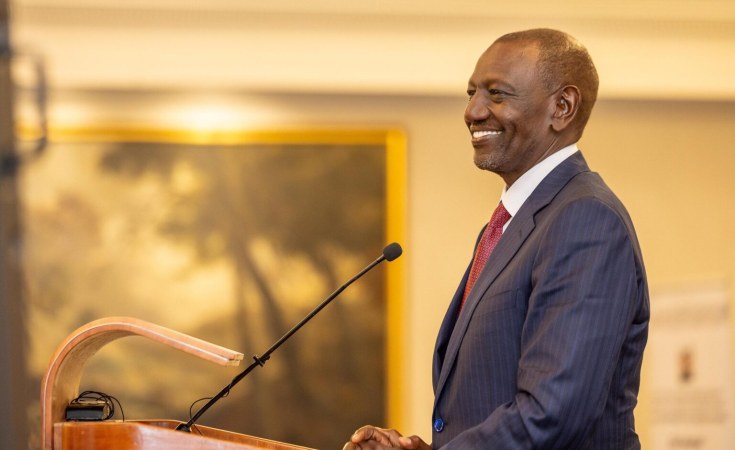
Kenya's President William Ruto has announced plans for his country to invest in Uganda's oil refinery, in a move aimed at strengthening regional energy cooperation and long-term infrastructure development.
Ruto made the revelation on Thursday during his keynote address at the Africa We Build Summit held in Nairobi.
He said the planned investment is partly a reciprocal gesture following Uganda's recent acquisition of shares in the Kenya Pipeline Company (KPC).
In February, Uganda--through the Uganda National Oil Company (UNOC)--finalised a deal to acquire a 20.15 per cent stake in KPC via its initial public offering on the Nairobi Securities Exchange.
Follow us on WhatsApp | LinkedIn for the latest headlines
Uganda purchased the shares at approximately Shs918 billion (KSh32.95 billion), a move widely seen as strategic in securing long-term access to petroleum products while deepening regional energy ties.
Speaking at the summit, Ruto highlighted the significance of Uganda's investment, revealing that President Museveni had previously expressed strong interest in the pipeline company.
"President Museveni called me and said, I want to buy 50% of Kenya pipeline. And he told me, I don't care the price," Ruto said.
He added that the Ugandan leader's approach reflected a broader vision for regional transformation beyond immediate financial considerations.
"President Museveni could see beyond the price. He could see the opportunity of transforming our region together," he said.
Ruto then affirmed Kenya's intention to reciprocate by backing Uganda's refinery project.
"Mzee, I want to assure you that the same way you invested in Kenya pipeline, Kenya is going to invest in your refinery and in the future of our resources together," he said.
President Museveni, who also travelled to Nairobi, is attending the summit alongside other African leaders, investors, and policymakers.
The two-day meeting, organised by the Africa Finance Corporation in partnership with the Government of Kenya, has brought together stakeholders from both the public and private sectors.
Discussions are focused on practical strategies to move Africa's infrastructure projects from planning to implementation, with an emphasis on long-term investment and regional collaboration.


