

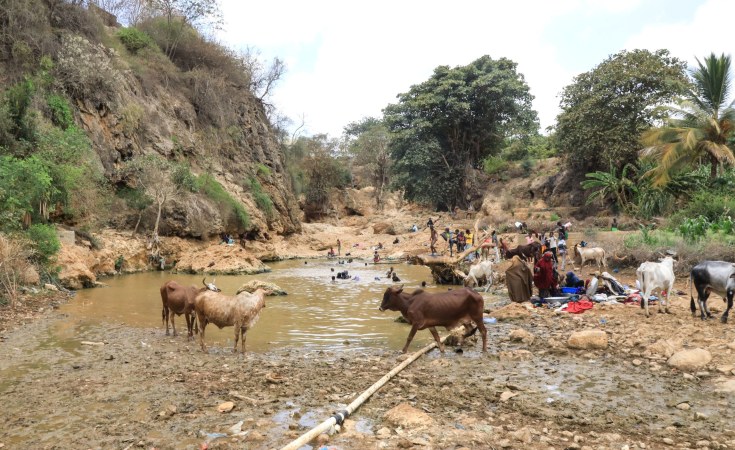
Geneva — Nearly 62,000 people have been displaced by drought since the beginning of this year, while more than six million people face hunger across five districts in Somalia, the International Organisation for Migration (IOM) said Friday.
“We think that the total figure could be over 300,000 for the country, but we only have the data for five districts as of today,” said Brian Kelly, senior programme coordinator with IOM Somalia, speaking at a Geneva UN press conference from Nairobi.
The IOM also warned that projections indicate drought-related displacement of approximately 125,000 additional people between April and the end of June, despite rainfall forecasts.
Drought now accounts for three out of every four new displacements in the five most affected districts in Somalia, which has an estimated population of around 19 million.
Keep up with the latest headlines on WhatsApp | LinkedIn
“At the same time, nearly 6.5 million people, almost one out of every three in the country, are facing high levels of hunger, while more than 1.8 million children are expected to suffer from acute malnutrition this year,” said Kelly.
“These figures point to a rapidly deteriorating humanitarian situation.”
Kelly said that in the hardest-hit areas, drought is driving crop failure, livestock losses and water shortages, forcing families to leave their homes in search of assistance.
“Many are moving to urban areas and displacement sites that are already overstretched, where access to shelter, water and basic services remains limited,” said the IOM official.
He explained that families are arriving in places like Mogadishu and Baidoa that cannot support them, and that often after their water has run out, crops have shrivelled and livestock dies.
Kelly said that rural-to-urban migration “is as old as time,” but the forced displacement in Somalia is affecting the most vulnerable.
Rising malnutrition
Health facilities in affected areas are seeing rising cases of malnutrition, particularly among children.
They have also become gathering points, as they are often the only places with access to water.
The UN official cited the case of a young woman named Ido from Boroma district, who used to receive water deliveries in her village, but since they stopped, she now walks five kilometres to the nearest clinic.
Another woman, Asha, who lives 15 kilometres away, has made the same journey five times in the past month.
UN agencies and NGO partners have received only 14 percent of the total funding requested for humanitarian assistance in 2026.
She said that without rain, crops cannot grow, and families are left sharing what little they have.

Sign up for free AllAfrica Newsletters
Get the latest in African news delivered straight to your inbox
Kelly said that needs are rising faster than available resources.
Collectively, UN agencies and NGO partners have received only 14 percent of the total funding requested for humanitarian assistance in 2026.
IOM has recently concluded a “hyper-prioritisation” of needs and is urgently seeking US$10 million to save lives and provide a basic level of dignity to the most vulnerable.

