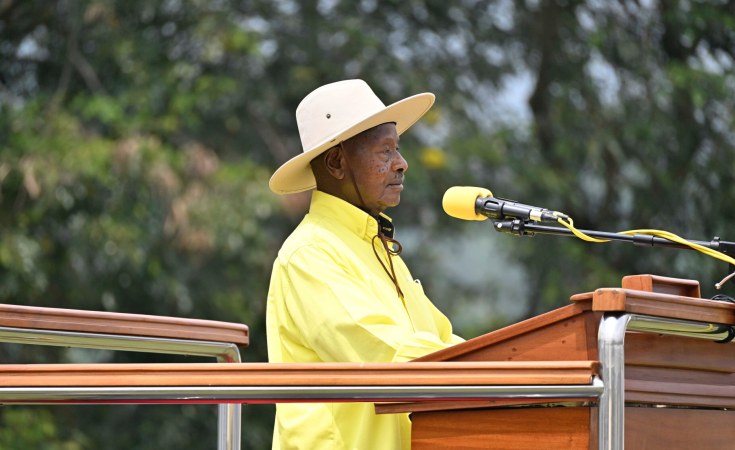
President Museveni has assented to the Employment (Amendment) Act, 2025, introducing sweeping reforms aimed at strengthening worker protections--but leaving the contentious issue of a national minimum wage unaddressed.
The new law comes at a time when Uganda continues to operate without an enforceable minimum wage, despite years of debate and repeated calls from labour unions and civil society, particularly as the country approaches International Labour Day.
The amended legislation updates the Employment Act, 2006, with a focus on protecting vulnerable workers, including domestic workers, casual labourers, and migrant employees.
Follow us on WhatsApp | LinkedIn for the latest headlines
Among the key reforms is the formal recognition of domestic workers under the law, alongside stricter safeguards against exploitation such as excessive working hours, forced labour, and abuse within private households.
The Act also strengthens regulation of recruitment agencies, especially those facilitating foreign employment, requiring licensing, proper documentation, and enforceable contracts for migrant workers.
However, analysts note that while the law addresses structural and rights-based gaps, it stops short of tackling wage regulation--one of the most pressing concerns for Ugandan workers.
Uganda has not operationalised a national minimum wage despite the existence of the Minimum Wages Advisory Board framework, leaving wages largely determined by market forces.
Labour activists argue this has contributed to widespread underpayment, particularly in informal and low-income sectors.
The new Act introduces improved protections for breastfeeding mothers, requiring employers to provide nursing breaks and, where possible, appropriate facilities.
It also clarifies conditions for casual workers, stating that continuous employment beyond six months may be converted into a formal contract--an effort to curb job insecurity.
Additionally, the law expands sexual harassment provisions to cover all workplaces regardless of size and gives the Minister responsible for labour powers to introduce broader preventive measures in line with international standards.
Reforms also address inconsistencies in severance pay calculations and clarify entitlements related to sick leave, areas that had previously relied heavily on court interpretation.
The legislation was initially tabled in 2022 and passed by Parliament in 2023, but was returned by President Museveni for reconsideration, citing concerns over recruitment agency regulation, adjudication powers of labour officers, and licensing responsibilities.
Parliament's committee on Gender, Labour and Social Development later reviewed and incorporated several of the President's recommendations, maintaining provisions such as the conversion of long-term casual employment into formal contracts in line with International Labour Organisation standards.

Sign up for free AllAfrica Newsletters
Get the latest in African news delivered straight to your inbox
Despite the progress, the absence of a minimum wage provision continues to dominate labour discourse, with stakeholders warning that legal protections alone may not translate into improved livelihoods without clear wage benchmarks.
As Uganda marks Labour Day, attention is likely to remain focused on whether government will take the next step in addressing wage inequality through a comprehensive minimum wage policy.

