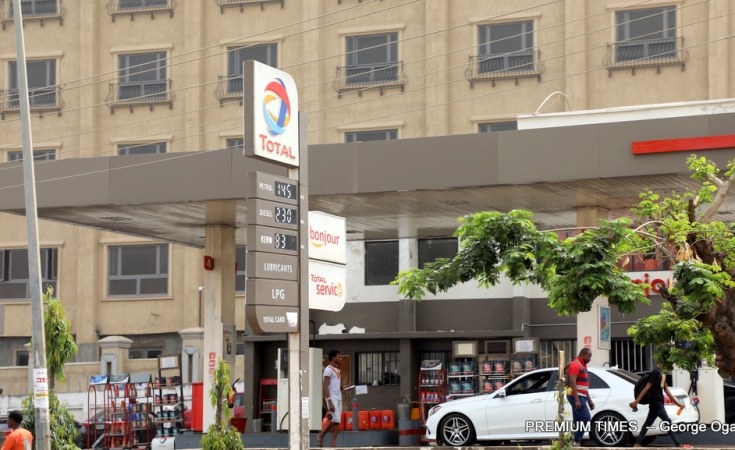
Kenya fuel prices surged in mid-April 2026, reigniting fierce debate over the role of taxes and levies in petrol pricing.
A familiar claim resurfaced, with political leaders from across the divide charging that "excessive" government taxes were to blame. Lawmaker and former budget committee chair Ndindi Nyoro claimed taxes and levies account "for around 50%" of fuel prices - the same claim made by then deputy president William Ruto on the 2022 campaign trail.
But as president, Ruto has taken fuel policy on a full U-turn tour, scrapping subsidies, doubling Value Added Tax to 16%, then bringing back subsidies and halving the VAT, all while defending high prices as the cost of a "middle-income economy".
At the heart of the debate is a simple question: what actually makes up the pump price? This explainer seeks to cut through some of that whiplash.
Keep up with the latest headlines on WhatsApp | LinkedIn
In Kenya, the energy and petroleum regulator sets maximum monthly retail prices enforced on the 15th of every month. The price of every litre has five components: the cost of importing the fuel, government taxes and levies, logistics from the port of Mombasa to the fuel station, company margins and subsidies.
The landed cost - the largest single component - covers the international purchase price of fuel, the exchange rate used to convert dollars into shillings, port handling fees, storage, inland transport and financing costs.
Oil marketer's margins are set by the regulator which caps what companies can earn per litre based on the estimated cost of running a standard petrol station.
A 2025 analysis by policy thinktank Institute of Economic Affairs Kenya found those margins have been quietly rising, a significant finding given that some oil marketers were caught hoarding fuel in April 2026, betting on a price increase.
The government also uses the petroleum development levy (PDL) to bring the final price down when import costs spike. It is the only item in the pricing formula that reduces what consumers pay at the pump. In April 2026, that subsidy kept kerosene prices unchanged, based on a government directive to protect poor households who rely on it.
For every litre of petrol purchased, the total tax burden comes to KSh72.38, or 36.6%. Diesel is taxed at KSh62.91, or 32%, and kerosene at KSh49.34 or 32.3%. None of these is at 50%, as often claimed.
| Components of fuel prices in Kenya (KSh/litre) | |||
| Component | Petrol | Diesel | Kerosene |
| Landed cost (import price) | 107.23 | 133.89 | 170.86 |
| Taxes & levies | 72.38 | 62.91 | 49.34 |
| Storage & distribution | 4.93 | 4.66 | 4.75 |
| Oil marketers' margins | 17.39 | 17.31 | 17.24 |
| Price stabilisation adjustment (PDL) | -4.34 | -22.15 | -89.41 |
| Final pump price | 197.60 | 196.63 | 152.78 |
Source: EPRA Addendum: Maximum Retail Petroleum Prices 16 April 2026
Taxes are compulsory payments to the government with no direct return, meaning they go into the general budget. Levies are also compulsory but are meant to fund a specific activity or service. In practice, the International Monetary Fund (IMF) notes that a levy can effectively become a tax if it has no clear link to the service it claims to fund. In fact, the two terms are often used interchangeably in Kenyan law and policy.
For example, the petroleum development levy is money collected from Kenyans at the pump to cushion them from fuel price spikes, yet lawmakers found it had been diverted to pay the Chinese firm operating the standard-gauge railway.
The government extracts two taxes and seven levies on every litre of fuel.
The taxes are:
- Excise duty at KSh21.95 petrol and KSh11.37 on diesel. It is a general tax for the national budget, used for debt servicing and public services.
- Value Added Tax at KSh17.81 on petrol and KSh17.85 for diesel. It is currently set at 8%. It was halved from 16% on 17 April 2026 for three months to limit the impact of the price spike.
The levies are:
- The Road Maintenance Levy, which at KSh25 per litre is the largest single levy. Increased from KSh18 in July 2024, it is meant to fund road repairs.
- Anti-Adulteration Levy of KSh18 per litre. Kenya has a long-running problem of rogue traders mixing cheaper kerosene into diesel and petrol. The levy was introduced in 2018 to close the price gap and reduce that incentive.
- The Petroleum Development Levy (PDL)
- Import Declaration Fee of KSh 3.50 which covers import documentation.
- Railway Development Levy of KSh2.10 per litre. This funds the standard gauge railway to help transport goods.
- Petroleum Regulatory Levy of KSh0.75 to fund the operations of the regulator, EPRA.
- Merchant Shipping Levy of KSh 0.03 per litre to fund maritime safety and port regulation.
Kenya's fuel tax structure has moved up and down in response to budget pressures, public protests and global oil shocks. Over the last seven years, the overall trend has been upward, according to regulatory monthly pricing data.
In September 2018, the government introduced 16% VAT on petroleum products, only to cut it to 8% within months following public protests. The rate held at 8% until 2023, though a 2020 change expanded the base on which VAT was calculated, raising the effective burden without touching the headline rate. VAT was restored to 16% under the Finance Act 2023.
The road maintenance levy then rose from KSh18 to KSh25 per litre in 2024, pushing total taxes and levies to their highest level on record. In April 2026, VAT was cut back to 8%.
Global oil is priced in US dollars, but Kenyans pay in shillings, which means the exchange rate directly shapes what consumers pay. For the April 2026 pricing cycle, the regulator benchmarked the rate at KSh130.08 to the dollar, up from KSh129.44 the previous month.
Because Kenya imports all of its refined petroleum products, any weakening of the shilling raises the landed cost before a single tax is added.
To manage this exposure, the government arranged a credit deal with oil firms in Saudi Arabia and the United Arab Emirates, under which Kenya receives fuel on 180-day payment terms.

Sign up for free AllAfrica Newsletters
Get the latest in African news delivered straight to your inbox
The so-called government-to-government deal, initiated in March 2023, was expanded in December 2024 and reportedly extended to 2028.
It helped stabilise the shilling in 2023 and 2024 by reducing dollar demand in the open market, and in April 2026, fuel imported outside the deal cost three times more per tonne than under it.
However, the arrangement carries financing interest and fixed premiums that are built into the landed cost. These end up at the pump, but are easy to miss.
Before winning the presidency in 2022, Ruto repeatedly argued that high fuel taxes were a major driver of expensive fuel. Once in office, however, his government doubled VAT to 16% in 2023.
After calling for an end to subsidies, his administration now uses them monthly. And on 15 April 2026, faced with a price spike of over KSh40 per litre, he signed an emergency bill cutting back VAT to 8% for 90 days.
The IMF cautioned about the fiscal implications, noting that while fuel subsidies and tax cuts can ease consumer pain, their costs can be severe for governments with limited fiscal room.
Taxes and levies do make up a large share of pump prices, and the burden is real. But the same government that taxes heavily also subsidises heavily when prices threaten to spiral.
The story of Kenya's fuel prices is ultimately about a government caught between a budget it needs to balance and a cost of living it cannot afford to ignore.
