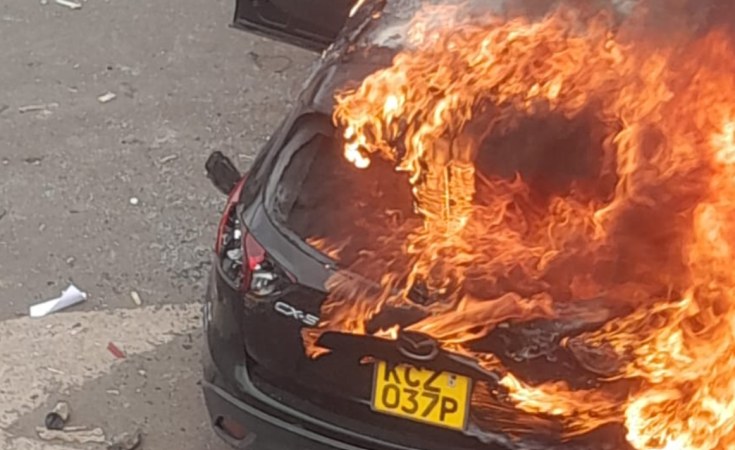
Nairobi — Thousands of stranded commuters streamed through roads and highways across Nairobi Monday morning after a nationwide transport strike crippled matatu and bus operations, transforming large sections of the capital into a "walking city" as pressure mounted on the government to urgently lower soaring fuel prices.
From dawn, crowded bus stops, deserted matatu termini and unusually quiet transport corridors reflected the scale of the coordinated shutdown orchestrated by the Transport Sector Alliance (TSA).
Across Thika Road, Mombasa Road, Waiyaki Way, Jogoo Road and Ngong Road, office workers, traders and students trekked several kilometres after failing to secure transport, while the few operational boda bodas charged sharply inflated fares.
Keep up with the latest headlines on WhatsApp | LinkedIn
The industrial action -- involving matatu operators, truckers, boda boda riders, digital taxi operators, logistics firms and private motorists -- is shaping into one of the broadest economic protests witnessed in Kenya in recent years.
"This action is not only for transport operators, but for every Kenyan citizen," the alliance said in a joint statement Sunday.
"The ordinary mwananchi is the ultimate victim of high fuel prices, paying more for transport, food, electricity and essential commodities."
The TSA brings together the Federation of Public Transport Sector (FPTS), Matatu Owners Association, Rig Owners Association, Motorist Association of Kenya (MAK), Association of Matatu Transport Owners (AMTO), Digital Boda Drivers and Deliveries Association, Truckers Association of Kenya, Digital Taxi Association of Kenya, Tour Guide Association, Association of Bus Operators, Counties Commuters Welfare Association, Mass Mobility Operators Association, Driving School Association and private motorists.
The coalition declared the strike "99 per cent successful" and vowed no vehicle would move beginning midnight Sunday.
At the heart of the standoff is a high-stakes political and economic gamble facing President William Ruto's administration: hold firm on fuel prices and risk deeper nationwide disruption, or concede to mounting pressure for immediate pump price reductions.
Will the government maintain current fuel prices despite mounting commuter paralysis and economic disruption, or will it yield to growing demands from transporters, businesses and politicians to lower fuel prices closer to Sh150 per litre?
The alliance wants the immediate reversal of the latest fuel price increase announced on May 14 and is demanding diesel and petrol prices be reduced to approximately Sh152 per litre, with a long-term target of between Sh140 and Sh150.
It is also seeking the resignation or dismissal of Energy Cabinet Secretary Opiyo Wandayi, disbandment of the Energy and Petroleum Regulatory Authority (EPRA), restoration of a competitive fuel procurement system and revival of the Changamwe Oil Refinery.
"Enough is enough. Fuel is the lifeblood of the economy. When fuel prices rise beyond reason, the entire nation suffers," the statement added.
The strike comes amid intensifying warnings from business leaders and politicians that the latest fuel increases could trigger severe inflationary and economic consequences.
The Kenya National Chamber of Commerce and Industry (KNCCI) warned that the latest EPRA review could slash MSME profit margins by up to 15 per cent while sharply increasing transport, manufacturing and food distribution costs.
KNCCI President Dr Erick Rutto described the fuel hikes as "an economy-wide shock," warning that transport and logistics costs could rise by between 10 and 20 per cent while food prices may increase by up to 7 per cent as businesses transfer rising costs to consumers.
"The latest increase is expected to squeeze MSME cashflows and profit margins by between 5 and 15 per cent," KNCCI stated on Friday.
Under the latest pricing cycle effective May 15 to June 14, diesel prices in Nairobi rose by Sh46.29 to Sh242.92 per litre while super petrol increased by Sh16.65 to Sh214.25.
The chamber further warned that Kenya risks losing competitiveness against regional economies such as Uganda and Tanzania due to persistently higher fuel costs.
Former National Assembly Budget Committee Chairperson Ndindi Nyoro has emerged as one of the strongest voices calling for immediate intervention to prevent what he termed an impending economic crisis.
Speaking in Nairobi on Friday, Nyoro warned that failure to urgently contain the fuel spike could hurt the economy "to the tune of hundreds of billions."
"We spend a little more money in terms of waivers and subsidies, and then we protect the economy going forward in the medium and long term," Nyoro said.
"Or we become laissez-faire and have a price to pay daily economically speaking."
Nyoro proposed an emergency three-pronged intervention to bring fuel prices below Sh190 per litre.
His proposals include reducing fuel distributors', retailers' and wholesalers' margins by Sh4 per litre, scrapping the 8 per cent VAT on petroleum products reinstated through Legal Notice No. 70 of April 15, 2026, and abolishing the Sh7 Road Maintenance Levy increment introduced in 2024.
"The second thing is that we must reduce our VAT further from the current 8 per cent to zero. In the short term, we must exempt fuel products from VAT," Nyoro stated.
According to his projections, the combined measures would reduce super petrol prices to approximately Sh186 per litre and diesel to around Sh189.
Nyoro also called for the immediate release of Sh5 billion from the Fuel Stabilisation Fund to cushion diesel prices, arguing that diesel costs have the largest ripple effect across the economy.
"Diesel is an ascendant input in every production that we do in this country," he said.
He further argued that taxes and domestic margins remain the biggest contributors to high pump prices.
"We are talking about close to Sh75 in taxes and levies and then the rest around Sh25 in terms of distribution and margins," he said.
Nyoro disclosed that he has already written to the Clerk of the National Assembly seeking amendments to both the VAT Act and Road Maintenance Levy framework to facilitate the proposed reductions.
"Whether you are going to reduce fuel prices or not is not on the table. You must reduce fuel prices. It is a matter of when," he stated.
Monday's commuter paralysis appeared to validate many of those fears in real time.
As transport operations stalled, schools and businesses activated contingency plans amid expectations of prolonged disruption.
The Kenya Private Schools Association (KPSA) advised schools to prepare for transport interruptions affecting learners, staff and parents, while recommending flexibility in reporting times and caution along likely protest hotspots including Nairobi CBD, Thika Road, Jogoo Road, Ngong Road and Industrial Area.

Sign up for free AllAfrica Newsletters
Get the latest in African news delivered straight to your inbox
Separately, a security advisory warned of possible road blockages, traffic paralysis, delayed cargo movement and demonstrations near fuel stations, bus termini and government offices in Nairobi, Mombasa, Kisumu, Nakuru and Eldoret.
The advisory also cautioned about possible confrontations between protesters and law enforcement as well as opportunistic criminal activity within crowded protest zones.
By Monday morning, the economic impact was already visible.
Some commuters reported being stranded for hours at stages while businesses reported delayed staff reporting and fears of supply interruptions.
"We have experience delays in handover between the night team and the team that arrives in the morning," a manager at a supermaket in Ruaka told Capital News.
The strike also threatens cargo movement along key trade corridors, raising fears of delayed deliveries, food inflation and additional pressure on household spending should the standoff persist.
For the government, the dilemma is rapidly intensifying.
Reducing fuel prices to the levels demanded by protesters would likely require significant tax cuts, levy reductions or expanded subsidies at a time Treasury faces pressure to sustain revenue collection and contain the fiscal deficit.
But maintaining current prices risks deepening public anger over the rising cost of living -- particularly as images of stranded commuters, disrupted schools and stalled businesses spread across the country.
Whether the government chooses negotiations, concessions or confrontation may determine not only when public service vehicles return to the roads, but also whether the fuel crisis evolves into a broader national economic revolt.
