

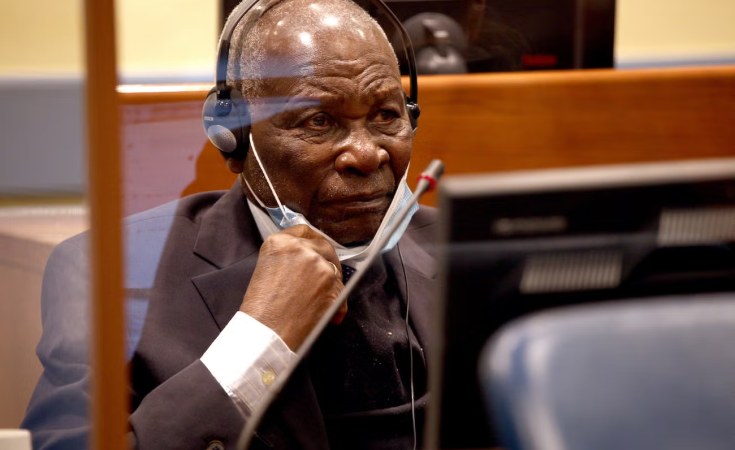
Rwanda's Felicien Kabuga was once one of the world's most-wanted fugitives. He was accused of encouraging and bankrolling the 1994 genocide.
Felicien Kabuga, a suspect in the 1994 Rwanda genocide, has died in custody, a UN court said on Saturday. He was 93 years old.
The court, the UN International Residual Mechanism for Criminal Tribunals (IRMCT), said it had ordered an inquiry into the circumstances of his death.
Who was Felicien Kabuga?
Keep up with the latest headlines on WhatsApp | LinkedIn
Kabuga was once one of the world's most-wanted fugitives.
He was accused of encouraging and bankrolling the massacres between April and June 1994, in which Hutu extremists killed more than 800,000 Tutsis and moderate Hutus in 100 days.
The genocide was triggered after a plane carrying Rwandan President Juvenal Habyarimana was shot down over the capital, Kigali, on April 6, 1994, killing the Hutu leader.
Kabuga was a close ally of Habyarimana and his political party.
On the run for decades
Kabuga evaded arrest for more than two decades after the genocide, using a succession of false passports and aided by a network of former Rwandan allies.
An arrest warrant for him was issued in 2013, and a $5 million (€4.3 million) bounty was announced.
He was finally arrested in 2020 in France and extradited to The Hague.
His trial started in 2022. Kabuga was charged with genocide, incitement to commit genocide, conspiracy to commit genocide, as well as persecution, extermination and murder.
Prosecutors accused Kabuga, once one of Rwanda's richest men, of being the driving force behind Radio-Television Libre des Mille Collines (RTLM), which urged ethnic Hutus to kill Tutsis.
Why was he deemed unfit to stand trial?
Kabuga, however, was later ruled unfit to stand trial because of dementia.
The decision angered many genocide survivors in Rwanda, who felt his crimes deserved the maximum sentence.
Kabuga was also deemed too ill to return to Rwanda.
With no country willing to accept him, Kabuga remained in the UN center in The Hague.
Edited by: Sean Sinico


