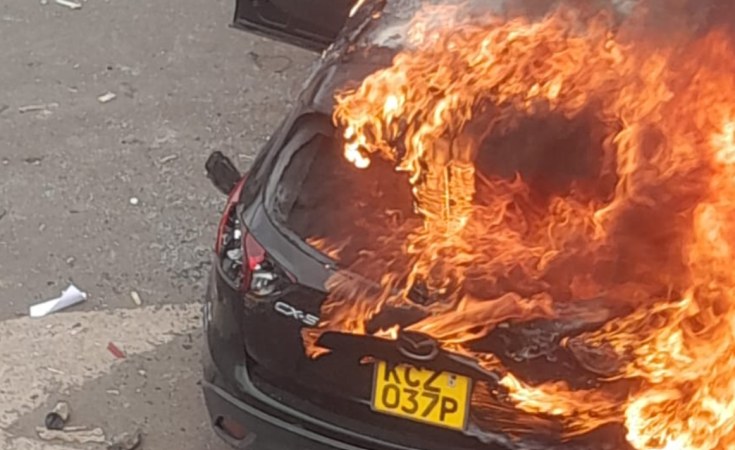
Nairobi — A private vehicle was set ablaze and others vandalised on Thika Road on Monday morning as fuel protest tensions escalated into running battles between protesters and police, plunging one of Nairobi's busiest highways into chaos.
The unrest erupted after protesters lit burning tyres and barricaded sections of the highway, forcing motorists to make abrupt U-turns and disrupting movement around Githurai and Kenyatta Road.
Thick plumes of smoke billowed across the carriageway as flames engulfed at least one private car, with other vehicles damaged in the ensuing confrontation, triggering panic among commuters and motorists caught in the corridor.
Keep up with the latest headlines on WhatsApp | LinkedIn
Public service vehicles, private motorists and boda boda operators were forced to turn back or abandon their journeys as access along parts of the road became increasingly restricted amid the unfolding clashes.
Groups of youth occupied sections of the highway as tensions remained high, while commuters watched from a distance as security forces moved in to contain the situation.
The disruption brought movement along the corridor to a near standstill during the morning rush hour, affecting workers, students and traders who rely on the highway for entry into and out of the city.
'Walking city'
Thousands of stranded commuters continued to stream across major roads in Nairobi after a nationwide transport strike crippled matatu and bus operations, turning large parts of the capital into a "walking city" as pressure mounted over soaring fuel prices.
From dawn, bus stops and matatu termini along Thika Road, Mombasa Road, Waiyaki Way, Jogoo Road and Ngong Road were left deserted, while commuters trekked long distances in search of transport.
The industrial action, led by the Transport Sector Alliance (TSA), brought together matatu operators, truckers, boda boda riders, digital taxi operators, logistics firms and private motorists in one of the broadest coordinated transport shutdowns in recent years.
The alliance declared the strike "99 per cent successful," demanding immediate reversal of recent fuel price increases and pushing for lower petrol and diesel prices, alongside sweeping reforms in the energy sector.
Among its demands are the reduction of fuel prices to between Sh140 and Sh150 per litre in the long term, the disbandment of the Energy and Petroleum Regulatory Authority (EPRA), and changes in fuel procurement systems.
The strike follows the latest EPRA pricing review effective May 15 to June 14, which saw diesel in Nairobi rise to Sh242.92 per litre and super petrol to Sh214.25, triggering sharp backlash from transport operators and business groups.

Sign up for free AllAfrica Newsletters
Get the latest in African news delivered straight to your inbox
The Kenya National Chamber of Commerce and Industry (KNCCI) has warned that the fuel increases could significantly raise transport and logistics costs while squeezing MSME margins and driving up the cost of essential goods.

