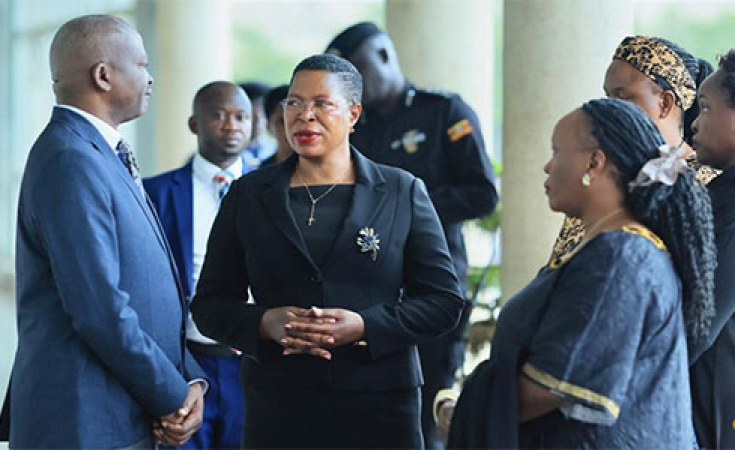
Kampala — As joint security teams concluded multi-hour searches at the residence of former Speaker Anita Annet Among on Mackinnon Road in Kampala's upscale Nakasero suburb -- and reportedly expanded operations to other properties linked to her associates -- an equally striking development began unfolding online: a quiet but noticeable digital retreat by individuals once publicly aligned with the powerful legislator.
Across X (formerly Twitter), WhatsApp, and other social media platforms, profiles were edited, political affiliations toned down, photographs removed, and privacy settings tightened. The shifts, while subtle, reflected growing unease within sections of Uganda's political establishment as the anti-corruption probe gathered momentum.
One of the most closely watched changes involved former principal press secretary to the outgoing Speaker, Joseph Sabiti. Following Sunday's developments surrounding the searches, Sabiti altered his X biography, reportedly removing references to his parliamentary role before switching his account to private.
Several legislators, especially from the Acholi, Karamoja, Teso, and Bugisu sub-regions, also quietly removed photographs of Among from their WhatsApp display pictures and reduced their public association with her camp.
Follow us on WhatsApp | LinkedIn for the latest headlines
The online retreat comes amid intensifying scrutiny following the arrest of Parliament's Director of Communications, Chris Obore, and reported travel restrictions imposed on Parliamentary Commissioner Esther Afoyochan. Security agencies are reportedly pursuing investigations into allegations of corruption, illicit enrichment, abuse of office, and money laundering involving current and former parliamentary officials.
At the center of the controversy are the now-infamous "service awards" controversially shared among Parliamentary Commissioners in 2022 and 2023.
The payouts -- estimated at between Shs1.4 billion and Shs1.7 billion per beneficiary -- ignited national outrage after legislators approved the allocations internally without broader parliamentary scrutiny. Among those linked to the payments were Anita Among, Mathias Mpuuga, Solomon Silwanyi, Prossy Mbabazi Akampurira, and Esther Afoyochan. The current investigations are reportedly being conducted following directives from Yoweri Museveni, who has recently intensified public messaging against corruption and misuse of public resources within state institutions.
"Security teams are examining financial records, property acquisitions, and digital communications, with particular focus on allegations that large amounts of cash may have been concealed in private residences or moved through unofficial channels," a detective privy to the investigations said on condition of anonymity. The raids also come against the backdrop of mounting international pressure. Both the United States and the United Kingdom previously imposed sanctions on Among over allegations related to corruption and abuse of office -- measures that significantly damaged her international standing while intensifying domestic scrutiny.
The investigations further coincide with a parliamentary transition period. Although Among retained her Bukedea Woman MP seat, many Ugandans believe she has already lost the race to retain the speakership, marking a dramatic reversal for one of the country's most influential political figures. Under the Anti-Corruption Act, 2009, particularly Section 11, abuse of office and illicit enrichment attract serious penalties, including imprisonment and confiscation of unlawfully acquired assets. The Leadership Code Act further requires public officials to fully declare assets, liabilities, and income sources.
Meanwhile, the Anti-Money Laundering Act empowers investigators to trace financial transactions, communications, and digital records believed to be linked to the proceeds of crime. Reports emerging from the current investigations suggest forensic teams are examining seized electronic devices, including mobile phones, in efforts to recover deleted messages, financial trails, and communication records. Public reaction across Ugandan social media has been fierce, emotional, and deeply polarized. On X, many users mocked the apparent distancing by former allies, describing it as "rats fleeing a sinking ship" or evidence that loyalty within the political establishment often lasts only as long as power remains intact.

Sign up for free AllAfrica Newsletters
Get the latest in African news delivered straight to your inbox
Activists and governance campaigners, including prominent commentator Agather Atuhaire, have long criticized what they describe as opacity in parliamentary spending and weak accountability mechanisms. Online discussions frequently juxtaposed reports of luxury vehicles, high-end homes, and lavish lifestyles with stalled infrastructure projects, delayed public salaries, and underfunded social services.
Yet critics, including David Lewis Rubongoya, Secretary General of National Unity Platform (NUP), and former Leader of Opposition Joel Ssenyonyi, argue that Uganda has historically witnessed selective anti-corruption enforcement, where investigations intensify during political realignments but rarely result in sustained institutional reform. All individuals linked to the investigations remain presumed innocent unless proven guilty in a competent court of law.

